


Colombia / Cartagena / Where to eat · 12 min read
Walk fifteen minutes and the same money buys more.
Celele put Cartagena on the global list. The reason to stay a week is everything underneath it, most of it in Getsemaní.
Jump to what you came for
Cartagena restaurants at a glance
The city splits cleanly by ambition
In 2025, a restaurant in Getsemaní — the neighborhood Cartagena's guidebooks used to tell you to avoid — climbed to number five on Latin America's 50 Best Restaurants list and made its debut on The World's 50 Best at number 48. Celele, run by chef Jaime Rodríguez, did this not by importing a European format or chasing international food trends, but by going specifically and rigorously deep into Caribbean Colombian coastal cuisine: the fruits, the seafood, the Afro-Colombian culinary traditions that most of Cartagena's upscale restaurants had been ignoring for decades.
The best restaurants in Cartagena split cleanly by ambition. Celele is the one with the international ranking and the Caribbean-Colombian cooking to justify it. Below that sit a set of serious kitchens in Getsemaní and the walled city, and below those the menú del día lunches that feed the people who live here.
Book the named dining rooms days ahead, especially in high season. Eat lunch where the office workers eat. And accept that the walled city charges a premium for the setting — walk to Getsemaní and the same money buys more.
What the coast actually cooks


That moment placed Cartagena on the global gastronomic map alongside Lima, Bogotá, and Mexico City. It also reframed what eating well in this city actually means: not the colonial-mansion-setting fine dining that had previously defined "upscale Cartagena," but something more specifically rooted in this coast, this sea, this culture.
This guide covers everything from that level of ambition down to the menú del día for 15,000 COP that is, quietly, some of the most satisfying food you'll eat anywhere in Colombia.
Where to eat, and what for
| Where to eat | Area | Style | Go for |
|---|---|---|---|
| Celele | Getsemaní | Caribbean tasting menu | Corozo cocktails; book weeks ahead |
| Carmen | Walled city | Creative Colombian tasting menu | A special evening |
| Lunático | Old city | Open kitchen, classes, tours | The Bazurto food tour |
| La Cevichería | Plaza San Diego | Ceviche | Once, for the Bourdain story |
| Sierpe | Getsemaní | Casual, ambitious | Grilled octopus, corozo cocktails |
| Ana Restaurante Bar | Getsemaní | Caribbean-Asian | A break from coconut and seafood |
| Doña Lola | Old city | Seafood in a colonial mansion | Ceviche, cazuela, whole fish |
| Casa Mar | Cartagena | Tropical lounge, daily catch | Dinner with live music |
| Mercado de Bazurto | Bazurto | Wholesale market | Fried fish; go with a guide |
| Menú del día | Getsemaní and local barrios | Set lunch | 15,000–20,000 COP |
The benchmark: Celele
Number five on Latin America’s 50 Best
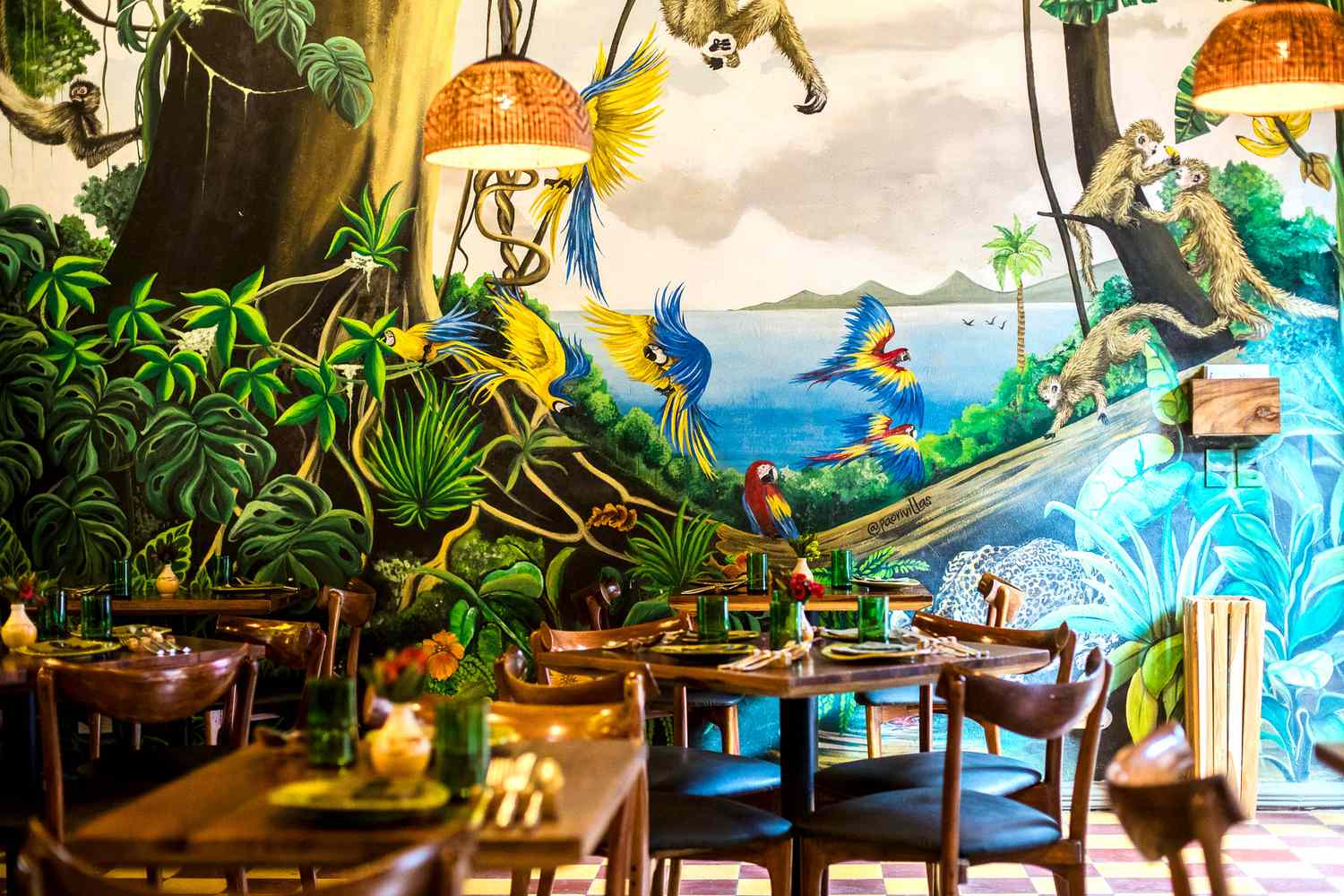 Celele in Getsemaní — Caribbean Colombian cooking with an international ranking behind it.
Let's start here. Celele is the restaurant that changed the conversation about Cartagena food — a Caribbean tasting menu rooted in local ingredients, Afro-Caribbean culinary traditions, and the specific biodiversity of Colombia's Caribbean coast. The name comes from a type of traditional Colombian candy, and the entire philosophy is about recovering and recontextualizing what coastal cooking actually is, rather than overlaying it with European technique for its own sake.
The contemporary Caribbean table
Where else is working in the same territory
A few other restaurants are working in the same territory as Celele — contemporary Colombian Caribbean cuisine rather than international formats applied to a local setting.

La Cevichería: what it is and is not
Worth going once, for the reason you think
La Cevichería earned its fame when Anthony Bourdain visited on No Reservations, and it is still, consistently, one of the most-visited restaurants in the city. The ceviche is genuinely good — fresh seafood, proper citrus acidity, the kind of simple execution that doesn't try to be more than it is. The blue-and-white exterior on a corner of Plaza San Diego photographs beautifully.
Getsemaní: the best food-to-price ratio
Thirty to fifty per cent cheaper, fifteen minutes away
Getsemaní, where the value is


A consistent finding in the Cartagena food research: Getsemaní restaurants run 30-50% cheaper than equivalent quality in the walled city. The neighborhood's emergence as a restaurant destination started with chefs and operators who couldn't afford old-city rents, and the result is a concentration of genuinely ambitious, affordable food in a more interesting social setting.
The best seafood in the city
Daily catch, and where it lands
The catch, three ways


What to order everywhere
Five things, in this order
The Caribbean Colombian canon
Cazuela de mariscos — the benchmark dish
A coconut-milk-based stew with shrimp, fish, crab, and plantain — the most representative dish of Caribbean Colombian coastal cooking. Order it as a benchmark at whichever restaurant you're evaluating.
Ceviche de camarones — specific to this coast
Shrimp ceviche, marinated in lime with ají, onion, and cilantro. The Colombian Caribbean version leans lighter and fresher than the Peruvian style, without the corn or sweet potato.
Arepas de huevo — street food
Fried corn cakes with egg cooked inside — the street food version of this conversation, sold from carts throughout Getsemaní for a few thousand pesos. Eat them as breakfast or a snack, standing up, from whoever is selling them fresh.
Corozo — order it when you see it
The small, tart Caribbean fruit that appears in cocktails, sauces, and local drinks across the coast. It's specific to this region and one of the ingredients most worth tasting here rather than anywhere else.
Patacones — with everything
Twice-fried green plantains — arrive with everything and should be eaten enthusiastically regardless.
Where to Eat — Cartagena
The budget end: menú del día
Fifteen thousand pesos, and the best access you will get
Every neighborhood in Cartagena that hasn't been entirely given over to tourism has a restaurant or two serving the menú del día — a set lunch of soup, main course, rice, beans, juice, and sometimes dessert, for somewhere between 15,000 and 20,000 COP (roughly $5-7 USD as of 2026). This is how the city's workers actually eat lunch, and the quality at the better spots — particularly in Getsemaní — is significantly higher than the price suggests.
The menú corriente is also your best access point to traditional Colombian Caribbean cooking in its most unfussy form: sancocho (a long-simmered meat and vegetable soup), whole fried fish with coconut rice and patacones, stewed chicken with ají. These are dishes that have been made the same way, in the same proportions, for decades, because they're correct the way they are.

A few honest trade-offs
What the walled city charges you for
Before you book
Eating on the main plazas.
Plaza Santo Domingo, Plaza de la Aduana — premium pricing and food tuned for tourist volume rather than locals. A restaurant with a direct view of a colonial church is paying for that real estate, and so are you.
Staying inside the walls for every meal.
Getsemaní runs cheaper and is more interesting right now. Walk fifteen minutes from the Clock Tower and the equation changes significantly.
Leaving it late in peak season.
Peak season (December-April, July) means the best restaurants in the walled city and top-end Getsemaní spots book out 1-3 weeks ahead. Book before you arrive if you have a specific evening in mind.
The neighbourhood breakdown
Decide by what you want the evening to be
A clear framework for deciding where to eat based on where you're spending your time:
Where to eat, by neighbourhood
Old City — Centro Histórico and San Diego
The highest-design restaurants and the highest prices. Carmen, La Cevichería, Doña Lola, and the colonial mansion settings. Good for a special evening dinner. Premium pricing reflects the real estate, not always the cooking.
Getsemaní — best food-to-price ratio
The most interesting food-to-price ratio in the city right now. Celele (at the very top), Sierpe and Ana Restaurante Bar in the contemporary-casual tier, Lunático for the experience format. The neighborhood is also where the best street food is most concentrated — arepas de huevo from morning carts, fresh tropical fruit vendors on the plaza.
Bocagrande — convenience
The beach/peninsula neighborhood with international chain hotels and oceanfront restaurants. Worth knowing for location convenience if you're staying there, but not a destination for Cartagena food culture specifically.
Mercado de Bazurto — the essential food experience
Not a restaurant neighborhood but the essential food experience. Go with a guide, go for lunch, go early enough that the morning's catch is still being sold. The prepared food section here is where the city's working population eats on their lunch break, which tells you more about what Cartagena actually is than any restaurant with a colonial-mansion setting.
Drinking in Cartagena
Two correct daytime drinks, and what to do after dark
 The coast produces fruit that does not exist in most places, and the bars have noticed.
What to drink, and when
Costeño beer and coconut water — daytime
The two correct drinks for daytime in Cartagena's heat. Costeño is the local brew — lighter than Águila, specifically associated with the Caribbean coast, and available everywhere.
Aguapanela con limón — non-alcoholic
Hot or cold, made from sugarcane block dissolved in water with lime — the traditional Colombian non-alcoholic drink that's particularly associated with the coast. Try it cold from a street vendor at 11am when the heat is building.
Local-fruit cocktails — after dark
Corozo-based cocktails at Sierpe and Celele, lulo-based variations at multiple Getsemaní bars, maracuyá caipirinhas from the street vendors around Plaza de la Trinidad in the evening. The Caribbean coast produces fruits that don't exist in most places, and the best Cartagena bars are starting to treat them as seriously as the best Oaxacan restaurants treat their local ingredients.
The bottom line
Start at the top, then walk to Getsemaní
Cartagena has earned its reputation as one of the best food cities in South America — not despite being a tourist city, but partially because of it. The combination of Caribbean coastal tradition, Afro-Colombian culinary culture, and a generation of chefs who decided to dig into local ingredients rather than import European formats has produced a restaurant scene that now competes at a global level.
Before you go
What is the best restaurant in Cartagena?
Celele in Getsemaní. In 2025 it reached number five on Latin America's 50 Best Restaurants and debuted at number 48 on The World's 50 Best, with a tasting menu built on Caribbean Colombian ingredients and Afro-Colombian traditions. Book weeks ahead for weekends.
Do you need reservations for Cartagena restaurants?
For the top tables, yes. In peak season (December to April, and July) the best restaurants in the walled city and the top Getsemaní spots book out one to three weeks ahead, so reserve before you arrive if you have a specific evening in mind.
Where can you eat cheaply in Cartagena?
Look for a menú del día: soup, a main, rice, beans and juice for 15,000 to 20,000 COP, roughly $5 to $7. Getsemaní is the best neighborhood for value, with restaurants running 30 to 50 percent cheaper than similar quality in the walled city.
Is La Cevichería worth it?
Once, if the Anthony Bourdain story matters to you. The ceviche is genuinely good, but the crowd is now mostly visitors. For a sense of where Cartagena's food scene is today, eat in Getsemaní.
What dish should you try in Cartagena?
Cazuela de mariscos, the coconut-milk seafood stew with shrimp, fish, crab and plantain. It's the region's benchmark dish. Also try shrimp ceviche, arepas de huevo from a street cart, patacones, and anything made with corozo.
Which neighborhood is best for food in Cartagena?
Getsemaní for value and the most interesting cooking, the old city for a special evening in a colonial setting, and Mercado de Bazurto for the market experience. Bocagrande is convenient if you're staying there, but it isn't a food destination.
Does Cartagena have Michelin-star restaurants?
No. At the time of writing, the Michelin Guide doesn't cover Colombia, so Latin America's 50 Best is the closest benchmark for fine dining in Cartagena.
What should you drink in Cartagena?
Costeño beer or fresh coconut water in the daytime heat, cold aguapanela con limón from a street vendor, and cocktails made with local fruit after dark, especially corozo at Sierpe and Celele.
Keep going
Sources
First-hand eating in Getsemaní, the walled city and Bazurto · prices are editorial estimates, not published rates — confirm before booking · Latin America’s 50 Best Restaurants · The World’s 50 Best Restaurants · ProColombia — Colombia Travel · UNESCO — Port, Fortresses and Group of Monuments, Cartagena · UNESCO — Cultural Space of Palenque de San Basilio · UK FCDO — Colombia travel advice · US State Department — travel advisories · CDC — food and water safety for travellers · WHO — food safety fact sheet · CIA World Factbook
We will tell you whether we can help and send a written quote before any paid work begins.