


Colombia / Cartagena / Things to do · 14 min read
Getsemaní at 9pm is the most honest introduction to this city.
The walled city is the postcard and it earns it. Everything that makes Cartagena worth more than two days is just outside it.
Cartagena at a glance
The walled city is the postcard, not the whole city
Getsemaní at 9pm on a Friday is the most honest introduction to Cartagena that exists. Not the Instagram version — the city walls and the pastel balconies and the women in full traditional dress selling fruit from baskets on their heads — but the actual social reality of the neighborhood: Plaza de la Trinidad full of locals and travelers spilling off plastic chairs, someone's phone blasting vallenato into the warm Caribbean air, a man dressed as Michael Jackson working the crowd while a woman doing a suspiciously accurate Shakira impression comes at you from the other direction. A $2 cocktail from one of the makeshift bars on Callejón Ancho. Sweat. Laughter. The specific warmth of a city that genuinely enjoys itself.
This guide is about the full version of Cartagena — the UNESCO walled city that earned its reputation, the Getsemaní neighborhood that's quietly become more interesting than the place it's adjacent to, the island day trips, and the few honest warnings nobody puts in the brochure. Here's how to make it count.
The walled city, up close


Every experience, and when to do it
| Experience | Where | Best time |
|---|---|---|
| Walk the city walls | Walled City | Golden hour — free |
| Castillo San Felipe | Hill above the city | 2 hours+, with a guide |
| Plaza de Bolívar | Old town | Before anything else |
| Street art | Getsemaní | Slowly, by day |
| Plaza de la Trinidad | Getsemaní | After sundown |
| Rosario Islands | 35 km offshore | The 8am boat |
| Mercado de Bazurto | City market | With a guide or food tour |
| El Totumo mud volcano | 45 min north | Once — about 90 minutes |
| Palenque de San Basilio | 70 km southeast | With a community-based operator |
| Playa Blanca | Barú Peninsula | A weekday, early |
The walled city: what you are actually looking at
UNESCO-listed, and free to walk
The UNESCO-listed Ciudad Amurallada — the walled city — formed part of one of the Caribbean’s most important fortified ports. Spanish engineers began the defensive system in the late 16th century and extended it through the 18th, protecting the maritime routes that made Cartagena strategically valuable.
Getsemani: the neighbourhood that arrived
The most honest introduction to the city
Getsemaní by day


Getsemaní was, not so long ago, the neighborhood you were told to avoid after dark. Today it's where Cartagena's most interesting food, the best street art, and the most genuine nightlife are concentrated — proof that a neighborhood's reputation takes years to catch up to its reality.
The street art here is worth going slowly through rather than walking past. Murals covering entire building facades depict Afro-Colombian history, displacement, resistance, and the specific neighborhood identity that survived decades of being written off as dangerous. The Getsemaní Art Project has been running for years and the quality of the work is remarkable — political, technically accomplished, and specific to this place rather than generic urban decoration.
Where It All Sits — Cartagena
The Rosario Islands: do this properly
Thirty-five kilometres offshore, and easy to do badly

The Rosario Islands are a protected coral reef archipelago off Cartagena, and a day trip out there is one of the genuinely extraordinary experiences available from the city. The water clarity around the islands is Caribbean at its most honest — transparent to the sandy bottom, warm, full of reef fish that treat snorkelers as background noise.
What the standard packages do not tell you
Budget for the boat.
Depending on the boat and island, the crossing takes about 45 to 90 minutes each way, so confirm the destination and journey time before paying. A poorly organized tour can leave surprisingly little time on the islands.
Book a reputable operator and go early.
The 8am departure beats the midday crowds by a significant margin.
Confirm exactly what's included.
Some packages include only beach time, some include snorkeling equipment, some include an aquarium visit or an additional island stop.
What most guides get wrong
Three honest corrections
A few honest corrections to the standard narrative:
Mercado de Bazurto: the real Cartagena
Loud, sprawling and entirely uncurated
Where Cartagena feeds itself


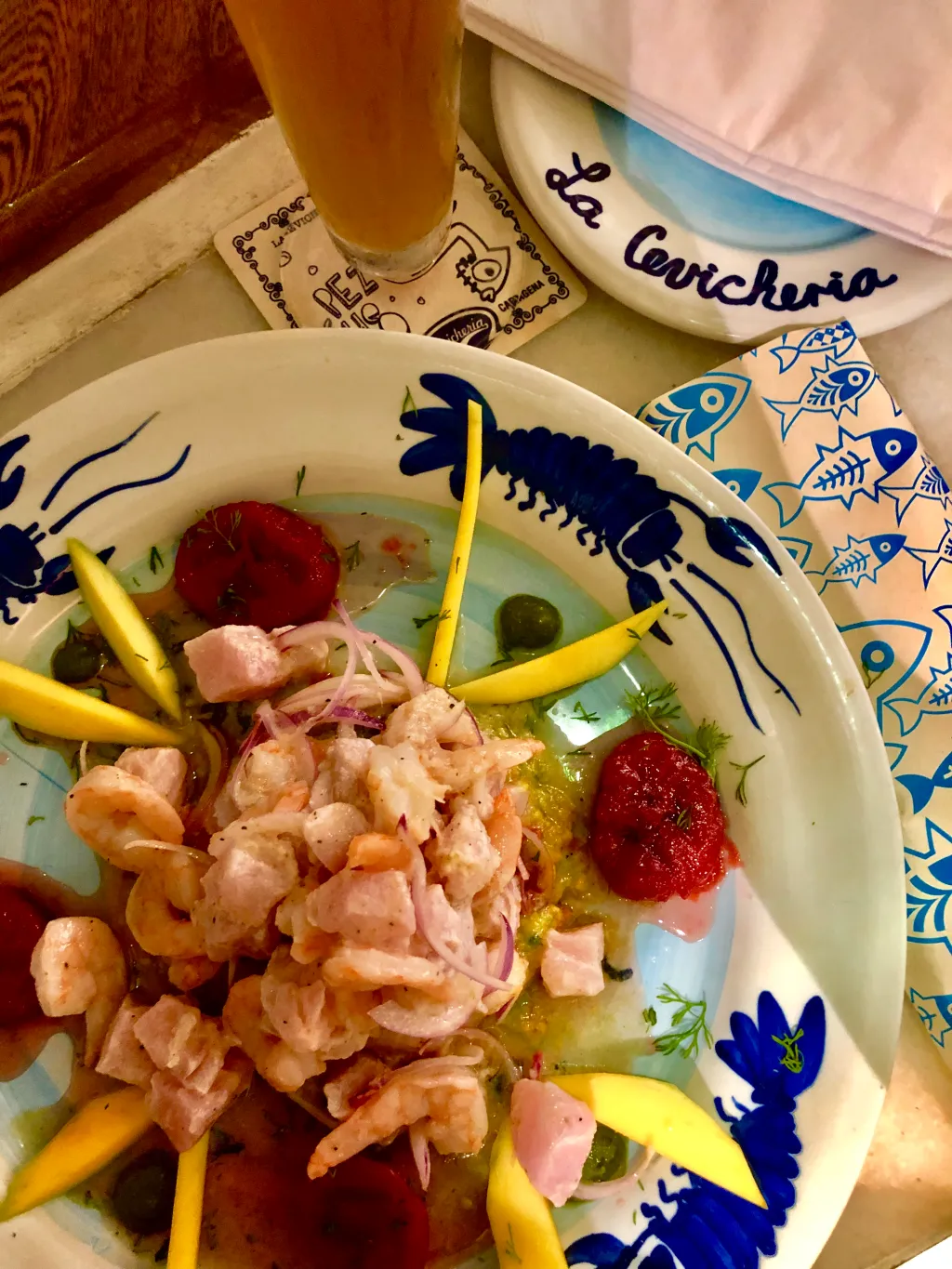 And the ceviche the coast is built on
Mercado de Bazurto is the city's main wholesale market — loud, sprawling, full of fresh fish, tropical fruits, herbs, and the kind of social noise that tells you more about how a city actually functions than any amount of historic architecture. It's not a tourist attraction. It's where Cartagena feeds itself.
Mud volcano El Totumo: worth it, or a gimmick
Ninety absurd minutes, once
About 45 minutes north of Cartagena, El Totumo is a 15-meter-high mud volcano where the crater is full of warm, mineral-rich mud that's dense enough to float in. The experience is exactly as bizarre as it sounds — climbing a wooden ladder into a small crater, being surrounded by other visitors floating in grey mud, having women who work there offer (aggressively) to massage it into you, then being walked down to a lagoon to wash off.
A few safety notes worth knowing
Specific risks, not a blanket warning
Current government travel advice warns about crime across Colombia, including street crime on the Caribbean coast. In Cartagena, plan around theft, drink-spiking, unlicensed transport and tourist-targeting scams rather than treating the historic centre as risk-free. Check the latest Colombia safety guidance before departure.
Know before you go
Scopolamine
(the "devil's breath" drug) has been reported in some Cartagena nightlife venues — it's slipped into drinks and renders victims unable to resist theft or worse. This isn't an everyday risk, but it's a real one. Don't leave drinks unattended, and don't accept drinks from strangers in clubs.
Tours and island trips from street touts.
Book through an established operator or your accommodation, confirm the boat and inclusions, and check for life jackets and safety equipment before boarding.
Unlicensed or street-hailed taxis.
Use a licensed telephone or internet-based taxi service, an authorised airport booth, or a taxi booked by your hotel or restaurant. Avoid hailing an unknown vehicle on the street, especially at night.
What to actually order
Four things, in this order
The Caribbean Colombian canon
Arepas de huevo — the street food benchmark
Fried corn cakes with an egg cooked inside — the Cartagena street food benchmark. They're sold from carts and market stalls, cost a few thousand COP, and are specifically Caribbean Colombian rather than the version you'll find inland.
Cazuela de mariscos — the regional classic
A creamy coconut seafood stew with shrimp, fish, and crab — the dish most representative of the regional cooking tradition. Order it wherever the catch looks fresh.
Patacones — with everything
Twice-fried green plantains, crispy outside and starchy inside, served as a side with everything and occasionally as a base for toppings. Present at every meal. Correct.
Fresh tropical fruit — from the cart, not the restaurant
Guanábana, maracuyá (passion fruit), lulo, corozo — from street vendors it's both better and cheaper than at restaurants. Eat it as dessert, as a snack, as an afternoon restorative. This is the coast; the fruit is extraordinary.
Day trips beyond the islands
One of them is among the most significant sites in the Americas
Cartagena is also a gateway to a few experiences that extend the trip meaningfully.

When to visit
Hot year round; the question is crowds
Cartagena is hot year-round — this is the Caribbean, and temperatures hover around 28-32°C daily. The "best" season question is mostly about rain: December through April is the driest period, July is reasonably dry, and May-June and August-November are wetter. The heat is consistent regardless.
Month by month
| Months | Weather | Crowds |
|---|---|---|
| December–January | Dry | Peak season — highest prices |
| February–April | Driest stretch | Busy; April is a sweet spot |
| May–June | Wetter | Quieter; May is a sweet spot |
| July | Reasonably dry | Peak season |
| August–October | Wetter | Quieter |
| November–early December | Wetter | Sweet spot before the Christmas crowd |
Peak season (December-January, July) brings the most visitors and the highest prices. The sweet spot for most travelers is November or early December before the Christmas crowd, or April-May after the dry season peak — still warm, significantly fewer cruise ships, slightly more manageable everything.
How to spend 1, 2 or 3 days
Routes, not a checklist
These are routes, not a checklist. Cartagena works best when the hottest part of the afternoon stays flexible.
Build the trip outward
One day:
walk the Walled City early, visit Castillo San Felipe before the midday heat, and spend the evening in Getsemaní and Plaza de la Trinidad.
Two days:
use the second day for a carefully chosen Rosario Islands trip, confirming the boat, safety equipment and inclusions before paying.
Three days:
add Bazurto with a guide, or choose a community-based visit to San Basilio de Palenque. El Totumo is the alternative if the mud-volcano story appeals more than another city day.
The bottom line
Better the further you wander from the postcard
Cartagena, past the postcard


Cartagena earns its reputation — the walled city is genuinely one of the most beautiful in the Americas, the Caribbean light does exactly what the photographs say it does, and the warmth of the place is real rather than performed. It also requires more navigation than the Instagram version suggests: the cruise ship question, the tourist-pricing reality, the need to get out of the old city and into Getsemaní to find the more honest version of what's here.
Before you go
How many days do you need in Cartagena?
Three or four days covers it well: a morning in the walled city and an evening in Getsemaní, a full day on the Rosario Islands, and time to sit in the plazas without a schedule. Add a day if you want El Totumo or a visit to Palenque de San Basilio.
Is Cartagena safe for tourists?
Government advisories warn about crime across Colombia, including the Caribbean coast. In Cartagena, watch your drink, book established tour operators, use licensed or pre-booked transport, and avoid displaying valuables. For the full picture, read Is Colombia Safe to Visit in 2026.
How do you get to the Rosario Islands from Cartagena?
By boat from the marina, usually about 45 to 90 minutes each way depending on the vessel and island. Take the 8am departure to beat the crowds, book through a reputable operator, and confirm what the package includes before you pay. If the boat feels like too much, Playa Blanca on the Barú Peninsula is 45 to 60 minutes away by road.
Is the El Totumo mud volcano worth it?
Yes, once. It's about 45 minutes north of the city and the whole thing takes around 90 minutes: climb into the crater, float in the warm mud, wash off in the lagoon. Go for the story, not for a spa day.
When is the best time to visit Cartagena?
December to April is the driest stretch, but December, January and July are peak season with the highest prices. The sweet spot is November or early December, before the Christmas crowd, or April and May, after the dry-season peak.
Are there still horse-drawn carriage rides in Cartagena?
No. Horse-drawn tourist carriages were prohibited in December 2025 and replaced by an official electric-carriage system. Use the designated points and confirm the current route and posted fare before boarding.
How do you avoid the cruise ship crowds in Cartagena?
Visit midweek if your dates are flexible, and do the old city early. The cruise passengers usually arrive around 10am and pack the Clock Tower entrance and the main shopping streets.
What food should you try in Cartagena?
Start with an arepa de huevo from a street cart, then cazuela de mariscos, the coconut seafood stew. Patacones come with almost everything, and the street fruit is extraordinary: try guanábana, maracuyá, lulo and corozo.
Keep going
Sources
First-hand time in the walled city, Getsemaní, Bazurto and the Barú peninsula · UNESCO — Port, Fortresses and Group of Monuments, Cartagena (1984) · UNESCO — Cultural Space of Palenque de San Basilio · ProColombia — Colombia Travel · UK FCDO — Colombia travel advice · US State Department — travel advisories · Smartraveller — Australian government advice · Government of Canada — travel advisories · CDC — Travelers’ Health · WHO — food safety fact sheet · CIA World Factbook
We will tell you whether we can help and send a written quote before any paid work begins.