
Colombia can be a rewarding trip, but safety varies by city, neighborhood, transport choice, and time of day. This guide separates routine precautions from higher-risk situations and compares what travelers should know in Bogotá, Medellín, Cartagena, the coffee region, and rural areas. Use it to make practical decisions without treating the whole country as either risk-free or off-limits.


Colombia / Safety / Region by region · 13 min read
There is no unconditional yes, and no honest blanket no.
Colombia sits at Level 3 countrywide with five areas rated Do Not Travel. Which Colombia you are going to decides the answer.
Jump to what you came for
The quick answer
Risk varies by region, and tourist areas are not risk-free
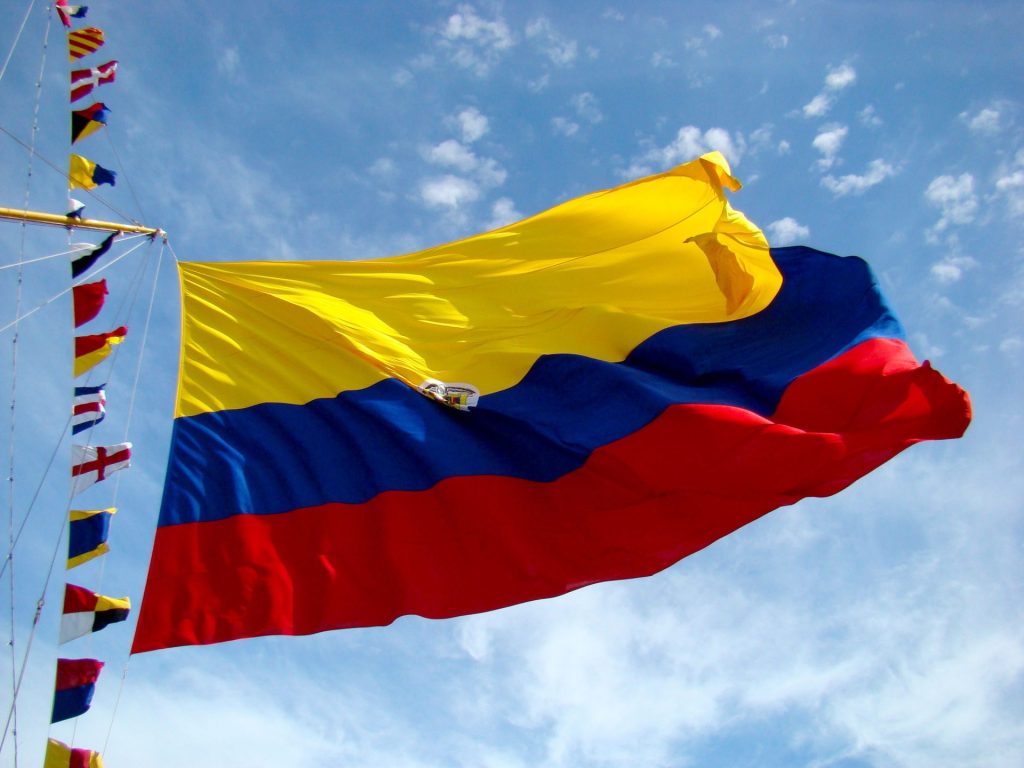 Colombia in 2026 — the honest answer depends entirely on which Colombia you mean.
Colombia's security picture varies sharply by region. The U.S. State Department advises Americans to reconsider travel to Colombia and identifies several areas where they should not travel at all. Cartagena, Medellín and the Coffee Region are outside those specific Level 4 areas, but visitors still need to take crime and transport risks seriously.
Colombia’s past does not give you a reliable forecast for a trip today. Neither does a reassuring story from someone who visited last year. Build your decision around the current advisory, the exact places you plan to visit and the practical risks below.
The useful answer to “is Colombia safe” starts with your itinerary. A city break, a rural road trip and a remote border crossing are different decisions. None comes with a guarantee, and popular destinations still require preparation.
The corridor most visitors actually use


What the official advisories actually say
Level 3 countrywide, with five areas worse
How the US State Department scale works
Level 1 — Exercise normal precautions
The lowest advisory level; normal precautions still apply.
Level 2 — Exercise increased caution
Heightened risks require additional caution.
The US State Department places Colombia at Level 3: Reconsider Travel. That warning applies countrywide; it is not limited to the areas listed under the stronger Do Not Travel warning.
The current advisory identifies these Do Not Travel (Level 4) areas:
Level 4 — do not travel
The U.S. advisory names four departments, with city exceptions in two, plus the Venezuelan border strip. Check the full wording before choosing a route. — Arauca
Eastern border department
Armed group presence and territorial conflict along the Venezuelan frontier. — Cauca
Outside the city of Popayán
Check the current advisory and local security alerts for this department. — Norte de Santander
Including the Catatumbo region
A familiar place name or an interesting tour does not override a regional warning. Check both your destination and the route used to reach it.
The U.S. advisory does not assign separate Level 2 ratings to Bogotá, Medellín, Cartagena or the Coffee Region. Those destinations remain under the countrywide Level 3 advisory; check the current regional details before you travel.
The UK FCDO advice and Canada’s Colombia advisory use different geographic boundaries and warning systems. Canada advises a high degree of caution nationally. Neither should be summarized as a blanket green light for tourist cities.
Read the advisory itself rather than comparing its headline tier with another country. Your nationality, route and insurance conditions all matter.
Medellín: the real safety picture
Changed substantially, with specific risks that remain
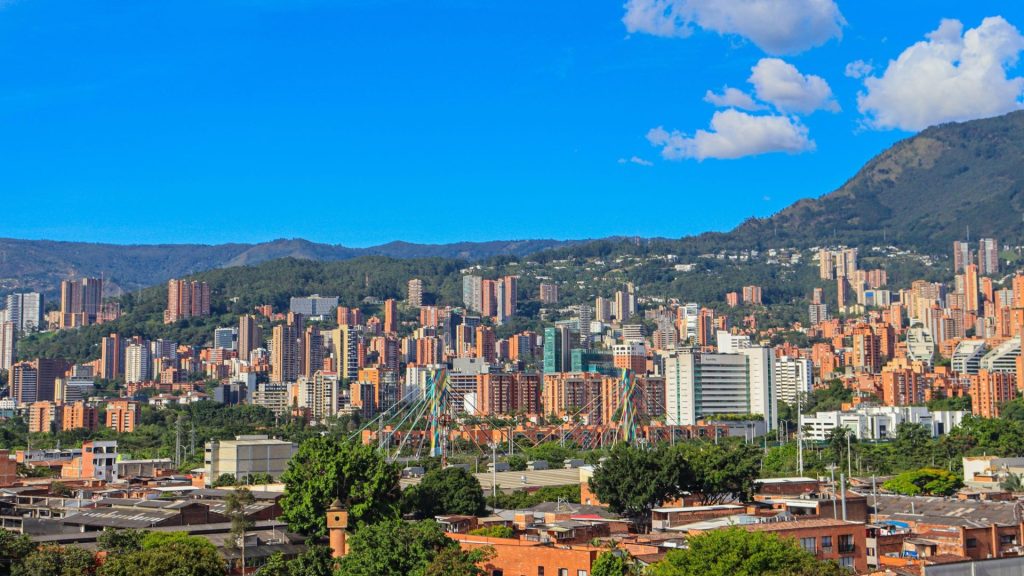 Medellín — a city that changed, and a set of risks that did not disappear with the reputation.
Medellín, three ways


Medellín has changed substantially since its most violent years, but a citywide homicide rate is not a reliable measure of an individual visitor's risk. Take the specific risks below seriously.
The specific risks that affect visitors in Medellín:
Phone snatching and robbery are risks in visitor districts as well as elsewhere. Keep valuables out of sight and plan your return transport before an evening out. A busy nightlife address is not a safety guarantee.
Drink spiking and drug-assisted robbery: keep control of food and drinks, and do not accept them from strangers. Sudden unexplained disorientation calls for urgent medical attention and help from someone you trust.
Solo female travelers: there is no reliable comparative statistic here showing Medellín is safer than Barcelona, Rome or Paris. Choose reviewed accommodation, arrange transport and keep a check-in plan with someone you trust.
Security alerts can change the picture faster than an article can. Check your embassy’s current alerts before departure and while traveling, including for places outside the route originally planned.
Where you base yourself in Medellín shapes the experience more than any statistic does. El Poblado is the default — walkable, dense with restaurants, and a place to remain alert around busy nightlife streets. Laureles is flatter, greener and much more residential, and a growing share of returning travelers pick it for exactly that reason. Envigado, just south, is quieter again. Check the metro and cable-car schedules for your exact route and arrange a return before services end.
Cartagena: different risks, well-known ones
Petty theft and scams, not the Medellín list
 Cartagena — the walled city is not exempt from the countrywide advisory.
Cartagena, three ways


For neighborhood-by-neighborhood planning alongside these precautions, use our guide to the best things to do in Cartagena.
Cartagena’s visitor districts are not exempt from crime. Choose accommodation carefully and plan how you will move between the walled city, Getsemaní and Bocagrande, particularly after dark.
The risks that affect visitors here are different:
Petty theft is the consistent concern — pickpocketing in crowded areas (the walled city near the Clock Tower, Getsemaní during busy evenings), bag snatching by motorcycle in less-monitored areas. Carry only what you need, use a bag that closes properly, keep your phone off café tables and in your pocket when walking.
Scams and overcharging: tourist-targeting scams are common in Cartagena and specific to visitors. The shoe-shine distraction (someone offers to shine your shoes, a companion takes your phone), the official-looking "police officer" who stops you to inspect your passport (not a real officer), the tour operator on the street selling island trips that don't match what's delivered. Use licensed operators, book through your accommodation, walk past anyone who approaches you on the street with a too-good offer.
Drug-assisted robbery: the same food, drink and meeting-strangers precautions apply in Cartagena. Do not treat a popular venue as a guarantee of safety.
Cartagena remains covered by the countrywide U.S. advisory. Check the current regional wording and local alerts rather than assuming the tourist center has a separate safety rating.
Two practical things about Cartagena that nobody mentions until you are already there. The first is heat: the walled city at two in the afternoon in August is punishing, and the usual rhythm is to move early, disappear through the middle of the day and come back out after six. The second is the airport run — Rafael Núñez sits barely fifteen minutes from the old town, which makes it one of the easiest arrivals in the region, but it is also where the most confident overcharging happens. Book the transfer through your hotel or open a ride app before you leave the terminal.
Coffee region: towns, trails and transport
A different pace, not a verified safety ranking
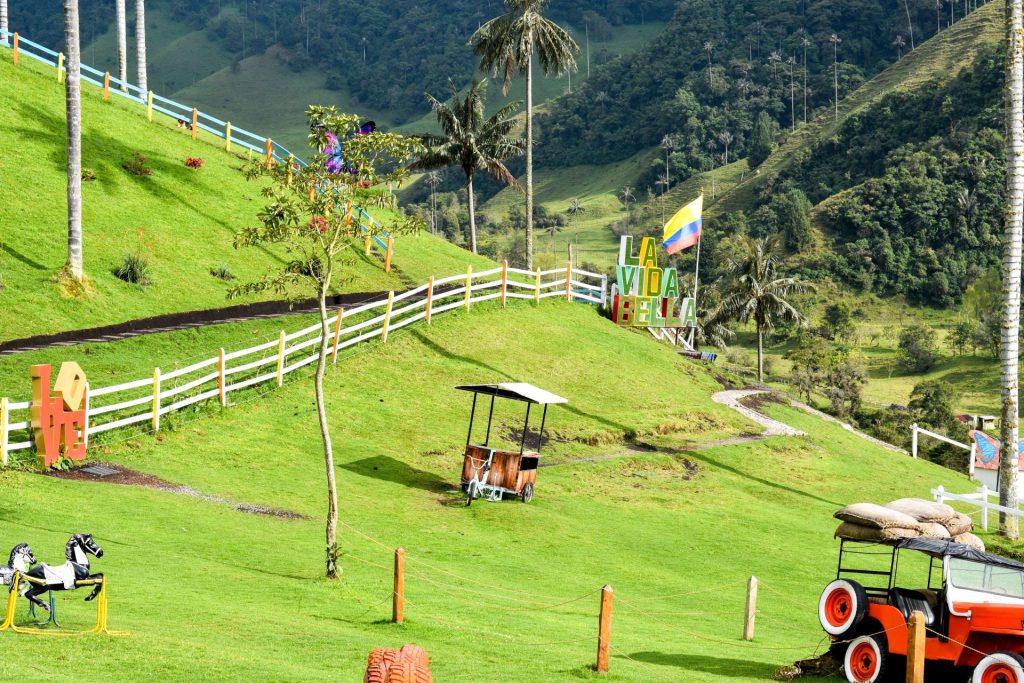 The Eje Cafetero — quieter, and still worth checking the exact route.
The Eje Cafetero


The Eje Cafetero — Salento, the Cocora Valley, Filandia and surrounding coffee towns — offers a different pace from the cities. That atmosphere is not a verified safety ranking. Check trail conditions, weather, transport and local advice for the particular place you intend to visit.
For a first visit, a reviewed base and a clearly planned day trip are more useful than choosing a place because it is described as undiscovered.
The Coffee Region runs on its own logistics. Salento is the usual base and the busiest; Filandia, twenty minutes away, is the same painted architecture with a fraction of the crowd. The Willys jeeps that queue on Salento’s main square are the local transport to the Cocora trailhead and the working fincas, and they leave when they fill rather than to a timetable. Start early: the valley clouds over most afternoons, the last jeeps back run mid-evening, and confirm the last return transport locally. Weather, trail conditions and rural roads need attention.
Areas to genuinely avoid
Five departments and a ten-kilometre strip
Be direct: the following areas should not be on your itinerary regardless of what any guide tells you about their authentic character or undiscovered beauty.
The Level 4 areas: Arauca, Cauca (outside Popayán), Valle del Cauca (outside Cali), Norte de Santander, and the Colombia–Venezuela border region within 10 km (6 miles). Active armed conflict, kidnapping risk, areas where the government itself cannot guarantee safety.
Cali requires more caution than the other major cities. The city has experienced increased terrorist activity and an unstable security situation beyond the specific tourist zones. Not a no-go for experienced travelers, but not the right first Colombia destination.
Rural areas and major highways in border zones away from the tourist corridor (Bogotá-Medellín-Cartagena-Coffee Region-Santa Marta) carry meaningfully elevated risk. Flying between cities rather than taking long-distance buses through rural areas is consistently recommended by security analysts.
The five Level 4 departments and the 10 km strip along the Venezuelan border.
Long-distance buses through rural border departments — fly between cities instead.
Driving rural roads after dark, anywhere in the country.
Cali as a first Colombian destination, however good the salsa is.
Any ‘undiscovered’ region a blog recommends that the advisory marks Level 4.
This list is not about being timid. It is about the difference between risk you can manage with common sense and risk described in official regional travel warnings.
Region by region, at a glance
| Destination | Department | Main risk for visitors | Verdict |
|---|---|---|---|
| Medellín | Antioquia | Phone snatching, nightlife spiking | Check local conditions |
| Cartagena | Bolívar | Petty theft, tourist-specific scams | Plan transport and guard valuables |
| Coffee Region | Quindío / Risaralda | Theft, trail weather and road conditions | Check the exact route |
| Bogotá | Bogotá, D.C. | Urban petty crime after dark | Plan neighborhoods and transport |
| Santa Marta | Magdalena | Petty theft around the beaches | Check local advice |
| Cali | Valle del Cauca (city) | Unstable beyond the tourist zones | Not a first Colombia trip |
| Arauca; Cauca except Popayán; Valle del Cauca except Cali; Norte de Santander; Venezuelan border strip | Level 4 zones | Armed conflict, kidnapping risk | Do not go |
The tourist corridor, mapped
Practical safety that actually applies
Transport, cash, drinks, and what to do if it goes wrong
Pre-book licensed transport. Use a licensed taxi service booked by phone, online or through your accommodation. Check the vehicle and driver details before boarding; an app alone does not remove risk.
Cash caution: only withdraw cash from ATMs inside banks or shopping malls during daylight hours. Cover the keypad. Don't walk away from an ATM on a quiet street at night.
Share your location with someone at home if you're traveling solo. Not because it's likely you'll need it, but because the peace of mind is worth the thirty seconds it takes to set up.
Travel insurance: ask the insurer to confirm cover for your exact itinerary, activities and current government advice, including emergency medical treatment and evacuation. Exclusions depend on the policy; there is no universal Level 2 cutoff.
Don't drive in rural areas at night. If you're renting a car, plan routes to arrive at your destination before dark. Night driving on rural Colombian roads carries elevated risk that has nothing to do with crime — road conditions, animals, unmarked hazards — and the crime risk in some areas rises significantly after dark.
If you are robbed, do not resist or chase the offender. Move to safety, call 123 for an emergency, and contact your insurer and consulate as appropriate. Seek medical care promptly if injured or if you suspect drugging. Report stolen documents and retain the report details.
The pocket version
Pre-book transport — Licensed services
Check the driver and vehicle against your booking before boarding.
Phone in pocket — Especially after dark
Keep your phone and other valuables out of sight on the street.
Never lose the drink — Scopolamine is real
Don’t leave it, don’t accept one from a stranger, tell someone if you feel off.
ATMs indoors — Banks and malls, daylight
Cover the keypad and don’t count cash on the street.
Insurance that names Colombia — Including evacuation
Confirm cover against your itinerary and current advisories.
Fly, don’t drive — Between the major cities
Compare flights with the risks and conditions of the exact road route.
Be cautious when meeting someone through a dating app. Meet in a public place, tell someone your plans and do not invite a stranger to your accommodation.
Save your accommodation address and emergency contacts offline.
Arrange your arrival transfer before leaving the airport.
Ask your host about current local conditions and the return route for your evening plans.
Keep a backup payment method separate from the card you carry.
Recheck official advice before changing destinations or taking a rural excursion.
For practical bases, compare our and .
Medellín neighborhood guide
use the for transport and nightlife precautions, and for its regional warnings and emergency contacts. This guide does not provide an individual risk score.
FCDO’s detailed safety guidance
For US travellers specifically: the visa
Do not assume 180 days on arrival
U.S. citizens visiting for tourism generally do not need a visa for a short stay, but admission and the permitted duration are decided at entry. Check the official U.S. country information and the permission recorded in your passport rather than assuming an automatic extension.
The context most safety guides leave out
Reputation can be out of date in either direction
There's a specific failure mode in travel safety writing: the guide either goes too far in reassuring ("Colombia is totally fine, go everywhere, don't worry") or too far in warning ("Colombia is dangerous, proceed with extreme caution"). Both positions are a disservice.
Colombia has substantial regional differences in security, and tourism infrastructure does not create a separate protected corridor. Bogotá, Medellín, Cartagena, the Coffee Region and Santa Marta still need destination-specific planning.
Reputation can be out of date in either direction. Use current sources, ask your accommodation about local conditions and keep enough flexibility to change a route when advice changes.
Checking current conditions
Advisories are revised without warning
Travel conditions in Colombia do evolve. Before booking, check:
The for the current tier and Level 4 list.
US State Department Colombia advisory
The , which uses its own regional boundaries and exceptions.
Your embassy’s local security alerts — these move faster than the headline tier does.
That your travel insurance still covers a Level 3 destination, including medical evacuation.
Advisories are revised without warning. A region that reads calm in January can carry a fresh alert by April, and the reverse is just as common.
Update your check again in the week before departure. Advisories are revised, and a country that was Level 2 in January may be Level 3 in April (or vice versa) based on specific events.
The final honest answer
There is no unconditional yes
Is Colombia safe to visit in 2026? There is no unconditional yes. If you decide to travel after reviewing the advice, plan each route, pre-book reliable transport, protect valuables and confirm insurance. These steps reduce avoidable exposure; they do not guarantee safety.
It is not safe to visit if you: drive through remote rural areas near the Venezuelan border, visit specific departments marked Level 4 regardless of how interesting the reasons sound, or treat the safety briefing as something that applies to less experienced travelers but not to you.
If this describes your trip
You stay inside the Bogotá–Medellín–Cartagena–Coffee Region–Santa Marta corridor.
You use app-based transport after dark rather than walking or hailing.
You apply ordinary urban judgement in nightlife, and guard your drink.
You keep your phone out of sight on the street.
You check the advisory again in the week before you fly.
Reasons to rethink the itinerary
If this describes your trip
You plan to drive remote rural roads near the Venezuelan border.
You want to visit a Level 4 department because the reasons sound interesting.
You treat the whole country as uniformly fine and stop paying attention.
Your insurer will not cover the route or activities you plan.
Check the current advisory before departure and choose the itinerary that fits your risk tolerance.
Source: U.S. State Department Colombia travel advisory, checked September 2026.
The bottom line
Know which trip you are taking
 Colombia in 2026 — not what the reputation says, and not uniformly fine either.
Colombia in 2026 is not what your parents' generation thought it was. It's not risk-free either. The gap between the two is where the honest answer lives.
Popular destinations offer established visitor services, but comparisons with unrelated cities do not establish your individual risk. Avoid areas covered by Do Not Travel advice and reassess plans when conditions change.
Know which one you're doing. Apply the same common-sense precautions you'd apply in any Latin American city. Check the current advisories before you travel, because they do change.
Colombia can be a rewarding destination. Make the decision with current information and a realistic plan, including the option to postpone or change an itinerary.
Before you go
Is Colombia safe for tourists in 2026?
Risk depends on the itinerary and current conditions. Read the countrywide warning and regional restrictions before booking; popular tourist areas are not a guarantee of safety.
Is Medellín safe for solo travelers?
Plan your accommodation, evening transport and check-ins carefully. Avoid assuming that a popular neighborhood or a well-reviewed venue removes the risks associated with robbery or meeting strangers.
Is Cartagena safer than Medellín?
This guide does not claim a verified ranking between the cities. Compare the neighborhood, activities, transport and current local advice for your own trip.
Is the Coffee Region safe for hiking?
Check the specific trail, weather forecast and return transport with a reputable local operator. A quiet town does not establish that every surrounding trail or rural road is suitable.
Should I take a taxi from the street in Colombia?
Pre-book a licensed service or ask your accommodation to arrange it. Confirm the driver and vehicle before boarding rather than choosing an unverified street pickup.
What is the emergency number in Colombia?
Call 123 for emergency assistance. Keep your accommodation address, insurer’s assistance number and consular contact available offline.
Does travel insurance cover Colombia?
Coverage depends on the insurer, current advice, route and activities. Obtain confirmation for your plans before paying for the trip; do not rely on a universal advisory-level cutoff.
Is Colombia safe if I stay only in tourist areas?
Staying in established visitor areas can simplify logistics, but it does not remove crime or other risks. Recheck conditions and be prepared to change plans.
Keep going
Sources
Official advisories checked against each other rather than summarised from one · this guide does not provide an individual risk score · US State Department — Colombia travel advisory · UK FCDO — Colombia travel advice · Government of Canada — Colombia advice · Smartraveller — Colombia · OSAC — country security reports · ProColombia — Colombia Travel · Migración Colombia — entry and stay rules · CDC — Colombia traveller health · UNESCO — Coffee Cultural Landscape of Colombia · CIA World Factbook
We will tell you whether we can help and send a written quote before any paid work begins.