
Medellín’s food scene reaches far beyond bandeja paisa. Markets, bakeries, modern Colombian kitchens, neighborhood lunch counters, and coffee bars each suit a different budget and part of the day. This guide explains the essential dishes, useful areas to eat, realistic prices, and how to combine food stops with a day exploring the city.


Colombia / Medellín / Food guide · 12 min read
Two neighbourhoods, two completely different meals.
Bandeja paisa in Laureles for seven dollars, and a chef trained at a Paris three-star cooking Antioquian produce above Provenza.
Jump to what you came for
Medellín food at a glance
Two neighbourhoods, two entirely different meals
This Medellin food guide starts with bandeja paisa in Laureles, then covers specialty coffee, traditional breakfasts, markets and contemporary restaurants in El Poblado. Eat the regional classics first, book ambitious restaurants ahead and check the official Medellín tourism site for current visitor information.

Brunch in Medellín starts at 9am and doesn't apologize about it. Not the hotel buffet version — the Provenza version: a queue of people outside the better coffee shops before 10am on a Sunday, the sidewalk tables full by 10:30, and a specific social ritual of coffee and food and the particular unhurried energy of a city that has a strong opinion about how a weekend morning should feel. Pergamino is the cathedral of this ritual — a specialty coffee roastery and café that has become one of the defining institutions of El Poblado's food culture. The coffee, roasted in-house from Colombian single-origin lots, is excellent. The weekend queue is long and entirely worth it.
This is the current shape of Medellín's food scene: a genuine culture of eating well, organized around neighborhoods with distinct identities, built on traditional Antioquian cooking and an increasingly ambitious generation of chefs who have added serious technique without losing the thread back to where they came from.
The three plates the city actually runs on


Where to eat, by neighbourhood
| Where to eat | Area | Style | Go for |
|---|---|---|---|
| Family restaurants | Laureles: Calle 33, Avenida 70 | Traditional Antioquian | Bandeja paisa at lunch |
| Pergamino | El Poblado | Specialty coffee roastery | Weekend brunch — worth the queue |
| OCI.mde | Los Balsos | Precision-led, botanical | The short ribs; book ahead |
| Sambombi Bistró Local | El Poblado | Contemporary bistro | Serious cooking, smaller bill |
| Redman | Los Balsos | Seasonal terrace | Valley views, local crowd |
| Carolina | El Poblado | Caribbean-inspired, live music | The scene |
| Krudo | El Poblado | Raw bar | Tiraditos and ceviche |
| 71Haus & Blunch | Laureles | Coworking café | Calm coffee and healthy food |
| Plaza Minorista | City center | Food market | Colombian produce and fruit |
The essential dish: bandeja paisa
Order it at lunch, and give up on dinner
Before anything else, you need to understand the bandeja paisa. It's the flagship dish of Antioquia — the department that Medellín is the capital of — and it's a plate that doesn't hedge its bets. Everything, all at once, on one very large plate.
Beans
Chicharrón (crispy pork belly)
Grilled steak or ground beef
Rice
A fried egg
Avocado
Fried plantain
A corn arepa
Blood sausage
Blood sausage turns up sometimes, not always.
It's not designed for elegance. It was designed to feed people who work physically demanding jobs, which is exactly what it was for historically. Eating it in a family restaurant in Laureles — the version that hasn't been adjusted for calorie-conscious visitors — is the single most direct encounter available with traditional Antioquian food culture.
Where to Eat — Medellín
El Poblado vs Laureles: the two food cultures
The distinction that decides where you eat
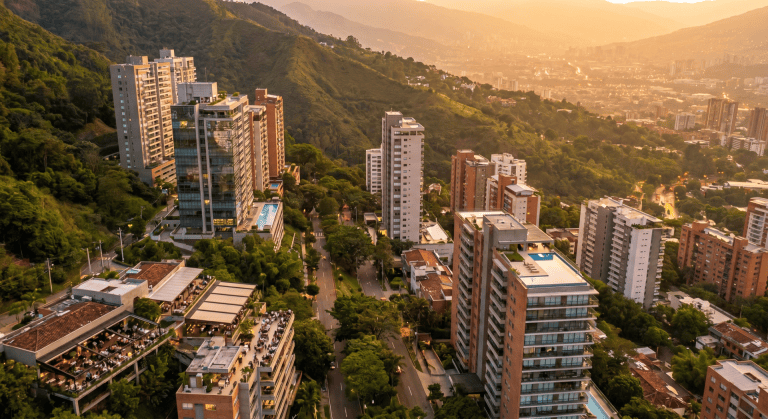 El Poblado’s towers, and the valley the whole city is folded into.
Understanding this distinction is the key to eating well in Medellín.
The two halves of eating here
El Poblado — Contemporary · $20–40 USD per person
El Poblado (and specifically the Provenza pocket) is where the contemporary restaurant scene concentrates — design-forward, internationally trained chefs, menus built around local produce with global technique, the kind of brunch culture that has Instagram consequences. The quality ceiling here is high and the prices reflect it: $20-40 USD per person at the serious restaurants, with the top tasting-menu options going considerably higher.
Laureles — Traditional · 18,000–28,000 COP set lunch
West of the city center on the other side of the metro, Laureles is where traditional Antioquian cooking is most reliably found at prices that make sense — family restaurants on Calle 33 and Avenida 70 serving bandeja paisa and set lunch menus for 18,000-28,000 COP (roughly $4-7 USD). Bakeries selling pan de bono and almojábanas at 7am alongside strong Colombian coffee. The pace is slower. The food is more honest about what it actually is.
First-time visitors mostly end up eating in El Poblado. Returning visitors and longer-stay residents often find themselves in Laureles.
The serious kitchen: OCI.mde
L’Astrance technique, Antioquian produce
Redman: the local secret
What El Poblado keeps for itself
 The Aburrá Valley after dark — the view the Los Balsos terraces are built around.
The serious tables, and what to order at them


The scene everyone is talking about
Three venues, one building, not really about the food
This belongs in a 2026 Medellín food guide even if it feels like tabloid gossip, because it's genuinely one of the most discussed openings in the city this year: Colombian pop superstar Karol G has opened three venues in a single El Poblado building.
Karol G’s three rooms
Carolina — Restaurant
A glamorous Caribbean-inspired restaurant with Havana aesthetics, live music, and decor that references Celia Cruz.
Provenza — Rooftop bar
Confusingly, sharing its name with the famous street — an open-air rooftop bar built for sunset cocktails.
El Callejón del Gato — Nightclub
The nightclub underneath it all.
Raw bar and ceviche: Krudo
The Nikkei wave reaches El Poblado
After dark in El Poblado


Coffee culture: the context
Why the good Colombian coffee had to come home

Medellín sits in one of the most important coffee-producing regions in the world — the Eje Cafetero is about 90 minutes away — and the specialty coffee culture in El Poblado and Laureles reflects that proximity. Pergamino is the flagship, but the broader scene is genuinely excellent: single-origin espresso, pour-over, chemex, cold brew from Colombian lots that are available nowhere else.
Traditional breakfast
Yuca starch, corn flour, and a tinto
The Antioquian breakfast, in three
Pan de bono — Hot from the oven
Small, cheesy bread rolls made from yuca starch and fresh cheese, best eaten hot from the oven.
Almojábanas — The corn-flour cousin
Similar to pan de bono, but made with corn flour.
Buñuelos — Best at 7am
Small, fried cheese fritters, specific to Colombia and particularly to Antioquia — sold from bakeries and street carts, best at 7am when they're fresh and hot. They taste exactly like what they are: warm, slightly salty, crispy on the outside and molten inside. December is buñuelo season; everywhere you look.
Pan de bono and almojábanas are the Antioquian breakfast staples — found at bakeries throughout both El Poblado and Laureles from early morning. They cost a few thousand pesos each and pair correctly with a tinto. This is the morning of the city's residents, not the hotel buffet.
What to actually order
A short decision table
A brief ordering guide for navigating the full range:
If you want … order
| If you want | Order or go to |
|---|---|
| Traditional Antioquian | Bandeja paisa at lunch in Laureles (not the tourist version in El Poblado), arepas, tamales on Sundays (traditionally a Sunday morning food across Antioquia), sancocho (a long-simmered stew of chicken or beef with yuca, corn, and plantain) |
| Contemporary Colombian | OCI.mde, Sambombi, or Redman, depending on your budget and patience for the drive |
| Brunch | Pergamino, or any serious café in El Poblado or Laureles with an outdoor terrace on a Sunday morning |
| Nightlife dining | Karol G's venues for the experience, Mondongo's for comfort food that will save you from a bad decision elsewhere |
The full day of eating
Five stops, 7am to late
A practical sequence that builds a complete picture of what Medellín's food culture actually is:
One day, five stops
A Medellín day, in three plates


Markets and ingredients
Where the city’s cooks actually shop
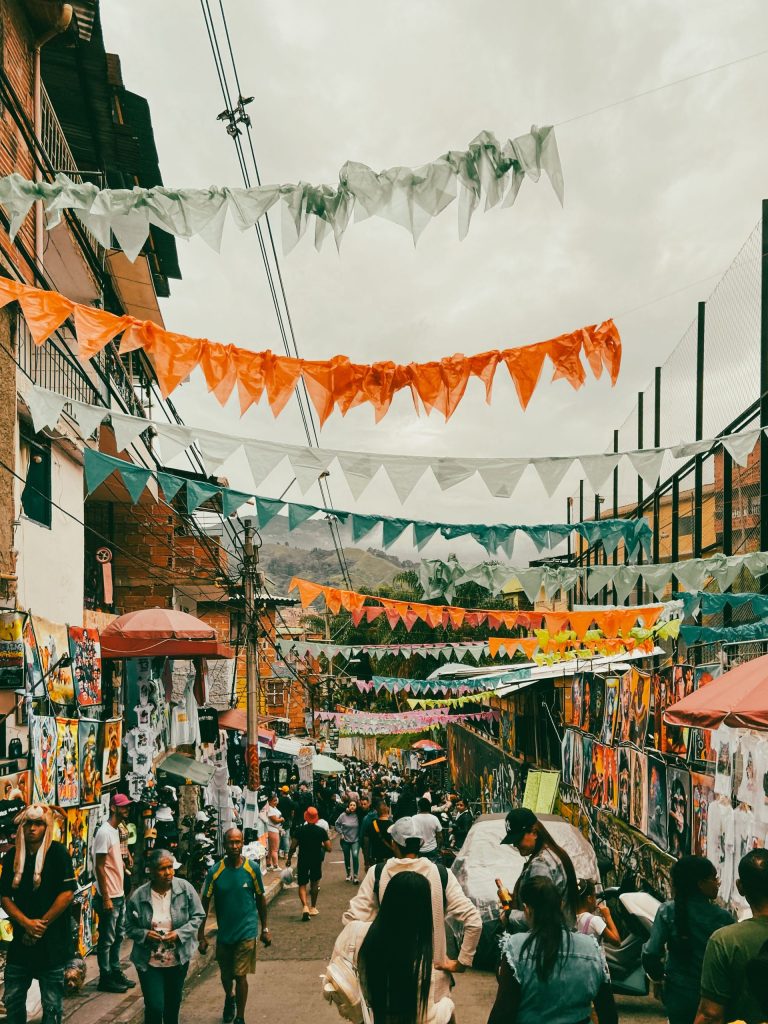 Market mornings at Plaza Minorista, where the city’s kitchens buy.
Plaza Minorista in the city center is Medellín's main food market — produce, chiles, tropical fruits, herbs, the kind of place where the city's cooks actually shop rather than a market designed for visitors to photograph. Worth a morning visit specifically to see the range of Colombian produce: guanábana, lulo, uchuva (cape gooseberry), borojó, chontaduro, varieties of plantain and yuca and potato that don't have English names because they don't exist outside of the Andes.
The bottom line
Eat the traditional version first
Medellín's food scene is one of the most genuinely exciting in Latin America right now — not because it's chasing the global fine-dining format, but because a generation of chefs has decided to go deeper into what Colombian ingredients and Antioquian culinary tradition can do with serious technique behind them. The bandeja paisa and the OCI.mde tasting menu exist in the same city for a reason: they're both honest expressions of where this place has been and where it's going.
Before you go
What is the most famous food in Medellín?
The bandeja paisa, the flagship dish of Antioquia: beans, chicharrón, grilled steak or ground beef, rice, a fried egg, avocado, fried plantain and a corn arepa, sometimes with blood sausage, all on one very large plate. Eat it at lunch in a Laureles family restaurant.
Should you eat in El Poblado or Laureles?
Both, for different things. El Poblado, especially around Provenza, is where the contemporary restaurants and brunch spots are, at around $20 to $40 per person. Laureles is where traditional Antioquian cooking is most reliable and cheapest, with set lunches for 18,000 to 28,000 COP.
What is the best restaurant in Medellín?
OCI.mde in Los Balsos makes the strongest case. Chef Laura Londoño trained at L'Astrance in Paris and cooks precise, seasonal food with Colombian highland produce; the slow-cooked short ribs are the dish people talk about. Book ahead. Sambombi Bistró Local is the more affordable alternative.
How much does it cost to eat in Medellín?
A set lunch in Laureles runs 18,000 to 28,000 COP, roughly $4 to $7. Serious restaurants in El Poblado cost $20 to $40 per person, and tasting menus go considerably higher. Pan de bono and buñuelos cost a few thousand pesos each.
Where can you get the best coffee in Medellín?
Pergamino in El Poblado is the flagship: it roasts Colombian single-origin lots in-house and has a weekend queue worth joining. For somewhere calmer, try 71Haus and Blunch in Laureles. The tinto sold everywhere is a small, sweet daily coffee, not specialty coffee.
What do people eat for breakfast in Medellín?
Pan de bono, the cheesy yuca-starch rolls, and almojábanas, their corn-flour cousin, with a tinto. Look out for buñuelos too, the fried cheese fritters that are best at 7am and everywhere in December.
When should you eat bandeja paisa?
At lunch, not dinner. It's a huge plate built for a working day, so give yourself the afternoon to recover.
Is Karol G's restaurant in Medellín worth visiting?
Go for the scene rather than the food. Carolina, her Caribbean-inspired restaurant in El Poblado, has live music and solid fusion-Colombian food, with a rooftop bar and a nightclub in the same building. It's a nightlife experience more than a gastronomic one.
Keep going
Sources
First-hand eating in Laureles, El Poblado and Los Balsos · Medellín’s official city tourism site · ProColombia — Colombia Travel · Alcaldía de Medellín · UNESCO — Coffee Cultural Landscape of Colombia, inscribed 2011 · Federación Nacional de Cafeteros de Colombia · Latin America’s 50 Best Restaurants · CDC — food and water safety for travellers · WHO — food safety fact sheet · UK FCDO — Colombia travel advice · CIA World Factbook
We will tell you whether we can help and send a written quote before any paid work begins.