
The best things to do in Medellín combine the city’s public spaces, mountain setting, neighborhood history, food, and easy day trips. This guide organizes the main attractions by area and time commitment, with practical notes on transport, booking, and safety. It is designed to help you build a balanced first visit instead of racing between disconnected highlights.


Colombia / Medellín / Things to do · 13 min read
In 1991 this was the most dangerous city in the world.
The cable car you ride to the hillside comunas is the clearest thing to understand about what changed — and it costs a normal metro fare.
Jump to what you came for
Medellín at a glance
A city that rebuilt itself, and what that leaves you to do
The best things to do in Medellin are to ride the Metrocable, understand Comuna 13 with a local guide, explore the Botanical Garden and Plaza Botero, spend time in Laureles and take a weekday trip to Guatapé. Allow three to four days and check the official Medellín tourism website for current events and visitor information.
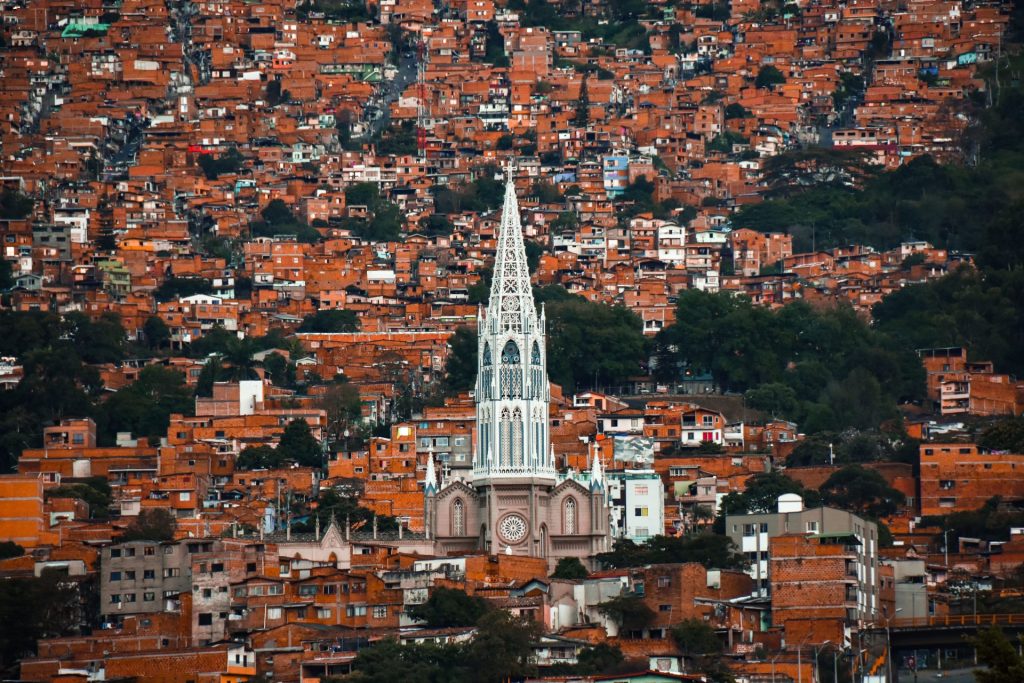 The hillside comunas — where the transformation is easiest to see.
In 1991, Medellín had the highest murder rate of any city on the planet. By 2013, it had won the Urban Land Institute’s Most Innovative City award, beating New York and Tel Aviv. In 2025, it welcomed 1.2 million international visitors. Pablo Escobar has been dead for 33 years, and the city where he was the most powerful criminal in the world has spent those three decades doing something extraordinary — which is not forgetting, exactly, but rebuilding on top of.
Understanding this arc isn’t optional context for a visit to Medellín. It’s the whole point. The cable cars that connect the hillside comunas to the city center, the outdoor escalators in the steep streets of Comuna 13, the metrocable libraries in neighborhoods that didn’t have running water twenty years ago — all of it is the visible result of a deliberate, city-wide decision to use public architecture and infrastructure as the tools of transformation. There’s nowhere else in the world quite like it.
This is what you actually come to Medellín for. Here’s how to spend your time.
The city that rebuilt itself


The short answers
| Thing | The short answer | Worth knowing |
|---|---|---|
| Where to base yourself | El Poblado for a short stay | Laureles if you are staying more than a week |
| The ride to take first | Línea K to Parque Arví | About 45 minutes each way, at the normal metro fare |
| The neighborhood | Comuna 13 | Go early morning; read what the murals actually say |
| The day trip | Guatapé | 90 minutes east; 740 steps up the Peñol Rock |
| The museum | Museo Casa de la Memoria | An honest account of the conflict, not a triumph story |
| Free and central | Plaza Botero | 23 bronze sculptures, always open |
| The architecture | Orquideorama, Jardín Botánico | 14 hectares in the middle of the city |
| Weather | 20–28°C year round | The City of Eternal Spring nickname is accurate |
| Getting around | Metro, metrocable, Uber or InDriver | Walkable within neighborhoods, not between them |
Ride the metro and the Metrocable first
Public transport first, viewpoint second
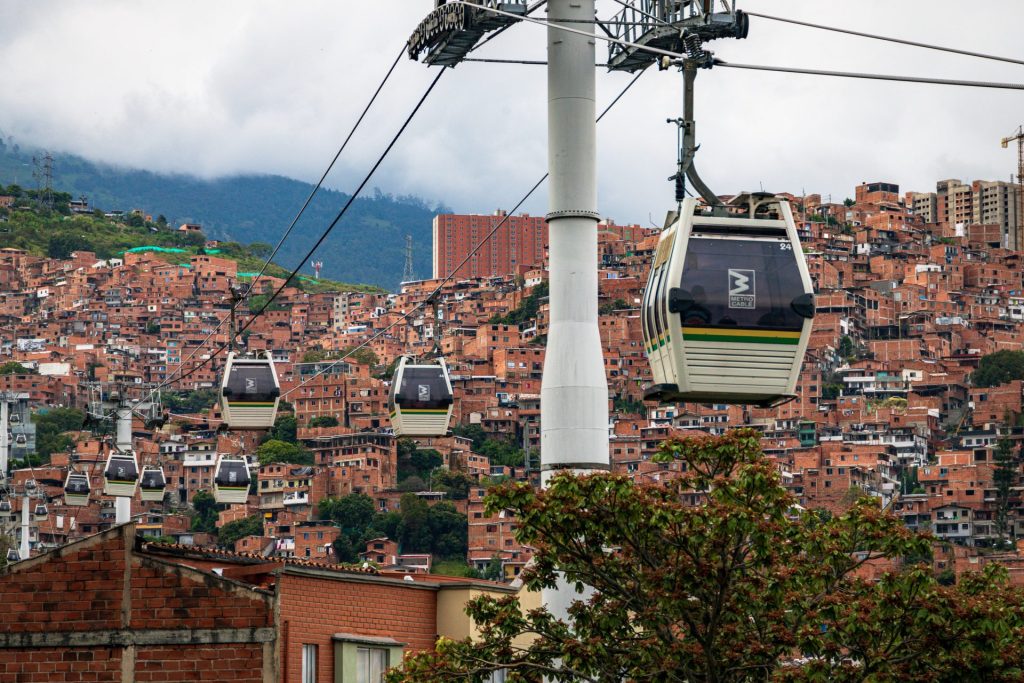 The metrocable is public transport first and a viewpoint second.
Before you go anywhere specifically, ride the metro. Medellín’s system is one of the most genuinely impressive pieces of public infrastructure in Latin America — clean, fast, consistent, and built in a city where most observers in 1991 would have said it was impossible. The aerial cable cars (metrocable) extend it into the hillside neighborhoods that were previously only reachable by walking steep streets or riding informal transport.
Take the Línea K cable car from Acevedo station up through the northeastern comunas to Parque Arví, a large nature reserve above the city with hiking trails, market stalls, and extraordinary views down over the Aburrá Valley. The entire journey — from the city center metro to Parque Arví — takes about 45 minutes one way and costs roughly the same as any other metro trip.
Medellín: El Poblado, Laureles and the Centro
Comuna 13: not just for the murals
Go early, and read what they actually say
Comuna 13 was, in the early 2000s, one of the most violent urban areas in Colombia — a hillside neighborhood controlled by multiple armed groups fighting over territory, the site of a 2002 military operation that left the community deeply scarred. Today it’s one of the most visited neighborhoods in the city, famous for its outdoor escalators (built to replace the exhausting climb up the steep hillside), its extraordinary street murals, and its hip-hop culture that emerged from the community itself during the years of conflict.
Doing Comuna 13 properly
Go early morning.
The tour groups arrive in waves from mid-morning onwards.
Read the murals rather than only photographing them.
They are making specific political arguments about this neighborhood’s history.
Take the outdoor escalator.
It is one of the more novel urban experiences available anywhere.

El Poblado: the base that works for everyone
Convenient, dense, and not the whole city
 El Poblado: the densest concentration of everything a visitor needs.
El Poblado is where most visitors base themselves, and the reasons are clear: the densest concentration of restaurants, bars, coworking spaces, and hotels in the city, within a walkable area with the Parque Lleras and Provenza street at the center.
Laureles: the alternative that is actually better
Flatter, cheaper, and genuinely residential
If you’ve read one guidebook about Medellín you’ve read about El Poblado. What you’ve probably not read is that most people who stay there for longer than a week quietly migrate to Laureles.
Laureles is west of the city center, flatter than El Poblado, built on tree-lined streets with a neighborhood rhythm that’s genuinely residential — traditional bakeries selling pan de bono and almojábanas at 7am, family restaurants serving bandeja paisa at lunch, the kind of Saturday morning that feels like a real city rather than a tourist zone. It’s not as dense with bars and international restaurants, but the baseline quality of food and coffee is comparable and the prices are meaningfully lower.
Everyday Medellín


The Botanical Garden and Parque Explora
Fourteen hectares in the middle of the city
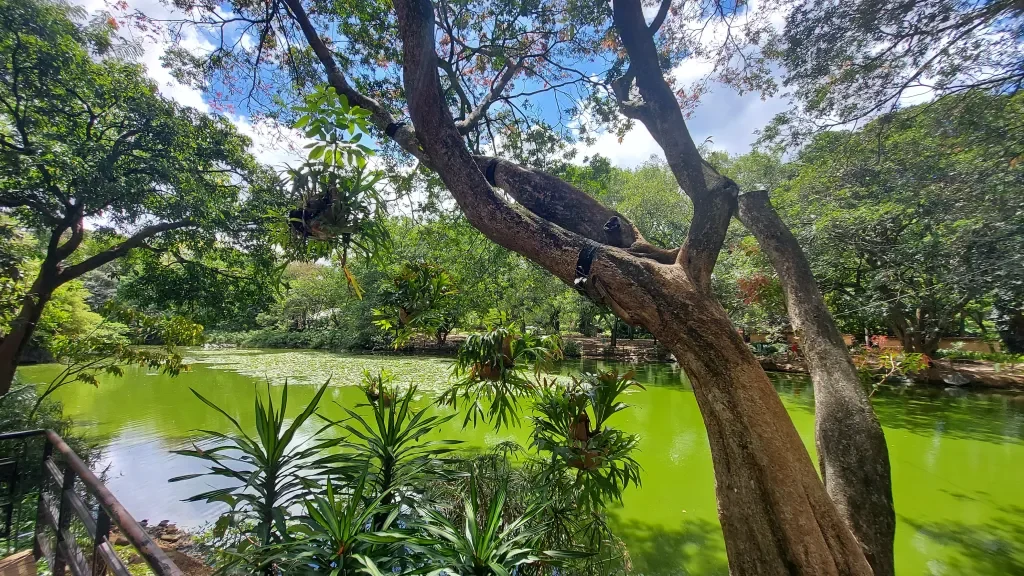 Fourteen hectares of tropical garden in the middle of the city.
The Jardín Botánico de Medellín is a 14-hectare tropical garden in the center of the city, free on some days and very cheap otherwise, with a remarkable collection of orchids (the national flower of Colombia), a butterfly pavilion, and the extraordinary “Orquideorama” — a wood lattice canopy structure built by the Plan B architecture firm, one of the most celebrated pieces of contemporary Latin American architecture, providing shade over the garden’s main plaza while functioning as a habitat for epiphytic plants. Walk under it slowly. It’s genuinely extraordinary.
Guatapé: the non-negotiable day trip
Ninety minutes east, 740 steps up
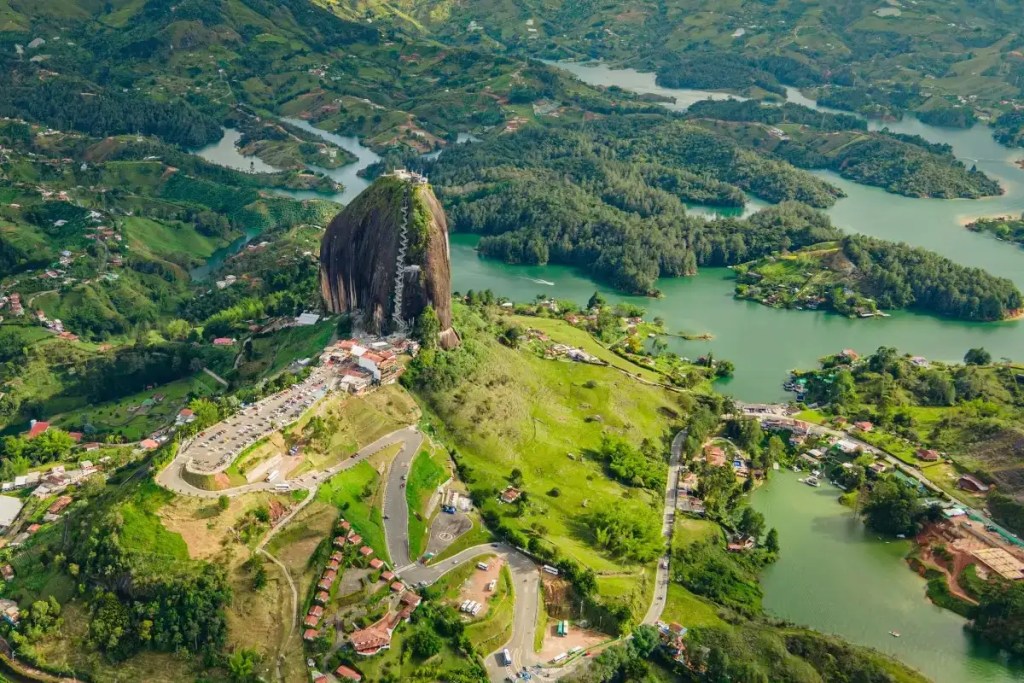 The Peñol Rock above the reservoir that flooded the valley in the 1970s.
About 90 minutes east of Medellín by bus or organized day trip, Guatapé is the most consistently recommended day excursion from the city — and one of the more striking natural spectacles in Colombia.
The Peñol Rock (La Piedra del Peñol) is a 220-meter granite monolith rising from a reservoir created by flooding the surrounding valley in the 1970s. Climbing it — 740 steps cut directly into a crack in the rock — gives you a view over a landscape of flooded valleys, dozens of islands, and multicolored boat houses that is genuinely unlike anything else in South America.
The town of Guatapé below the rock is painted floor-to-ceiling in brightly colored zocalos — relief panels depicting local scenes and stories that cover the base of every building on every street. It’s one of the more cheerful urban environments you’ll walk through anywhere.
Out of the city


The Transformation Museum and remembrance
An honest account, not a triumph story
For a more considered engagement with what Medellín has been through: the Museo Casa de la Memoria is a museum dedicated to the armed conflict that defined the city and country through much of the late 20th century. It’s not a triumphalist story of transformation — it’s an honest, sometimes difficult account of what the violence actually was and what it cost. One of the more important museums in Latin America for understanding contemporary Colombian history.
A few honest trade-offs
What the city asks of you in return
Medellín at peak weekend energy — Friday and Saturday nights in El Poblado — can feel more like an international party destination than a Colombian city. The bar scene around Parque Lleras pulls in a large bachelorette and international crowd that has less to do with the city itself and more to do with Medellín’s reputation as a party destination. This isn’t a criticism of anyone’s priorities, but worth knowing if your interest is in the transformation narrative rather than the rooftop bar scene.
The city’s size means you need the metro and ride-share apps (Uber and InDriver both operate here) rather than treating it as entirely walkable. El Poblado is walkable within itself; everything else requires transit.
Nightlife: what works and what does not
El Poblado on a Saturday is not the only version
 The valley after dark — the part of the night that is free.
Medellín’s nightlife reputation precedes it — specifically El Poblado’s Parque Lleras area, which draws a large international crowd, plus Karol G’s three-venue complex that opened in 2026 and became one of the most talked-about entertainment destinations in the city.
The honest framework: El Poblado on a Friday or Saturday night is loud, crowded, and fun in a way that has less to do with Colombian culture and more to do with what happens when an international party destination reaches critical mass. It’s a good night out; it’s not a specifically Medellín night out.
For something more genuinely local: the salsa clubs in the Prado neighborhood, the bars in Laureles that are aimed at professional-class Colombians rather than tourists, the small jazz venues in the city center. Ask your accommodation for specific recommendations based on current programming — the good spots rotate and the current local knowledge is always better than a guide written six months ago.
Security notes for a night out
Keep your phone in your pocket on the street in El Poblado,
particularly after midnight. Phone snatching in the nightlife areas is the most consistent complaint from visitors who’ve had an incident.
Don’t walk home or flag a street taxi late.
Use Uber or InDriver instead; the app-based options are also more transparent on pricing.
Practical Medellín
Transit, timing and the one week to avoid
Getting around: the metro covers the main axis from the north to the south, with cable cars branching into the hillside neighborhoods. Uber and InDriver (both operating in Medellín as of 2026) fill the gaps. Street taxis are available but the app-based options are more transparent on pricing.
When to visit: Medellín genuinely has spring weather year-round (20–28°C), which makes the “best time” question mostly about events rather than climate. The Feria de las Flores (Flower Festival) in August is Medellín’s most famous annual event — a week of parades, flower exhibitions, and the famous Desfile de Silleteros where farmers from the surrounding mountains carry elaborate flower arrangements down the main avenue. Plan well ahead if this is your target.
Before you go
Ride the Línea K cable car on your first morning.
It orients you to the shape of the valley better than any map.
Keep Guatapé for a weekday.
Weekends and Colombian public holidays fill the rock and the town.
Book well ahead for August.
The Feria de las Flores fills the city.
Set up Uber or InDriver before you arrive.
You will use them between neighborhoods, especially at night.
The bottom line
Engage with what the city actually is
Medellín rewards people who engage with what it actually is rather than what they expected from the Narcos era or the Instagram era. The transformation is real. The infrastructure is genuinely impressive. The food and coffee are excellent. The creative energy — the architects, the chefs, the musicians, the graffiti artists in the comunas — is specific to this city and this moment.
Stay long enough that El Poblado starts feeling like one neighborhood rather than the whole city.
Before you go
How many days do you need in Medellín?
Three to four days covers the metrocable, Comuna 13, the botanical garden and a full day in Guatapé. A week lets you move beyond El Poblado into Laureles and the city center, which is where most people say the trip actually got good.
Is Medellín safe for tourists in 2026?
The city is far from its 1991 reputation, and normal urban caution covers most of it. The most consistent complaint from visitors is phone snatching in the El Poblado nightlife areas after midnight — keep your phone in your pocket on the street and use Uber or InDriver rather than walking home or flagging a street taxi late.
Should you stay in El Poblado or Laureles?
El Poblado for a first visit or a short stay: it has the densest concentration of restaurants, bars, coworking and hotels, all walkable. Laureles for anything longer — flatter, quieter, meaningfully cheaper, and genuinely residential.
Is Comuna 13 worth visiting?
Yes, with clear eyes. It is busy and heavily touristed now, but the murals are extraordinary and make specific political arguments rooted in the neighborhood’s own history. Go early morning, before the tour groups arrive in waves.
How do you get to Guatapé from Medellín?
It is about 90 minutes east by bus or organized day trip, and the organized trips include transport. Go on a weekday: weekends and Colombian public holidays can feel overwhelming at the rock and in the town.
What is the Metrocable and is it worth riding?
The metrocable is the aerial cable car network that extends the metro into the hillside comunas. Take Línea K from Acevedo up to Parque Arví — about 45 minutes one way at the normal metro fare, and one of the most spectacular urban transit rides anywhere.
What is the best time of year to visit Medellín?
The climate is roughly 20–28°C every month, so timing is about events rather than weather. The Feria de las Flores in August is the biggest week of the year and needs planning well ahead.
How do you get around Medellín?
The metro runs the length of the valley with cable cars branching into the hills, and Uber and InDriver fill the gaps. El Poblado is walkable within itself; getting between neighborhoods is not.
Keep going
Sources
First-hand time in El Poblado, Laureles, the Centro and Guatapé · Medellín’s official city tourism site · Metro de Medellín — lines and Metrocable · Alcaldía de Medellín · ProColombia — Colombia Travel · UK FCDO — Colombia travel advice · US State Department — travel advisories · Smartraveller — Australian government advice · CDC — Travelers’ Health · UNESCO — Coffee Cultural Landscape of Colombia · CIA World Factbook
We will tell you whether we can help and send a written quote before any paid work begins.