Paris has twenty arrondissements and a tourist industry that’s spent decades telling you to stay in the wrong half of them. The honest version is simpler: the city’s best neighborhoods for visitors concentrate in a roughly spiral-shaped core running from the 1st through the 9th and 11th, with one standout exception in the 18th (Montmartre), and a few genuinely good reasons to go further out if you’ve been before. Everything else on most “best neighborhoods” lists is padding.
Quick Answer: Where to Stay in Paris by Neighborhood
Where to stay in Paris by neighborhood depends on your first priority: choose Le Marais for the safest all-round base, Saint-Germain for elegance and Left Bank atmosphere, the 11th for food and nightlife, Montmartre for romance if you accept the hills, the 2nd for central value, and the Latin Quarter for families or tighter budgets. First-timers should usually stay in Le Marais, Saint-Germain, the 2nd, or the Latin Quarter rather than chasing a hotel beside one monument.
- Best first-time base: Le Marais.
- Best romantic base: Saint-Germain or upper Montmartre.
- Best food base: the 11th arrondissement.
- Best value central base: the 2nd arrondissement.
- Best family/budget base: the Latin Quarter.
For a first Paris trip, book Le Marais if you want the best balance of location, restaurants, nightlife, and walkability. If you are deciding where to stay in Paris by neighborhood, choose Saint-Germain for a quieter Left Bank stay, the 2nd for central value, the 11th for food, Montmartre for romance with hills, and the Latin Quarter for families or budget-conscious travelers.
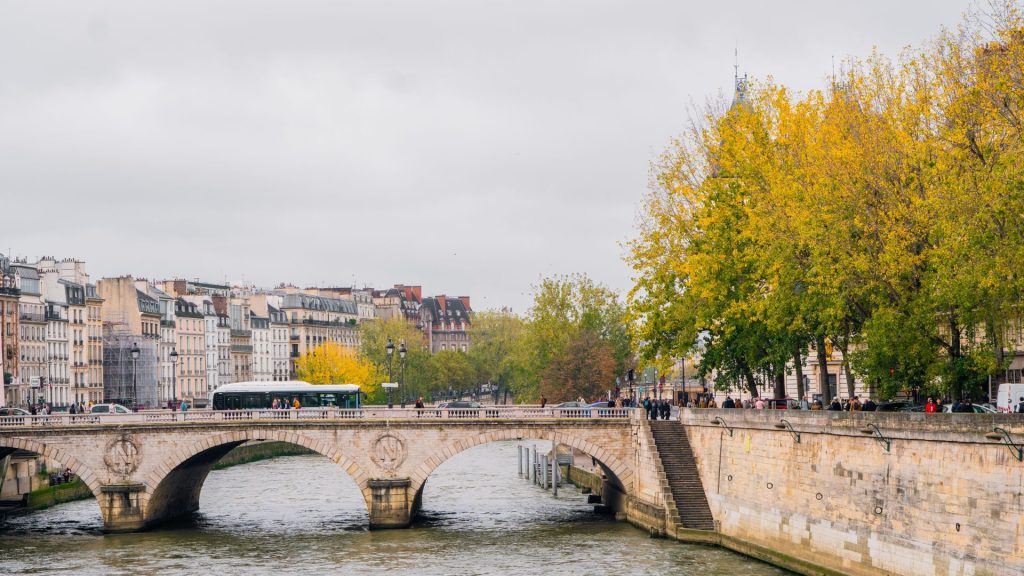
Here’s what actually separates one base from another — and why that choice shapes your trip more than any individual sight or restaurant.
The Single Most Important Thing Nobody Tells You
Paris is a city of hills. Not dramatic Alps-style hills, but enough of them that a poorly chosen base means adding twenty to thirty minutes to every journey home after a long day — specifically if you’re climbing toward Montmartre, Belleville, or parts of the 5th. The neighborhoods around the flat riverbank center (Marais, Île de la Cité, Châtelet/Les Halles, Saint-Germain) don’t have this problem. Factor it in before your luggage does.
Le Marais (3rd and 4th Arrondissements): The Best All-Round Bet
If you only want one answer, this is it. Le Marais is consistently cited by long-term Paris residents — not travel bloggers checking in for a week, but people who’ve lived here for years — as the single best neighborhood for visitors who want central, walkable, and genuinely atmospheric.
The medieval street plan survived more of Haussmann’s 19th-century rebuilding than many central districts, which means you get narrow lanes, beautiful historic mansions (the hôtels particuliers that gave the area its name), and courtyards that open unexpectedly onto peaceful squares. The Jewish Quarter on Rue des Rosiers is one of the most distinct cultural pockets in the city. The 4th is an LGBTQ+ hub with actual nightlife. The Marais is touristy, yes — a long-time Paris resident writes that it’s “great, so who cares?!” — and she means it. It’s also within easy walking distance of the Louvre, the Seine, the Bastille, and Notre Dame. Multiple metro lines run through it.
Hotel prices here range from around €250 on the lower end of mid-range to €500+ for premium options. It’s not budget territory, but the concentration of boutique hotels in historic buildings gives you better character per euro than most central alternatives.
Saint-Germain-des-Prés (6th): The Intellectual Paris of the Novels
Saint-Germain is where the postcard version of Paris most closely matches reality. Sartre and de Beauvoir at Les Deux Magots, Picasso in a nearby studio, the Luxembourg Gardens two blocks away, the Musée d’Orsay a short walk west, the Seine right there. Art galleries, antique shops, independent bookshops, the feel of a neighborhood that’s been literary for a century because it actually has been.
The honest trade-off: it’s expensive, one of the pricier areas to stay in the city, and the evenings lean sophisticated rather than lively. The 6th is elegant and walkable but notably quieter after 10pm than the Marais or the 11th. Good for couples who want refinement and calm. Less good for anyone whose second priority after sightseeing is a nightlife scene worth staying out for.
The 11th: Where the Food Is Actually Good
Here’s what most neighborhood guides won’t tell you directly: if eating well is your priority — not eating with a view, not eating where other tourists eat, but eating the food that Parisian chefs are actually excited about right now — the 11th arrondissement is where you want to be. Pair this section with our Paris cafés and bistros guide if food is shaping the trip.
Cheaper rents than the historic center have drawn a whole generation of serious cooks to Oberkampf, Saint-Ambroise, and the surrounding streets. Café du Coin, Recoin, Le Café de l’Usine, Septime, L’Arpaon — all in this arrondissement, all within walking distance of each other, none of them built for tourists. The nightlife around Oberkampf and Bastille is genuine, diverse, and unpretentious.
The trade-off: you’ll need the metro to reach the major sights. For first-timers who want to maximize sightseeing time, the 11th requires more planning than a central Marais base. For anyone who’s been to Paris before, or anyone for whom dinner matters as much as the Louvre, it’s one of the smartest choices in the city.
Montmartre (18th): Beautiful, Inconvenient, Worth It Conditionally
No neighborhood advice about Paris is complete without the Montmartre question, because it comes up constantly and the honest answer is more complicated than most guides admit.
Montmartre is genuinely beautiful. The village-scale lanes, the view from Sacré-Cœur on a clear morning before the tourist crowds arrive, the ivy-covered buildings and the old artists’ studios — this is Paris as it exists in the imagination, and it’s real. A 20-year Paris resident writes that the streets around Place du Tertre in the early morning, before the portrait-painter tours set up, are “as romantic as Paris gets.”
The caveats are real though: Montmartre is on a steep hill with romantic-but-demanding cobblestones. The tourist crowds around Sacré-Cœur from mid-morning onward can rival August in the Marais. And it’s a longer metro ride to most major sights than any of the neighborhoods above. The area closest to Pigalle at the bottom of the hill has street scenes that some travelers find uncomfortable, especially late at night — staying higher up the hill matters here more than in most other arrondissements.
Best for: couples, anyone for whom the Montmartre aesthetic is the specific Paris dream. Not ideal for: anyone who wants maximum sightseeing efficiency, families with young children, people who aren’t prepared for hills.
The Sleeper Pick: The 2nd Arrondissement
This is the kind of recommendation that only comes from someone who’s actually lived here. The 2nd arrondissement sits between the 1st (Louvre/Palais-Royal) and the trendy Marais, gets a fraction of either neighborhood’s tourist traffic, and holds some genuine treasures: Rue Montorgueil, a working market street where actual Parisians shop on Saturday mornings, surrounded by excellent cafés; the covered passages Vivienne and Colbert, Belle Époque glass-roofed arcades that are among the most atmospheric walking in the city; hotels that are “notably cheaper than the 1st for the same quality.”
A Paris-based local calls it a “sleeper pick for 2026” and the description holds up: it’s genuinely underused, genuinely central, and offers better value than either of its more famous neighbors.
The honest trade-off: no single iconic sight to anchor the neighborhood, and the southern end near Les Halles can feel slightly gritty at night. But if you’ve done the Marais before and want something less trafficked, the 2nd delivers.
The Latin Quarter (5th): Families and Budget Travelers Done Right
The Latin Quarter has fed and housed Paris’s students since the 12th century, and it shows in the best possible way: a dense concentration of affordable bistros, arthouse cinemas, philosophy cafés, budget hotels, and two of Paris’s most underrated parks (Jardin des Plantes and the Luxembourg Gardens, shared with Saint-Germain) within walking distance. The Panthéon, small Roman-era ruins, the Sorbonne — history is embedded in the streets without requiring a ticket to experience it.
It’s the best neighborhood for families, specifically over the Marais: the streets are more manageable, the parks give kids space to run, and the restaurant options are genuinely affordable without sacrificing quality. Budget travelers staying in the 5th are a short metro ride from everything without paying the premium attached to staying right at the center.
The atmosphere is student and literary rather than fashionable, which is either exactly what you want or not quite what you’re after.
| Neighborhood | Best for | Price | Verdict |
|---|---|---|---|
| Le Marais (3rd/4th) | All-round, walkable | €€–€€€ | Highly recommended |
| Saint-Germain (6th) | Elegance, literary Paris | €€€ | Highly recommended |
| The 11th | Food & nightlife | €€ | Worth the metro ride |
| Montmartre (18th) | Views, romance | €€ | Conditional pick |
| The 2nd | Value, fewer crowds | €€ | Highly recommended |
| Latin Quarter (5th) | Families, budget | €–€€ | Worth the metro ride |
Highly recommended works for almost any trip Worth the metro ride best if that trade-off matches your priority Conditional pick only if the specific draw matters more than convenience
The neighborhoods at a glance
Centered on Châtelet — roughly equidistant from Le Marais, Saint-Germain, and the Latin Quarter. Montmartre and the 11th sit a bit further out. Zoom and pan to explore.
Paris Neighborhood Costs and Transit Cheat Sheet
Hotel prices move hard with season, events, school holidays, and how early you book, but the neighborhood pattern is fairly consistent. Use this where to stay in Paris by neighborhood cheat sheet as a sanity check before paying a premium for the wrong base.
| Area | Typical hotel feel | Transit note | Best booking move |
|---|---|---|---|
| Le Marais | Boutique, central, expensive fast | Easy access to the Seine, Bastille, Louvre side, and multiple metro lines | Book early for spring and autumn |
| Saint-Germain | Polished, romantic, premium | Excellent for Left Bank walks and museums | Pay for atmosphere, not room size |
| 2nd arrondissement | Central value, fewer first-timers | Strong for north-south and east-west movement | Check it before defaulting to the 1st |
| 11th arrondissement | Better restaurants, less classic sightseeing | Metro-dependent for monuments, excellent for evenings | Choose near Oberkampf, Charonne, or Saint-Ambroise |
| Latin Quarter | Student, literary, more affordable | Good Left Bank connections, some hills | Best value for families who still want central Paris |
| Montmartre | Romantic, hilly, variable by exact street | Longer ride to many major sights | Stay higher up, not at the noisy base of the hill |
For route planning and current service changes, check the official RATP Paris transit site before locking in a hotel.
Where I Wouldn’t Send You
The 7th (near the Eiffel Tower): Prestigious, elegant, not convenient. The Eiffel Tower view is real, but the 7th is an embassy district that goes quiet early. Outside of Rue Cler (a good market street) and the immediate sight-seeing corridor, you’ll find yourself hopping the metro to other neighborhoods for any kind of evening atmosphere. Worth choosing only if the view genuinely matters more than convenience.
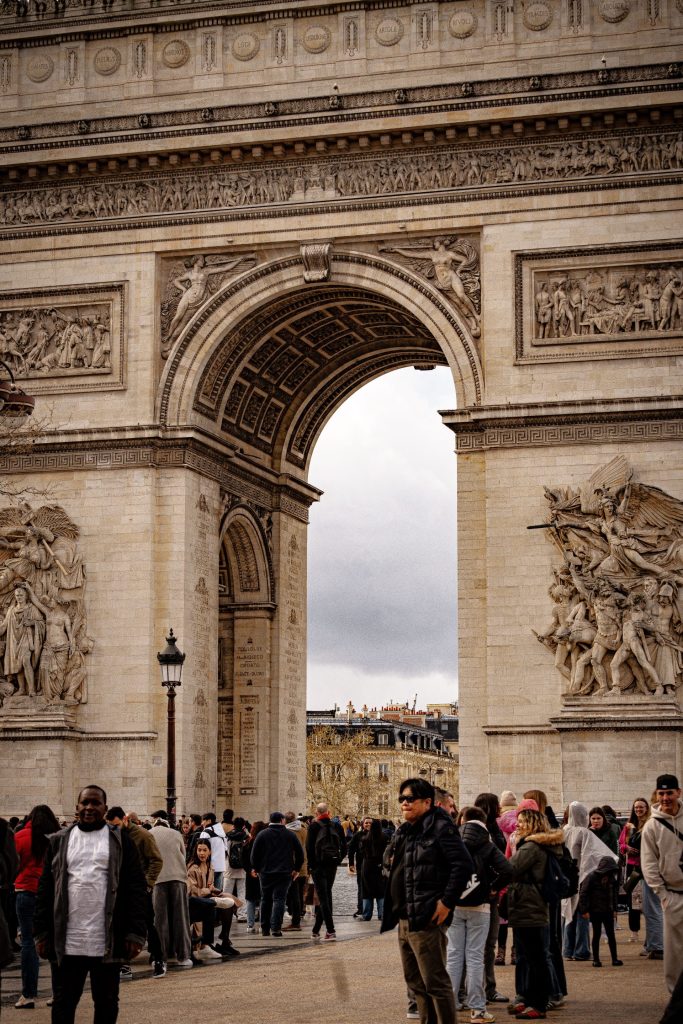
The Champs-Élysées area (8th): Beautiful avenue, expensive hotels, the most generic dining in the city. You’re paying for the address more than the experience.
Far outer arrondissements (15th, 19th, 20th): Fine if you’ve been many times and want a genuinely local base, confusing if it’s your first visit and you’re trying to figure out Paris’s geography while also managing metro connections.


Watch: Paris Neighborhoods Before You Book
Practical Things That Actually Matter
Book early. Paris hotels — especially good-value ones in Le Marais and Saint-Germain — fill up months ahead for spring and autumn, the two best seasons to visit. If your dates are fixed, sort the hotel before you finalize restaurants or activities.
The metro is genuinely excellent. Paris’s system is comprehensive, frequent, and fast enough that being two or three stops from a major sight is genuinely not a problem. Don’t let a hotel marketed as “steps from the Louvre” be the deciding factor when similar quality is available in a more interesting neighborhood for less. For current passes, service updates, and route planning, use the official RATP site.
Noise matters at night. The Marais quiets down reasonably early for a central neighborhood. Bairro Alto in Lisbon it is not. Oberkampf (11th) and Pigalle (lower 18th) are louder than they look on a map. Factor this in if you’re a light sleeper.
The 2nd arrondissement remains underbooked relative to its quality, which means you have a better shot at last-minute availability than in either the Marais or Saint-Germain.
For official planning basics, check Paris Je t’aime, the city’s official visitor site, confirm airport transfers through Paris Aéroport, and compare museum locations against your base before booking. If you are building a wider Europe itinerary, the same hotel-base logic applies in our Barcelona budget neighborhoods guide.
The Bottom Line
Choose Le Marais for an all-round, walkable, characterful base that won’t disappoint regardless of what kind of trip you’re having. Choose Saint-Germain for elegance, Left Bank atmosphere, and a specific literary Paris feeling that’s still real. Choose the 11th if eating well is as important to you as sightseeing. Choose Montmartre if the dream is specifically those morning cobblestones — with full knowledge of the hills and the commute. And look at the 2nd if you’ve been before and want the best-value central neighborhood that most visitors have never heard of.
The wrong choice isn’t usually a disaster. But the right one means your neighborhood feels like part of the trip rather than a corridor between attractions.
FAQ: Where to Stay in Paris by Neighborhood
What is the best neighborhood to stay in Paris for first-time visitors?
Le Marais is the best all-round neighborhood for most first-time visitors because it is central, walkable, atmospheric, and well connected by metro. For anyone asking where to stay in Paris by neighborhood, Saint-Germain is the more elegant Left Bank alternative, while the Latin Quarter can work better for families or tighter budgets.
Is it better to stay near the Eiffel Tower or in Le Marais?
For most visitors, Le Marais is a better base than staying beside the Eiffel Tower. The Eiffel Tower area is iconic for one sight, but Le Marais puts you closer to a wider mix of cafés, shops, restaurants, nightlife, the Seine, Notre Dame, and several metro lines.
Where should couples stay in Paris?
Couples should look first at Saint-Germain for elegance and calm, Le Marais for atmosphere and walkability, or upper Montmartre if the hilltop village feeling is the specific dream. Montmartre is beautiful, but the hills and commute make it a conditional choice.
Where should food-focused travelers stay in Paris?
Food-focused travelers should consider the 11th arrondissement, especially around Oberkampf, Charonne, and Saint-Ambroise. It is less convenient for classic sightseeing than Le Marais, but it is one of the strongest areas for modern bistros, natural wine bars, and local restaurants.
What Paris neighborhoods should tourists avoid staying in?
Most visitors should be cautious about staying far outside the central core if the only advantage is a cheaper room. Around major transport hubs, lower Pigalle, or remote outer arrondissements, check the exact street, late-night route, and metro connection before booking.
What is the best affordable area to stay in Paris?
The Latin Quarter is usually the best affordable central area for first-time visitors, especially families and travelers who want parks, bistros, and good metro access without Marais or Saint-Germain prices. The 2nd can also be excellent value if you find a well-priced room early.
Should I stay near Gare du Nord or another Paris train station?
Stay near a major train station only if you have an early departure or a very short overnight connection. For a normal Paris trip, choose the neighborhood you want to return to at night, then use the metro, RER, or taxi for station transfers.
Which Paris neighborhood is best connected by metro?
Le Marais, the 2nd, Châtelet/Les Halles, and the Latin Quarter are among the easiest bases for metro access because they sit near multiple lines and central transfer points. The 11th is also well connected, but it adds a few extra stops to classic sightseeing routes.
Related Paris and Europe Guides
Use these next if you are building the rest of the trip around food, hotels, and walkable city bases:
- Paris Cafés and Bistros: How the City Actually Eats
- Luxury Hotels in Barcelona: Where to Actually Stay
- Where to Stay in Barcelona on a Budget
- Best Restaurants in Rome: Where to Eat Well in 2026
- Greek Food in Athens: Best Tavernas and Local Dishes
A Note on Paris in 2024–2026
The post-Olympics hangover is real. Paris hosted the 2024 Summer Olympics and invested significantly in infrastructure, public transport, and city beautification. The central neighborhoods are cleaner and better-signed than they were five years ago. Hotel prices in peak season remain high — Paris has never been cheap to sleep in, and the Olympics-era demand spike reset some price floors upward. The 2nd arrondissement is where this price gap is most exploitable: a neighborhood that punches well above its accommodation costs thanks to location and character, still not on most first-timer itineraries, and worth the redirection.
Seasons That Actually Matter
Spring (April-May) and autumn (September-October) remain the best times to visit for weather and crowd management — not too hot, lighter tourist traffic than July-August, and the city at its most characteristically itself. Summer is fine but requires earlier reservations and higher budgets across all categories. Winter (November-February, excluding Christmas) is genuinely underrated: lower prices, short queues at major sites, and a version of Parisian café culture that feels exactly right when it’s cold outside and you’re three minutes from the zinc counter with a café express.
Christmas week is its own chaotic category and should be priced and planned for separately.
Author: Álvaro M Llerena