
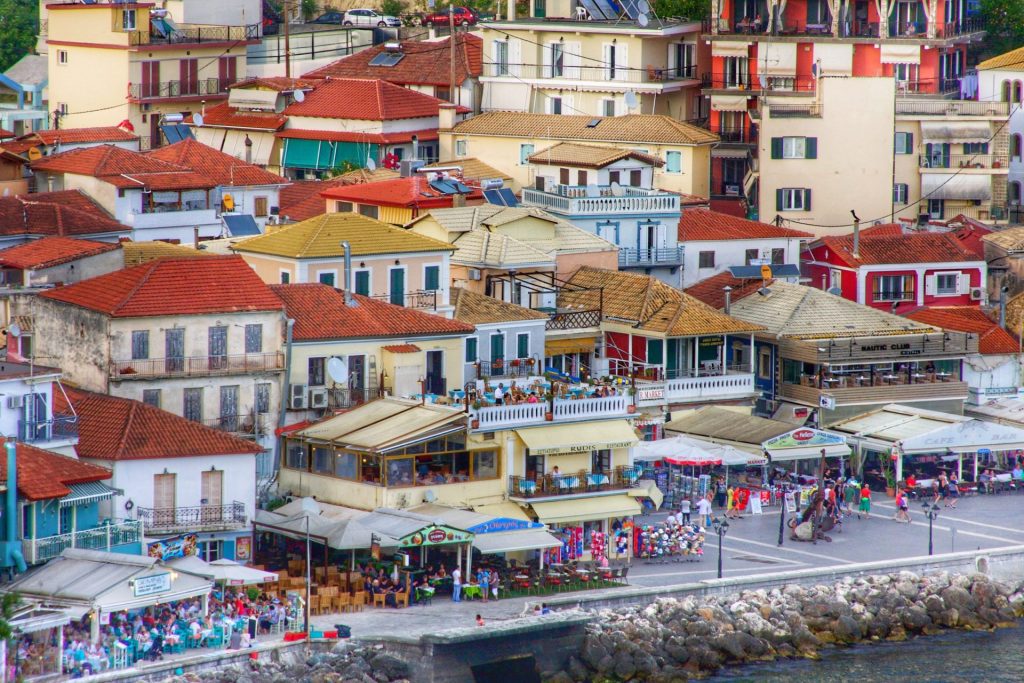

Greece / Athens / Food guide · 14 min read
The view does more work than the kitchen in most places under the Acropolis.
A cellar taverna with no sign, the market kitchens that open at dawn, and the souvlaki run that ends the night.
Know This First
Start with the old tavernas, add a market meal, and be careful with the polished menus under the Acropolis.
Greek food in Athens is best approached through old tavernas, market kitchens, meze rooms, late-night souvlaki counters, and neighborhood restaurants where the cooking still feels tied to daily life. This guide focuses on where to eat, what to order, and how to avoid the tourist-trap version of Athens dining.
For the best Greek food in Athens, start with old-school tavernas like Diporto, Oikonomou, and To Steki tou Ilia, then add a market meal, a meze stop at Karamanlidika, and a late souvlaki run. Stay cautious around the most polished menus directly under the Acropolis, where the view often does more work than the kitchen.
There's a tavern in central Athens with no sign on the door, no printed menu, and an owner who's been telling people what's cooking that day for longer than most of his customers have been alive. You find it by following the sound of live music down an alley and trusting that the smell means something. That's not a metaphor I'm reaching for — that's Diporto, and it's a better starting point for this guide than anything you'll find five minutes from the Acropolis.
Plaka, the postcard-pretty neighborhood under the Parthenon, is where most "best of Athens" lists point you first, and it's also where the food is the least interesting in the city. Staff stand in doorways waving menus at you. The bouzouki music is piped through speakers, not played by anyone in the room. None of that is where Athenians actually eat dinner, and you don't have to go far to fix it.
The Athens eating clock
Three rooms, and none of them are in Plaka
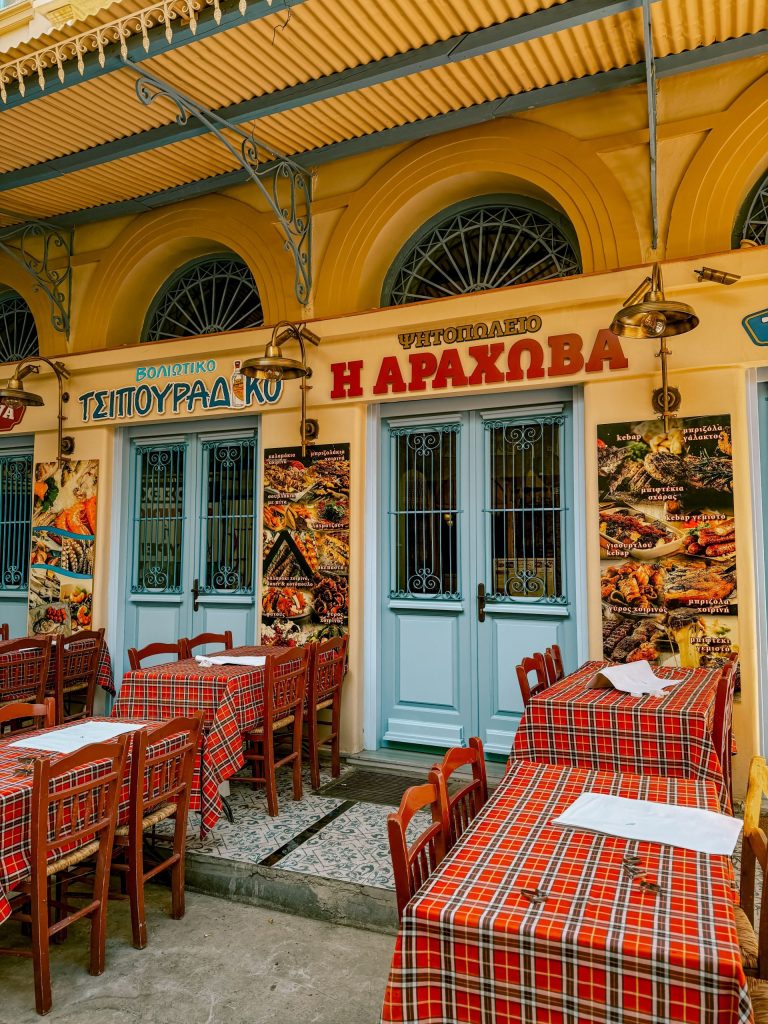 A taverna interior, which is the formatThe meze, which is how it starts
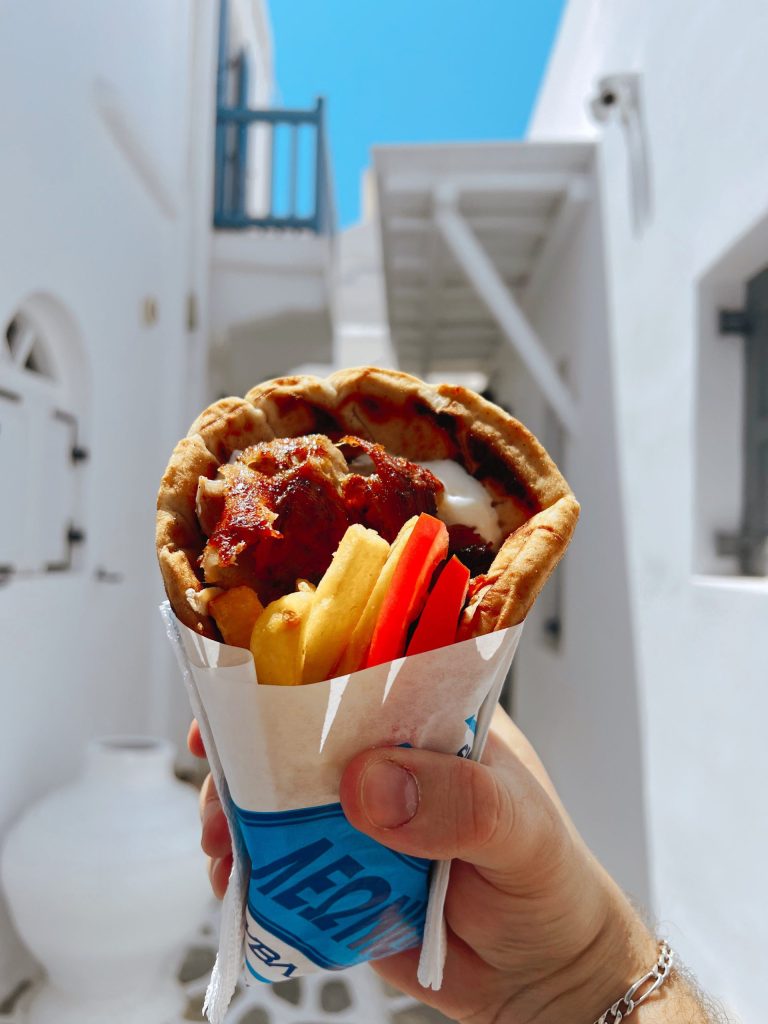 And Diporto, which has no sign at all
Diporto: 130 Years, No Sign, No Menu
A cellar tavern that has barely changed, where the owner tells you what is cooking.
Diporto is a cellar tavern that's remained largely unchanged for over a century, run by its beloved, famously curmudgeonly proprietor, who simply tells you what's available that day. One dish appears on almost every table: chickpeas stewed with onion, garlic, thyme, and rosemary, served with a wedge of feta still dripping in brine. To Athenians, that bowl tastes like home. It's not a polished experience, and that's exactly the point — this is what taverna culture looked like before anyone thought to make it presentable for visitors, and it's survived because the food never needed the polish in the first place.
On the map
The Tavernas Athenians Actually Return To
Lamb chops in Thisio, oven dishes in Petralona, cured meat in Psyrri.
Beyond Diporto, a handful of neighborhood spots come up again and again from people who actually live here, not from "best of" roundups copying each other.
To Steki tou Ilia, with locations in Thisio, does the lamb chops that locals describe without hesitation as the best in the city — and they mean it as a statement of fact, not an opinion up for debate. The vibe is loud, fast-moving, and entirely unconcerned with looking polished: this is a grill-and-wine-list operation, not a dining experience built around atmosphere.
Oikonomou, in Petralona, is the taverna to go to if you want the "someone's yiayia is in the kitchen" feeling — rustic cabbage rolls, slow-cooked vegetable casseroles, chicken stews with thick pasta, and lamb with potatoes that have soaked up every bit of pan juice. It's quiet, unpretentious, and built around oven dishes that take hours rather than anything grilled to order.
Karamanlidika, part deli and part tavern in one space, is the move if you want a meze-style spread built around exceptional cold cuts and cured meats rather than a single hot entrée. It's the kind of place where the deli counter and the dining room blur into each other, and the quality of what's hanging in the window tells you everything about what's coming to your table.
The Old Magereia and the Patsas Tradition
Before Athens had tavernas in the modern sense, it had cook-houses. A few are still going.
Before Athens had "tavernas" in the modern sense, it had magereia — kitchens where the philosophy of sharing food mattered more than fancy methods or specific ingredients. Most have disappeared. A few haven't.
Epirus, inside the Varvakeios Agora central market, is one of the last true magereia left in the city, and it's the most reliable place to try patsas — a soup built on beef, pork, or lamb tripe, traditionally eaten as a hangover remedy and served late into the night for both night owls and early-shift market workers. It's an acquired taste by design, but Epirus is unusually generous with vinegar and chile flakes on the side, which goes a long way toward making the dish click for a first-timer in a city that's generally spice-averse.
The New Gastro-Taverna Wave
A younger generation cooking Greek ingredients without the folklore.
A newer generation of Athenian kitchens has emerged over the past decade that respects everything above without being trapped by it — seasonal, local-producer-driven cooking that still feels like a taverna rather than a restaurant performing fine dining.
Ama Lachei, in Exarchia, is the clearest example: long tables, shared plates, a seasonally rotating menu of modern twists on traditional dishes, and genuinely strong vegetarian options that feel considered rather than like an afterthought. The atmosphere is casual and social in the specifically Athenian way — loud, warm, unconcerned with formality.
This broader gastro-taverna movement has been spreading even into northern suburbs like Maroussi, where it's historically been largely absent, which says something about how far this style of cooking has traveled from its Exarchia and Pangrati origins.
When You Want the Full Production
Younger than Paris or Rome, and the three worth booking are worth booking.
Athens' fine dining scene is younger than Barcelona's or Rome's, but it's moving fast — Greece now has twelve Michelin-starred restaurants, all currently concentrated in Athens, with the guide expanding to Santorini and Thessaloniki for the first time later in 2026.
Spondi, set in a neoclassical building with a vaulted stone dining room and courtyard, holds the distinction of being the first restaurant in Greece ever awarded a Michelin star, back in 2002. Its contemporary Mediterranean cooking has anchored the city's fine dining reputation for over two decades, and it remains one of the hardest reservations in the city to secure.
Delta, set inside the Stavros Niarchos Foundation Cultural Centre with views over Piraeus, holds Greece's only two Michelin stars. Chefs Giorgos Papazacharias and Thanos Feskos built the kitchen around fermentation and a distinct Nordic influence absorbed from years working in Scandinavian restaurants, applied to a thoroughly Greek pantry — sea urchin made from potato, fermented "white" pepper. It's conceptual, but it's never cold or detached from what it's actually built on.
Zillers, located opposite the Athens Cathedral with views of the Acropolis, holds one star and is something of a unicorn among the city's starred restaurants: it's the only one located right in the historic center rather than tucked into a residential neighborhood or coastal suburb. Chef Pavlos Kyriakis built the menu around "Greekness" specifically — a star dish of lamb smoked in sage alongside slow-cooked shoulder, served with a Cretan pasta variant fermented in sheep's buttermilk. It's refined, but it never loses the thread back to the food it's actually descended from.
Worth the hype? Yes, on all three. Book weeks ahead for weekends — Spondi and Delta in particular are consistently full — though lunch sittings tend to be easier to secure if your schedule allows it.
A Few Honest Trade-Offs
Every meal decision here comes down to convenience against cooking.
Every meal decision in Athens comes down to a real trade-off, and pretending otherwise sets you up for a worse trip.
Eat in Plaka and you'll get convenience and Acropolis views, paired with inflated prices and a kitchen built for turnover rather than care. Eat in Koukaki, Psyrri, Petralona, or Exarchia and you'll get better food and real local atmosphere, at the cost of a slightly longer walk and a menu that might only be in Greek — which, as more than one local guide points out, is usually a good sign rather than a problem.
Same goes for the late-dinner question specifically: Greeks routinely don't sit down for dinner until 9 or 10pm, and restaurants in central Athens that look dead at 7pm aren't bad — you're just early by local standards. Adjust your body clock, or accept a quiet, half-lit dining room that isn't representative of what the place actually feels like at full capacity.
What the neighbourhoods actually serve
 The classic plates, in a neighbourhood room
 The market stalls that supply them
 And the grill, which is most of the menu
Eating main meals in Plaka — convenient, always overpriced, mostly feeding people who will not come back. The kitchens know this.
Arriving before 8.30 or 9pm for dinner — Athenians sit down at nine or ten. Earlier and the room is empty.
The laminated multilingual menu exists for people who are only there once. A Greek-only board is almost always the better signal.
Judging by the view — directly under the Acropolis, the view does more work than the kitchen.
What to Actually Order
Five dishes that separate the people who ate well from the people who ate nearby.
A few dishes that separate the people who understand Greek food from the people working through a checklist:
Souvlaki — grilled meat on a skewer, with roots traced back over 3,000 years to Bronze Age Santorini. It's not a compromise meal; it's a legitimate, central part of how this city eats, day or night.
Fava — a puréed yellow split pea dish, most closely associated with Santorini but found across Athens, often plated with the island's other signature, a deeply concentrated homemade tomato paste.
Taramosalata — a dip built on cod roe blended with bread or potato, deceptively simple and easy to get wrong; the better versions have a light, almost fluffy texture rather than a dense paste.
Patsas — the tripe soup described above. Not for everyone on a first try, but genuinely worth attempting at a proper magereio like Epirus rather than a tourist-facing taverna's watered-down version.
Ladera — vegetables slow-cooked in olive oil and tomato sauce — okra, eggplant, green beans — the backbone of how Greek households actually eat on an ordinary Tuesday, and a good measure of whether a taverna kitchen takes its vegetable cooking seriously or treats it as filler.
Souvlaki — grilled skewer. Not a shortcut meal. The real thing, eaten standing up at Monastiraki at midnight.
Fava — yellow split pea purée. Ask for it with tomato paste on the side and olive oil on top.
Taramosalata — homemade only, the fluffy pale version. Avoid anything unnaturally pink.
Ladera — seasonal vegetables slow-cooked in olive oil. What Greek households actually eat on a Tuesday.
Revithia — chickpea stew. It is not on a menu. Just ask.
Street Food and the Late-Night Souvlaki Run
Monastiraki after midnight, a few euro, standing up.
Beyond sit-down tavernas, Athens has a genuine street food culture that's worth treating as a real meal, not a snack between sights.
Around Monastiraki, souvlaki stands do brisk, fast business all day, and at least one institution has built a reputation specifically on the 2am crowd — the kind of place that exists because Athenian nightlife runs late and people need fuel on the way home, not because a tourism board decided "street food experience" needed a flagship. If you're out past midnight and see a line at a souvlaki window, that's usually a better signal than any daytime review.
For something sweeter, loukoumades — Greek honey-soaked doughnuts, usually finished with cinnamon and crushed walnuts — are sold at dedicated stalls scattered through the central market areas, and they're worth treating as dessert in their own right rather than an afterthought you grab while walking to something else.
The late run, and what it costs
 Souvlaki at night, which is the point
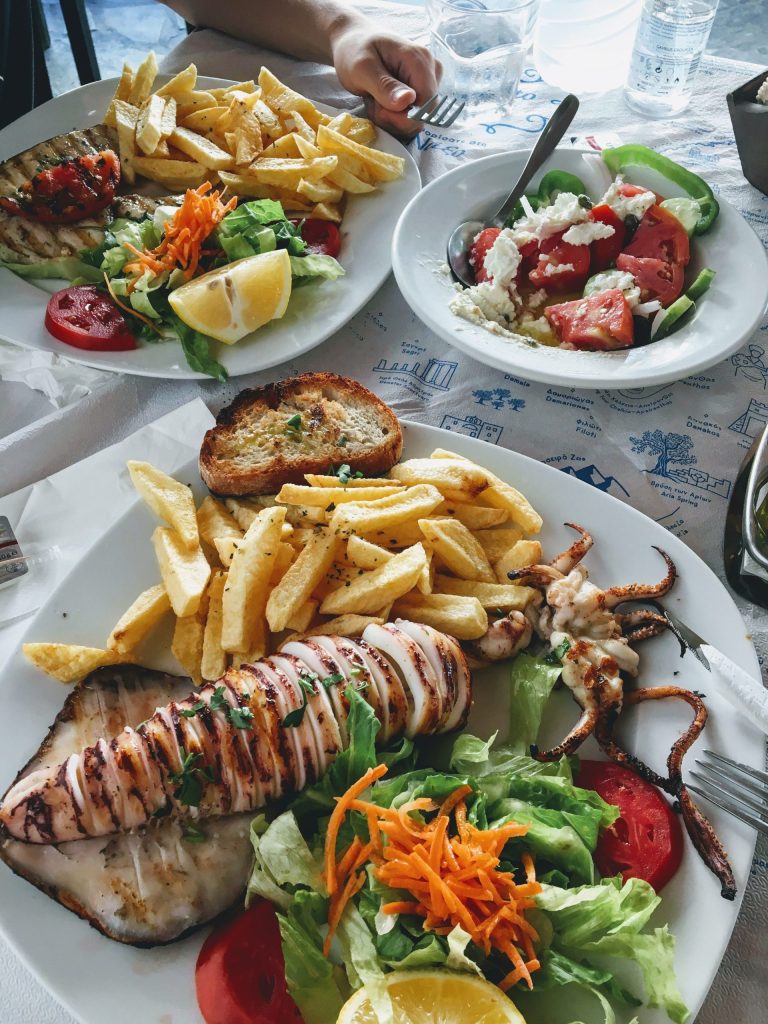
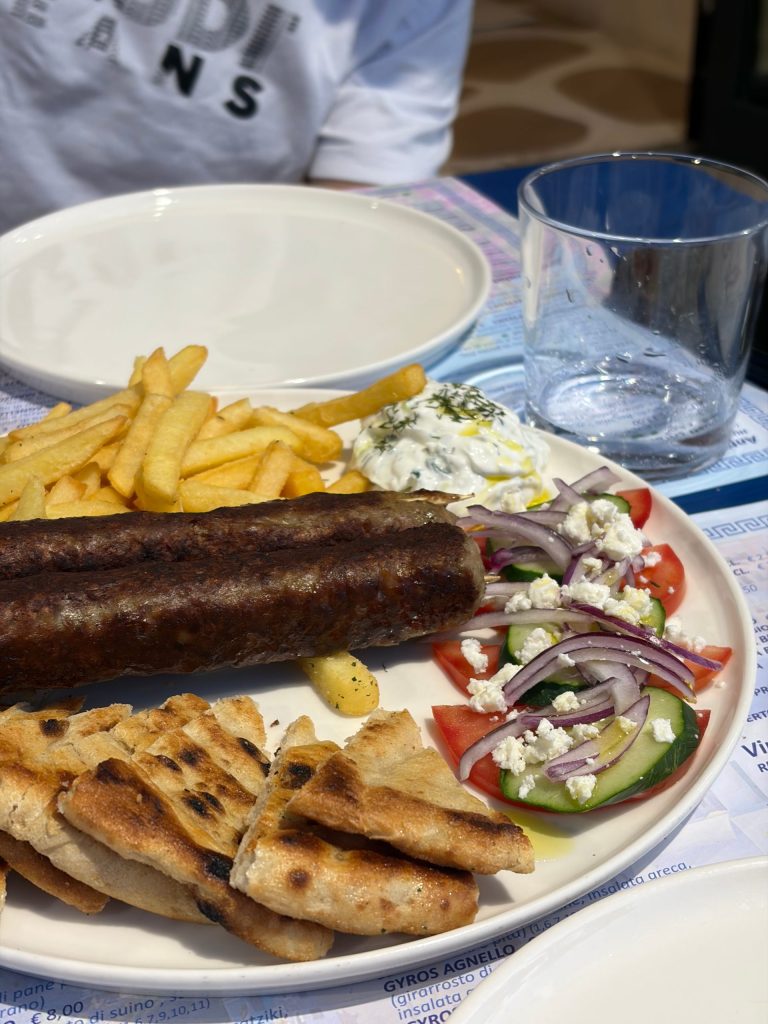 The seafood and the shared plates

How to Actually Eat Well Here
Eat late, base yourself in Koukaki, and follow the Greek-only board.
A few practical things that matter more than any single restaurant name:
Eat late if you want the real atmosphere. A 9 or 10pm dinner isn't a special late-night thing here — it's just dinner. Restaurants come alive after 9pm in a way that's genuinely different from the quieter, tourist-paced early evening.
Koukaki is the smartest base for value. It's a ten-minute walk from the Acropolis but priced and populated like a real residential neighborhood, which makes it one of the better places to base a few days of eating.
A proper taverna meal runs roughly €15-25 per person — Athens remains one of the more affordable European capitals for eating well, and budget options (souvlaki, bakeries, market food) run as low as €3-8.
Follow the Greek-only menu, not the multilingual one. It's not a hard and fast rule, but a menu with no English translation is consistently a better signal of who the kitchen is actually cooking for.
Athens Tavernas at a Glance
Each one, the area, what it is best for, the price and whether to book.
These four cover the main styles in this guide: a basement taverna with no menu, a lamb chop institution, a meze deli, and a neighbourhood cooking spot. Each earns its reputation for a different reason.
The Bottom Line
The best meal here probably has no view at all, and that is the point.
Greek food in Athens rewards travelers who slow down. Athens doesn't need you to discover its food scene — it's been feeding itself the same way for generations, long before anyone wrote a list about it. What it needs is for you to walk past the restaurants built for foot traffic under the Acropolis and into the neighborhoods where the lamb chops, the chickpea stew, and the patsas are made for people who'll be back again next week, not for people who'll never return.
The best Greek food in Athens probably won't come with an Acropolis view. It'll be a bowl of chickpeas in a cellar with no sign outside, served by a man who's been doing this for decades and has no particular interest in whether you came for the Instagram photo or the food.
That's not a missed view. That's Athens actually letting you in.
Before you go
What food is Athens known for?
Athens is known for souvlaki, gyros, meze, lamb chops, market stews, pies, grilled seafood, and old taverna dishes that change with the day.
Where should first-time visitors eat Greek food in Athens?
First-time visitors should mix one old taverna, one market-area meal, one meze restaurant, and one late-night souvlaki stop instead of eating every meal in Plaka.
Is Plaka good for food?
Plaka has some enjoyable places, but it also has many tourist-focused menus. For better value and character, compare it with Psiri, Monastiraki edges, Petralona, Exarchia, and market streets.
What should you order at an Athens taverna?
Order what is cooked that day: beans, greens, stews, grilled meat, lamb chops, salad, dips, and house wine. Daily specials usually beat the safest-looking menu items.
Keep going

Sources
Checked 2026 against the national tourism board, the city of Athens and the restaurants' own listings · Visit Greece, the national tourism board · This is Athens, the city tourism board · Greek Ministry of Culture · Time Out Athens · Lonely Planet Athens · Michelin Guide Greece · Athens public transport · Aegean Airlines · Greek ferry timetables · FCDO Greece travel advice
We will tell you whether we can help and send a written quote before any paid work begins.