
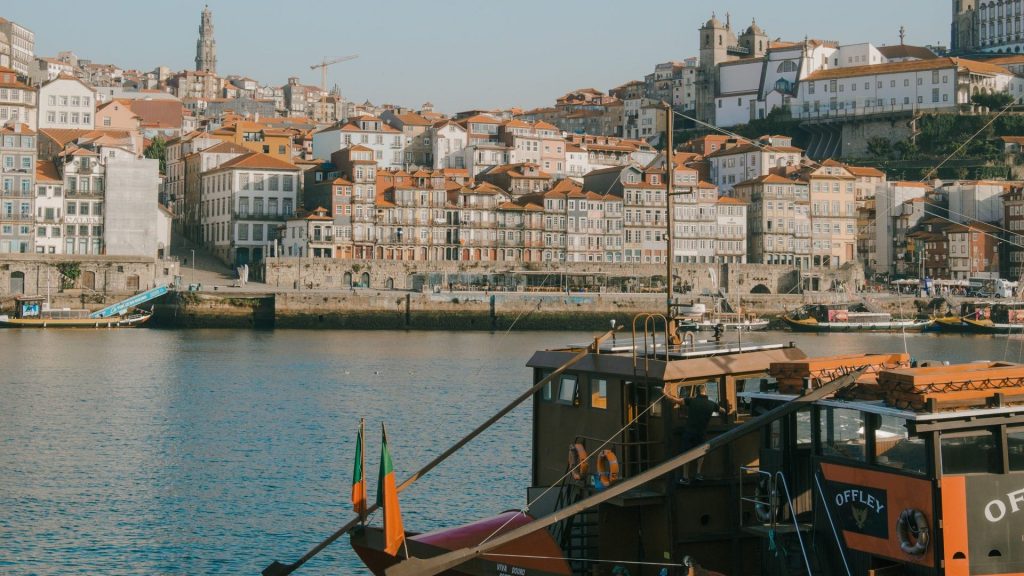

Portugal / Porto / Things to do · 15 min read
Cross the bridge on both decks. They are two different cities.
Three days in the right order, the timed tickets worth booking, and why the hills are the reason Porto feels slow.
Know This First
Everything clusters around the river, and the hills decide how much of it you see in a day.
There’s a sentence in every Porto guide that says something like “Porto rewards slow travel,” and I’ve started to think what that actually means is: Porto has hills, and the hills will slow you down whether you plan it or not. The granite steps and the steep lanes between the Ribeira and the upper city are not a design choice — they’re geography. You will spend more time on Porto’s streets than you planned because walking from one thing to another takes longer than the map suggests, and that is also the whole experience. Slow is not a choice you make in Porto. It’s what the city does to you.
What you find in the extra time is the azulejo tiles and the stone and the specific quality of light on the Douro in the late afternoon, which is better seen slowly than quickly. Here’s what to actually do with it.
The best things to do in Porto cluster around the river. Cross the Dom Luís I bridge on both decks, not one. Do a port lodge in Vila Nova de Gaia on the far bank. Stop inside São Bento station even if you are not catching a train. Climb the Clérigos tower for the view, and eat a francesinha once.
Three days is the sensible minimum and four if you want the Douro Valley. Book Livraria Lello and the tower online, buy an Andante card before your first journey, and wear shoes with grip — the hills are the whole reason the city feels slow.
Before you go
The three set pieces, and all of them are free to look at
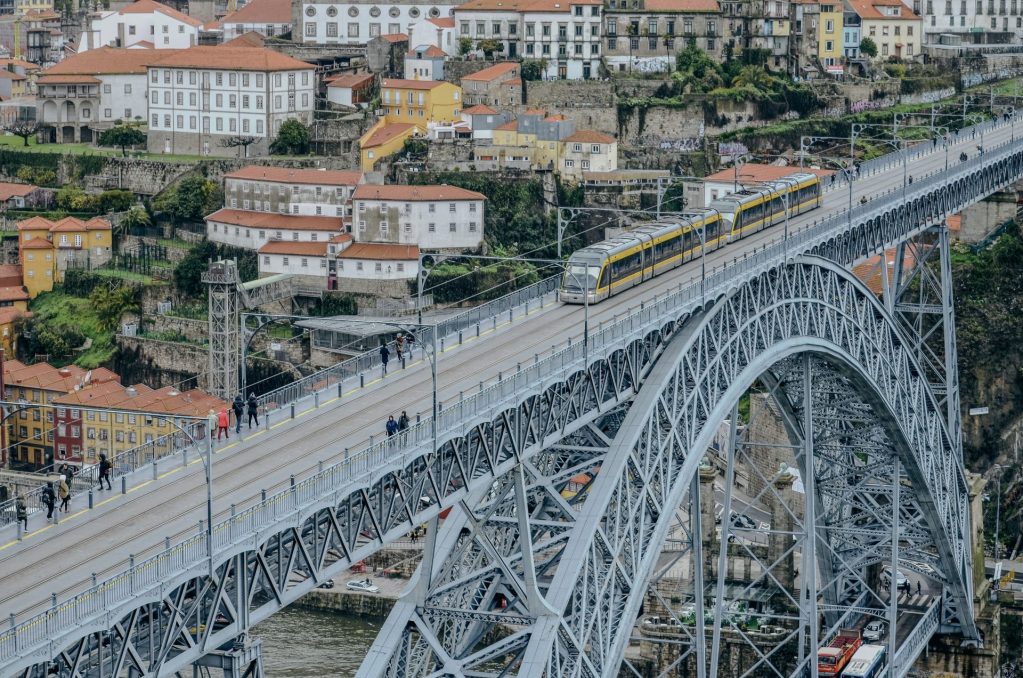 The bridge, which you cross twice
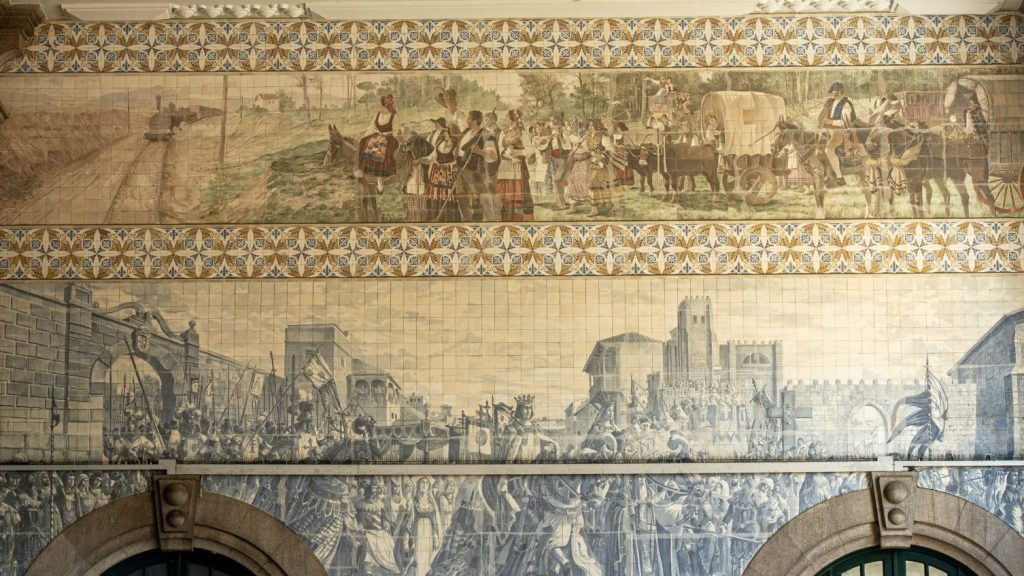 São Bento, which is a station
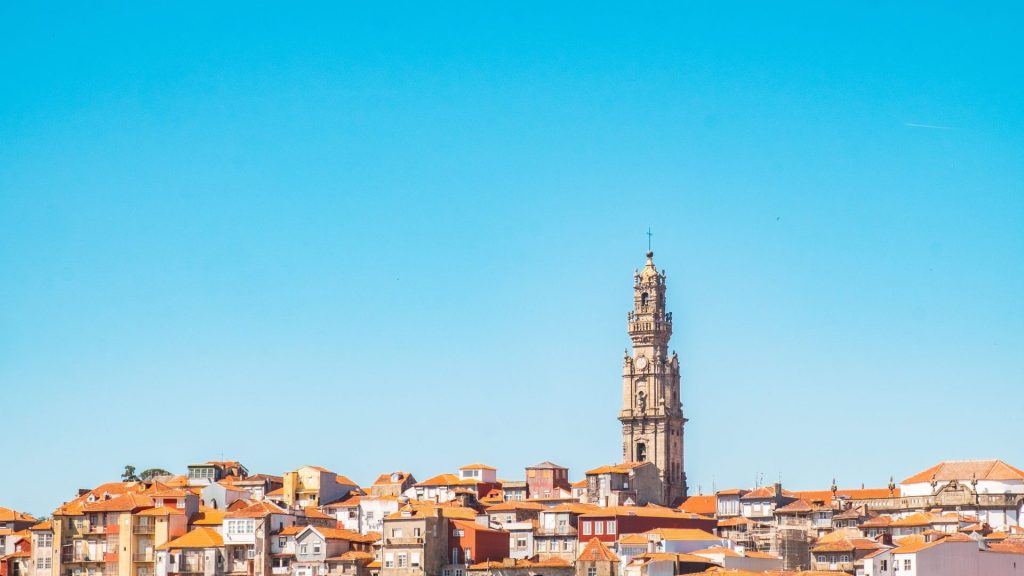 And the tower, which earns the stairs
The Dom Luís I Bridge: Do Both Decks, Not Just One
Designed by a student of Eiffel, and the two decks are two different cities.
The Dom Luís I Bridge was designed by a student of Gustave Eiffel in 1886 and crosses the Douro on two levels: the upper deck for pedestrians and the metro, the lower deck for traffic. Most visitors cross once. The better approach is to cross on the upper deck (the view over both banks is spectacular — Porto on the north, the port wine lodges stacked up the hillside of Vila Nova de Gaia on the south) and return on the lower deck, which puts you at the Ribeira level and in a completely different relationship with the river.
The crossing takes twenty minutes at a normal pace and about forty at a photo pace. Go at golden hour if you can. The bridge at sunset with the wine lodges behind it is a specific image that travel content has made seem clichéd and that turns out to be completely accurate in person.
The Port Wine Lodges in Vila Nova de Gaia
The south bank is technically a different city, and it is where the wine has always been aged.
The south bank of the Douro is technically a separate city — Vila Nova de Gaia — and the hillside above the riverfront is stacked with the cellars (locally called “lodges”) of the port wine houses: Graham’s, Taylor Fladgate, Sandeman, Ferreira, Cálem. These are working wine operations that have been aging port wine in oak barrels here since the 17th century, and you can walk into most of them off the street during business hours.
Walking in without booking works on weekdays. On weekends, book ahead to guarantee entry and avoid the queue. The premium tasting at roughly €25-35 includes aged tawnies — port wine with a decade or more of oak aging that has developed a specific nutty, complex character — that the basic entry-level tour doesn’t reach. Worth the additional cost if you’re interested in understanding what port wine actually is at its best, rather than what it tastes like from a bottle in a duty-free shop.
Graham’s has the best elevated lodge terrace view over Porto. Taylor Fladgate includes a port wine museum component. Cálem has the most theatrical presentation. All three are well-organized; the choice depends on whether you want the view, the history, or the experience.
Order the thing the lodges themselves drink before dinner: white port and tonic, over ice, with a twist of lemon. It costs a fraction of a tawny flight, it is dry rather than sweet, and it is what you will see in front of locals on a Gaia terrace at seven in the evening while the tour groups are still working through their three-glass tastings. The lodges will pour it; you just have to know to ask.
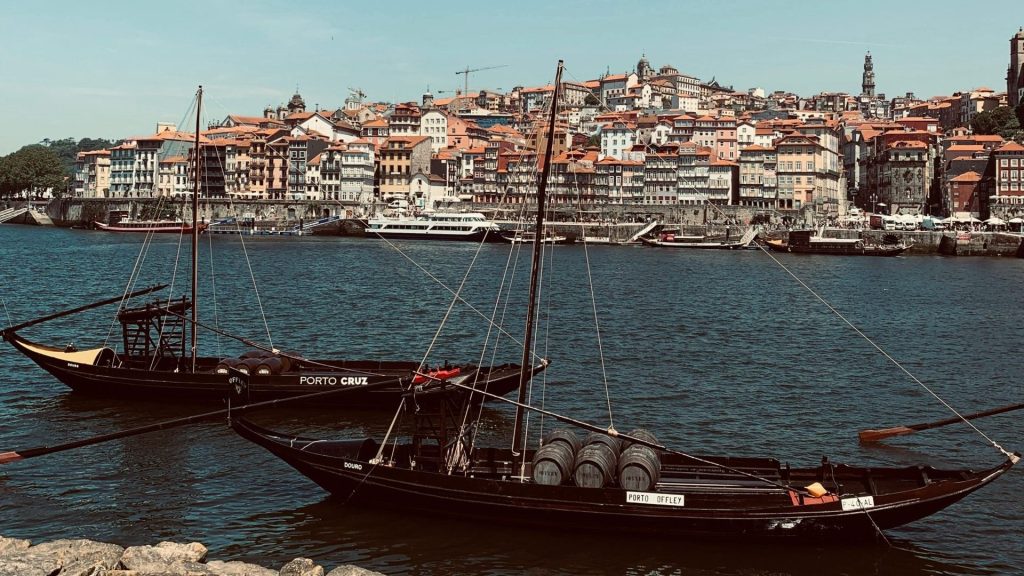 Rabelo boats, which carried the barrels down before the railway did
São Bento Station: Arrive With Time to Look Up
One of the most beautiful railway stations in Europe, and you can walk in for nothing.
São Bento is one of the most beautiful railway stations in the world, and it continues to function as a working train station, which is part of what makes it work. The main hall is covered floor-to-ceiling with azulejo tile panels — 20,000 tiles depicting scenes from Portuguese history and daily life, installed between 1905 and 1916. Most people walk through on their way somewhere else and don’t stop. Stop.
The train connection from São Bento runs to the Douro Valley (a 2-hour journey through increasingly extraordinary wine country that is worth doing as a day trip) and along the coast. Even if you’re not taking a train, the station is worth visiting as a destination.
Livraria Lello: Worth the Queue, Done Properly
Book a timed slot, go at opening on a weekday, and give yourself twenty minutes.
Livraria Lello is one of the most famous bookshops in the world — a 1906 neo-Gothic building with a central red staircase that’s become one of Portugal’s most visited sites, probably because it allegedly inspired Hogwarts in some fashion. The bookshop is real and genuinely beautiful, and has also become so popular that it now requires timed-entry tickets, with the ticket value deductible from a book purchase; check the current price when booking.
The queue kills the experience, consistently, every account agrees on this. Go at 9am when it opens, on a weekday, book online in advance, and limit yourself to twenty minutes inside. The staircase is extraordinary. The shelves are stocked with actual books. The gift shop sells Lello-branded items at the kind of prices that reflect the location premium.
Avoid Saturday afternoon entirely. A guidebook author who covers Porto specifically flagged this as the worst time: the queue destroys the atmosphere that the building’s fame was built on.
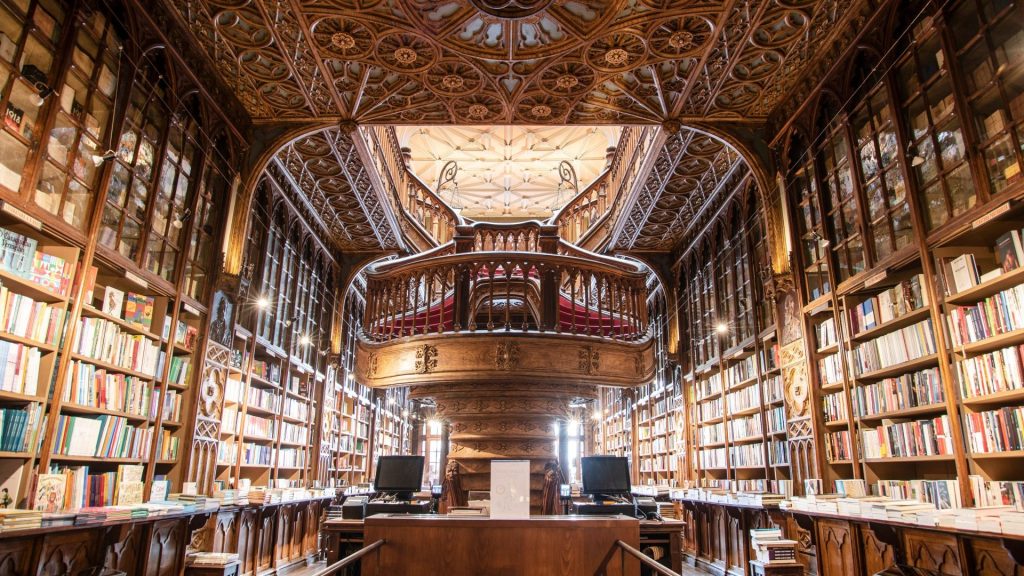 The staircase, which is the reason for the queue and the reason it is worth it
The Clérigos Tower: The View That Earns It
Two hundred and twenty-five steps, and the only place the whole city resolves at once.
The baroque tower of Igreja dos Clérigos (1763) is the most recognizable structure in Porto’s skyline, climbing 75 meters and offering a 360-degree view over the city, the Douro, and the Atlantic in the distance. There are 240 steps. The golden hour slot (roughly 6-7pm in summer) fills fastest and is the one worth having. Book online.
The church itself at the base of the tower is also worth a few minutes; the baroque interior is less famous than the tower but genuinely excellent.
The Ribeira: What It Actually Is
A UNESCO World Heritage waterfront, and the restaurants on it are priced for the view.
The Ribeira is Porto’s UNESCO World Heritage riverfront — a row of narrow, brightly colored houses stacked above the waterfront, connected by lanes that lead up the hillside to the rest of the city. It’s the image on every Porto postcard and also a genuine residential neighborhood where people actually live, hang laundry from wrought-iron balconies, and greet each other on cobblestone streets.
The restaurants directly on the waterfront terrace are, as a category, more tourist-facing than the places a block or two up the hill. Don’t eat on the very first row — walk two streets up and the quality-to-price ratio improves immediately. The view of the bridge and the Gaia hillside from a riverside café is the same regardless.
Foz do Douro: The Atlantic End of Everything
Twenty minutes by tram, and the point where the river stops being a river.
About 20 minutes by tram from the city center, Foz do Douro is where the Douro meets the Atlantic — a lighthouse, the specific smell of the ocean, a different architecture from the historic center (more 19th-century resort town, less medieval Portuguese), and the beach culture that Porto residents retreat to on summer evenings. Less convenient for a short first visit; specifically worth knowing for anyone with more than three days.
The Francesinha: Porto's Sandwich, Which Is Not Exactly a Sandwich
Order it once. Either it becomes the thing you talk about, or it does not.
The francesinha is Porto’s contribution to the category of things that look like sandwiches but are actually closer to a meal that arrived in the wrong format. It’s layers of ham, steak, and linguiça sausage between thick slices of bread, covered in melted cheese and a spiced beer-and-tomato sauce, sometimes with a fried egg on top and fries alongside. It’s heavy, specific, and unlike anything from anywhere else.
Order it once. Either it becomes the thing you talk about for years or it doesn’t — both outcomes are legitimate — but having been to Porto without eating a francesinha is missing the city’s specific personality in food form. Most local restaurants and tascas serve it. Ask specifically for the sauce (molho) on the side if you want to control the ratio.
The other dish worth knowing is the one the city is named for. People from Porto are called tripeiros — tripe-eaters — after the story that in 1415 the city gave up all its meat to provision Henry the Navigator’s fleet for Ceuta and kept only the offal for itself. Tripas à moda do Porto, tripe slow-cooked with white beans, chouriço and cumin, is still on the menu in the older tascas, usually on Thursdays. It is not a tourist dish and nobody will push it on you, which is exactly why it is worth ordering once.
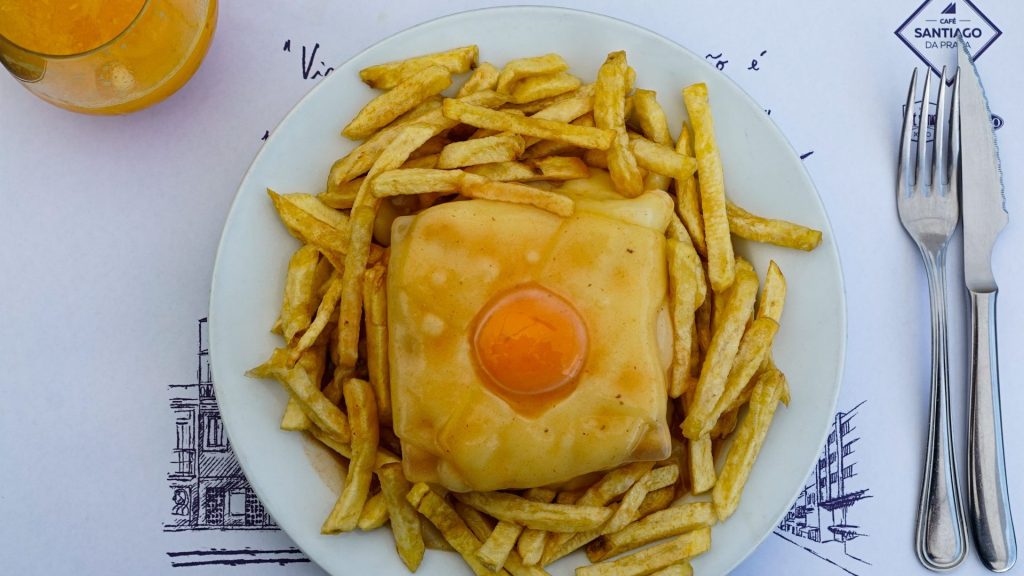 A francesinha with chips and an egg — a lunch that ends your afternoon
Bonfim: The Neighbourhood the Experienced Visitors Know
Every guide tells you to stay in Ribeira. This is where the people who live here went instead.
Every Porto guide tells you to stay in Ribeira or Baixa for your first visit. What the experienced Porto visitors have figured out is that Bonfim — east of the historic center, residential, flatter than Ribeira, full of the kind of cafés and tascas that don’t know they’re trendy because they’ve been operating since before trendy was a concept — is where you want to be for your second visit and ideally your first.
The neighborhood has become the base for Porto’s creative community (studios, galleries, ceramics workshops), which means it has the kind of coffee shop and wine bar infrastructure that follows creative communities, alongside older family restaurants and the actual market where residents shop. It’s twenty minutes’ walk from the Ribeira waterfront, which is inconvenient exactly twice a day — when you leave and when you come back.
The Douro Valley Day Trip: How to Do It Right
Two hours east by train, a full day, and it does not compress.
About two hours east of Porto by train, the Douro Valley is one of the most spectacular wine regions in the world — terraced hillsides carved into steep granite gorge walls above the river, covered in vines that produce the grapes for both port wine and a genuinely excellent category of still wines (Douro reds and whites) that the international market is discovering slowly.
The train journey from São Bento or Campanhã station is itself one of the more beautiful train rides in Europe. The line hugs the Douro River through gorges with views that justify the journey before you’ve reached anything. The town of Peso da Régua at the head of the demarcated port wine region is the practical destination for a day trip — wine tastings at multiple quintas (estates), the riverside atmosphere, lunch of bacalhau or grilled river trout.
Book a specific quinta visit (Quinta do Crasto, Quinta da Romaneira, or any of the main houses) rather than arriving without a plan. Most welcome visitors during business hours; the tasting experience is meaningfully better with advance contact.
The valley, and the river that connects it to the city
 Terraces above the river
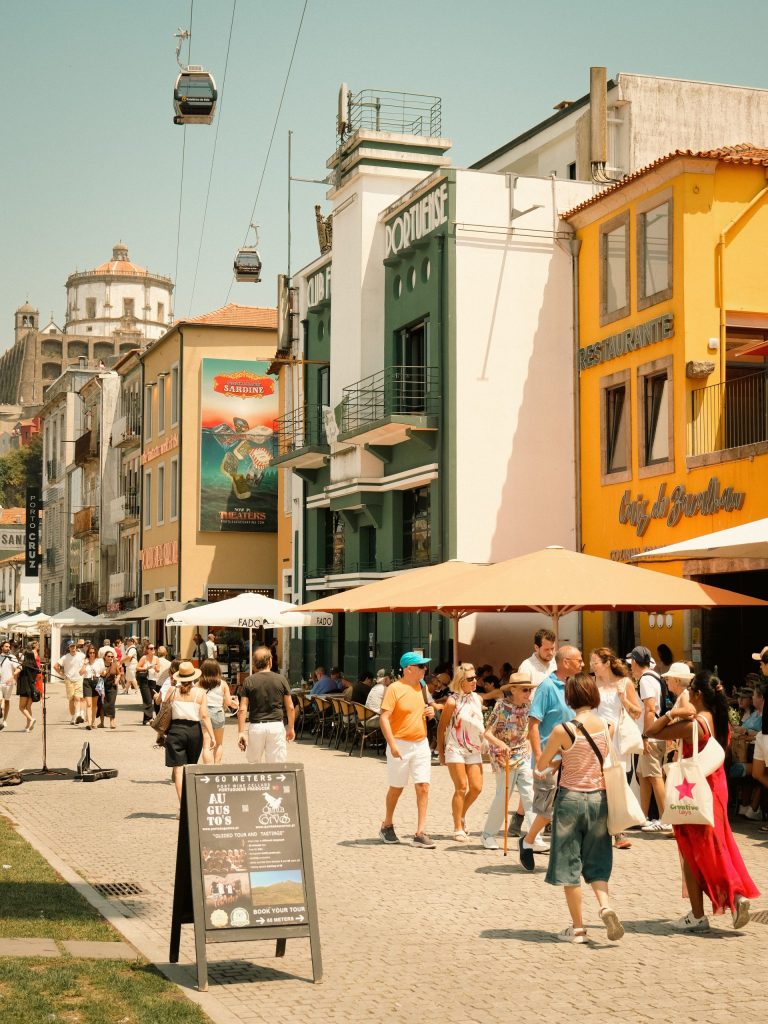 The Gaia waterfront, with the cable car
 And a boat below the Serra do Pilar bluff
What Porto Gets Right
A working port city that has not been rearranged for visitors, and the hills that keep it that way.
Porto is a genuinely working city — a port city that built its wealth on wine and trade and still operates with the specific energy of a place that has been doing something real for a very long time. The tiles and the granite and the Port wine lodges are not curated for visitors; they exist because they needed to exist, and visitors arrived later. That distinction is increasingly rare in European cities, and it’s worth noticing while it holds.
Three days minimum. Walk the bridge twice. Get to Bonfim. Eat the francesinha.
Porto from three angles
The Ribeira, stacked above the water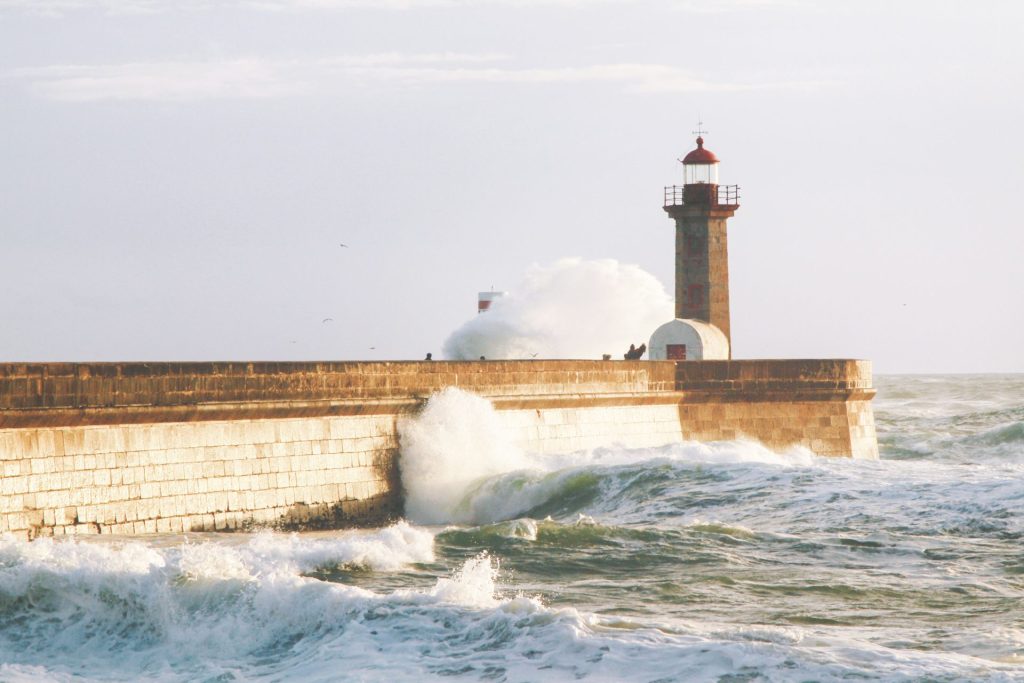 The Atlantic, at the Foz breakwater
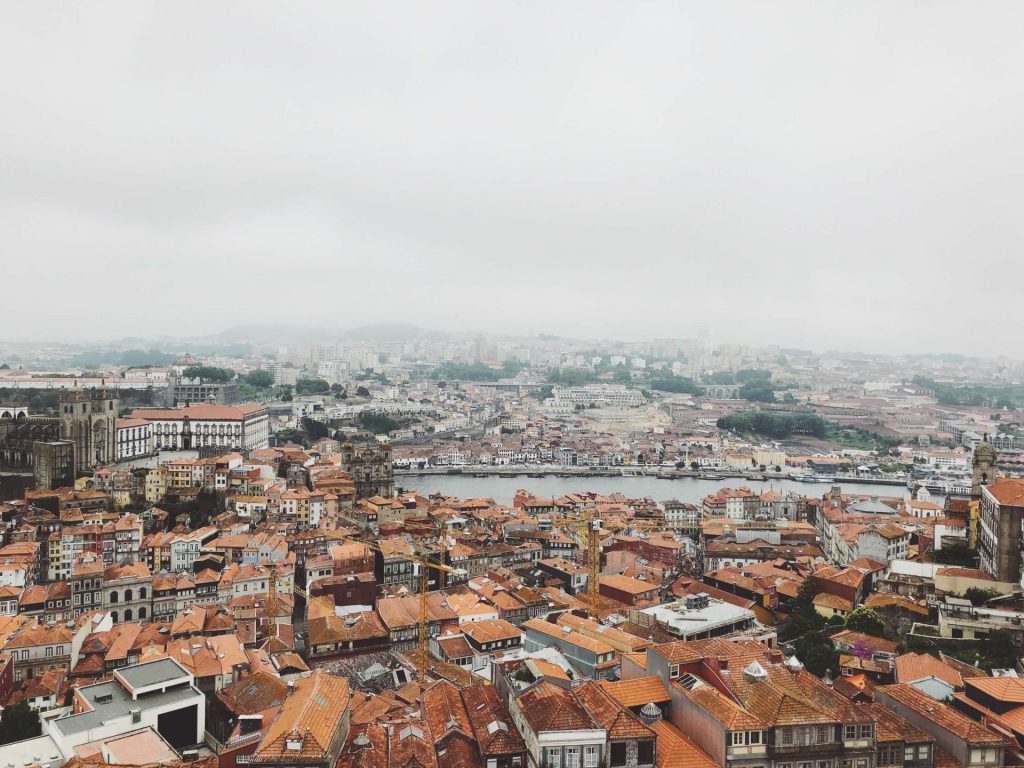 And the rooftops, under the weather it usually has
What kind of Porto trip is this?
Two days and a long list
Cut the Douro and cut Foz. Porto's centre alone will fill them.
You came for the wine
Gaia on day one, the Douro Valley on day three, and book the lodge tastings ahead.
You have been before
Bonfim, Matosinhos for the seafood, and the Clérigos view you skipped last time.
You are eating your way through
The restaurant guide goes deeper than this one.
Practical Notes
The Andante card, the funicular, the hills and how long the city actually needs.
Before the first journey, buy an Andante card. It is a rechargeable paper or plastic ticket that covers the metro, the STCP buses and the urban trains on a zone system, and it is noticeably cheaper than buying singles each time; you tap in at the platform validator rather than on board, and the ticket is valid for a period rather than a single ride, so connections inside the window cost nothing extra. The historic trams are charged separately and are a ride rather than transport.
Three days, in the right order
Day one — the river, both ways
Walk the lower deck of the Dom Luís I into Gaia, do one port lodge, then come back across the top deck at dusk. The two decks are two different cities.
Day two — the upper town
São Bento first thing before the tour groups, Livraria Lello on a pre-booked slot, the Clérigos tower for the view that earns the stairs, then the francesinha you have been putting off.
Day three — out of the centre
Foz do Douro for the Atlantic and the seafood, or Bonfim for the version of Porto that is not curated for anybody. Both are a tram or a short metro ride.
Day four, if you have it — the Douro
The valley is a full day and it does not compress. Train out, boat or car back, and do not try to bolt it onto a day that already has something in it.
Before you go
How many days do you need in Porto?
Three is the sensible minimum: one for the river and a port lodge, one for the upper town — São Bento, Lello, the Clérigos tower — and one for Foz or Bonfim. Add a fourth if you want the Douro Valley, which does not compress into half a day no matter what the tour operators suggest.
Is Livraria Lello worth the queue?
Yes, if you do it properly. Book a timed ticket online, go at opening on a weekday, and give yourself twenty minutes inside. The ticket price comes off a book purchase. Saturday afternoon is the worst possible slot — the crush removes exactly the atmosphere you came for.
Which port lodge should you choose in Gaia?
Graham's for the terrace view back over Porto, Taylor's if you want the museum side of it, Cálem for the most theatrical tour. Walking in works on weekdays; book ahead for weekends. The premium tasting with aged tawnies costs more and is the one worth paying for if you actually want to understand port.
Do you need to book the Clérigos tower?
Book online, especially for the golden-hour slot in summer, which goes first. There are 240 steps and no lift. The baroque church at the base is free to look into and takes five minutes.
What is a francesinha and should you order one?
Layers of ham, steak and linguiça between thick bread, buried under melted cheese and a spiced beer-and-tomato sauce, usually with chips and sometimes a fried egg. Order it once, at lunch, and ask for the sauce on the side if you want to control it. It is heavy, specific and the clearest expression of the city's personality in food.
How do you get around Porto?
Buy an Andante card before your first journey — it covers the metro, STCP buses and urban trains on a zone system and is cheaper than buying singles. Validate on the platform rather than on board. The historic trams are priced separately and are a ride rather than transport, and the Funicular dos Guindais saves the steepest climb from the Ribeira.
Where should you stay in Porto?
Ribeira and Baixa are the obvious first-visit choices and the most walkable to the sights. Bonfim, east of the centre, is flatter, more residential, cheaper and twenty minutes' walk from the waterfront — which is inconvenient exactly twice a day and better the rest of the time.
Is the Douro Valley day trip worth it?
If you give it a full day, yes. The train from São Bento or Campanhã hugs the river through gorges and is one of the better rail journeys in Europe before you arrive anywhere. Peso da Régua is the practical base. Contact a quinta in advance rather than turning up and hoping.
Keep going


Sources
Checked 2026 against the ticketed sites, the metro operator, the port lodges and the city tourism board · Visit Porto · Livraria Lello · Torre dos Clérigos · Metro do Porto · Graham's Port Lodge · Taylor's Port · Comboios de Portugal · Visit Portugal · Time Out Porto · FCDO Portugal travel advice
We will tell you whether we can help and send a written quote before any paid work begins.