
Lisbon now holds 16 Michelin stars. The Time Out Market draws four million visitors a year. A generation of young chefs has rebuilt the humble tasca into something that can go head-to-head with Italy’s trattorias or Spain’s neighborhood asadores, the same honest-city-dining logic behind our guides to where to eat in Rome and Barcelona restaurants. And you can still get a complete lunch — soup, main course, dessert, wine, coffee — for under €11 at a Mouraria tasca on a Wednesday. That’s the specific tension that makes Lisbon one of the most rewarding food cities in Europe right now: the serious dining culture arrived without dismantling the affordable one underneath it.
This guide covers both layers, and it pairs naturally with the Lisbon street food guide if you want snacks, markets, and casual bites between proper meals. Where to eat well, what to order, who’s been there long enough to know the difference between a restaurant built for critics and one built for the people who live nearby.
The best restaurants in Lisbon for first-time visitors are Cervejaria Ramiro for seafood, Taberna da Rua das Flores for petiscos, Prado for modern Portuguese cooking, Belcanto for a Michelin-starred tasting menu, and a Mouraria tasca such as Zé da Mouraria for the best-value local lunch. Book Belcanto well ahead, arrive early for no-reservation restaurants, and keep one lunch open for a prato do dia.
Primary keyword: best restaurants in Lisbon. Best for: first-time visitors, food-focused travelers, couples, solo travelers, and anyone trying to balance one memorable splurge with genuinely local meals.
How Lisbon Eats: Tascas, Petiscos, Seafood, and Michelin Tables
Before getting to any specific names, a few structural things that shape every meal decision in this city.


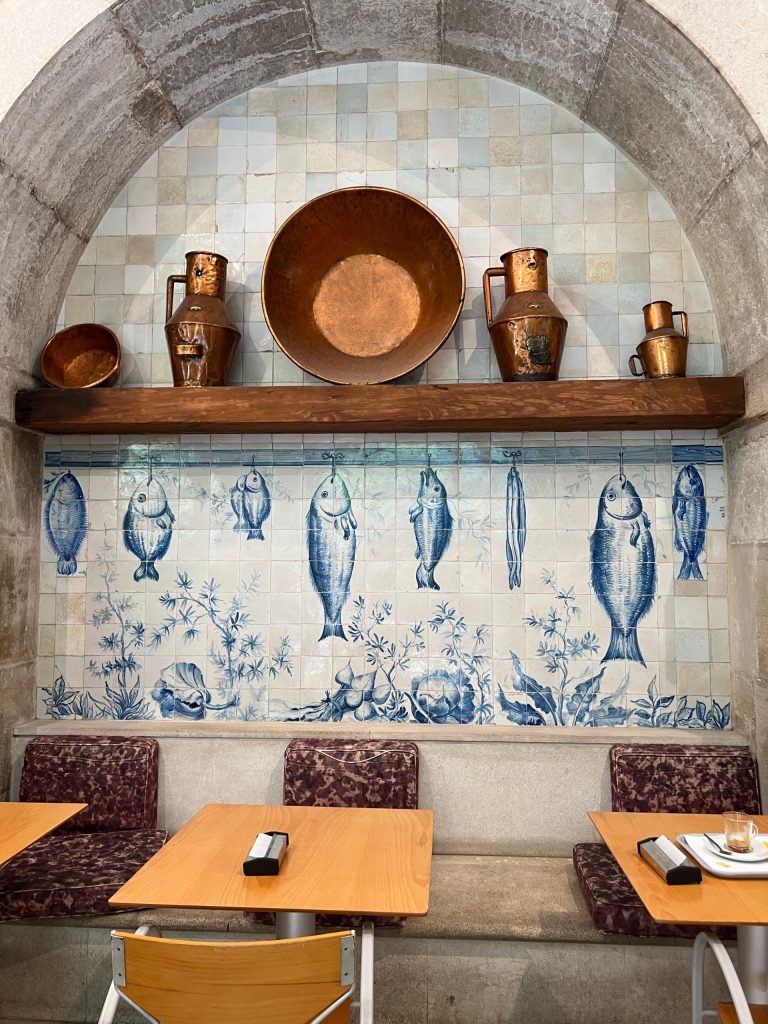
Tascas are the backbone. A tasca is a small, traditional eatery serving home-style cooking — bacalhau, stews, grilled meats, petiscos (small sharing plates), a set daily menu. The best ones don’t have websites, take no reservations, and are full of local workers by 12:30pm. This is the category where Lisbon eating is most itself, and the category most likely to be overlooked in favor of the flashier restaurants.
Lunch is the main event. The prato do dia (dish of the day) at a traditional tasca — usually soup, a main, and sometimes dessert and wine included — runs €9-12 and represents the best value eating in any major European capital. Skip it for a tourist-facing lunch spot and you’ve misunderstood the city.
Bacalhau has 365 preparations. The Portuguese claim one for every day of the year, and while that’s probably an exaggeration, it’s not much of one. Salted cod arrived as a preservation technique for sailors on long Atlantic voyages and stayed. Bacalhau à Brás (shredded cod with matchstick fried potatoes, scrambled eggs, onions, black olives) is the most famous version. Pastel de bacalhau (fried cod cakes) are the snack version, found at café counters for €1-2 each.
Order the prato do dia at lunch, never dinner — it’s a midday-only tradition at most tascas. Show up at 12:30 to eat alongside the actual neighborhood, not the evening tourist crowd.
Cervejaria Ramiro: The Seafood Institution
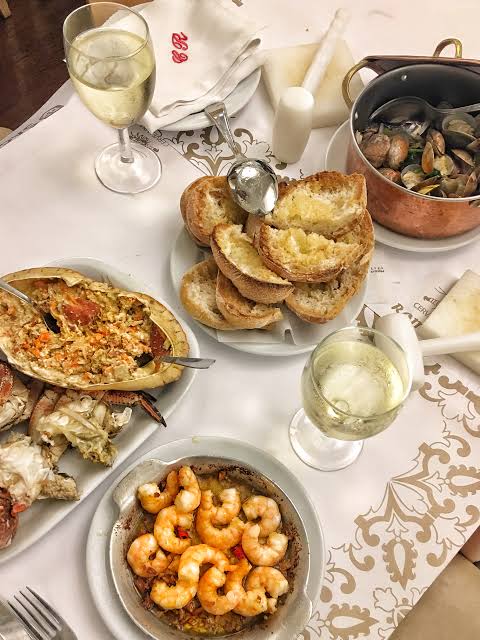


Anthony Bourdain ate here on No Reservations. Phil Rosenthal came for Somebody Feed Phil. The queues haven’t stopped since either program aired.
Cervejaria Ramiro has been doing the same thing since 1956: three floors of buzzing dining rooms focused entirely on shellfish. No bacalhau, no fish dishes, just prawns, clams, lobster, percebes (gooseneck barnacles), oysters, and beer. The order that gets mentioned by everyone who eats here: tiger prawns, clams in garlic-and-coriander sauce, scarlet prawns, and then — this is the specific Ramiro tradition — a prego (steak sandwich) at the very end, as dessert. Don’t skip this last step. It’s not a joke; it’s the ritual.
Time Out Lisbon calls it “a sophisticated food factory,” watching the kitchen logistics in action as an experience in itself. It doesn’t take reservations (you can try emailing, but results vary). Arrive at 6:45pm for dinner or accept a 60-90 minute wait at peak times. Worth both.
Taberna da Rua das Flores: Petiscos Done Right


Taberna da Rua das Flores in Chiado operates on a simple model: small plates, early arrival or you won’t get in, no fuss, serious food. It appears consistently in the lists that local Lisbon food writers keep — the kind of restaurant that never needs to market itself because it’s always full of people who were sent by someone who ate there last week.
The petiscos format here, close in spirit to the bar-to-bar rhythm in our Barcelona tapas guide, isn’t the dumbed-down tourist-tapas version. It’s the real thing: sharing plates that function as a meal when ordered in the right combination, built around Portuguese ingredients and techniques. Arrive early; the place is small and the kitchen runs through the good stuff fast.
Prado: The Modern Portuguese Argument


Prado, in the Baixa, represents the generation of Lisbon restaurants that remade what Portuguese cooking could be — seasonal, local-producer-driven, small plates, tableware thoughtful enough to notice. The sourdough bread arrives with two dips: organic olive oil and a garlic purée topped with pork fat. Multiple people who cover Lisbon food seriously describe ordering more bread specifically for the dips, which is either an embarrassing admission or an honest review, depending on how you look at it.
The menu is handwritten and changes with what’s available — 28 seats, daily-changing specials, mains around €14-22. No reservations are accepted; arrive at 11:45am for lunch or 7pm for dinner to have any reasonable chance at a table. The queue exists for a reason.
Belcanto: Two Michelin Stars, Worth the Occasion


If you’re going to spend serious money on a tasting menu in Lisbon, Belcanto is the reason to do it. Chef José Avillez’s flagship Belcanto holds two Michelin stars in the MICHELIN Guide Lisbon selection and has built a reputation as Portugal’s most celebrated fine dining room, with a menu that interprets Portuguese culinary history through serious technique without losing the thread back to where it came from. This is cooking that could stand up in any major city and chooses to be here.
Book 6+ weeks ahead for weekends. Tasting menus start at prices that reflect the star count. Not an everyday meal — which is fine, because it’s not designed as one.
Best Traditional Tascas in Lisbon
The best traditional tascas in Lisbon change slowly by design. A few specifically verified picks worth knowing:
Described by a food writer who has lived in Lisbon since 2018 as her “favorite tasca” — serving the octopus, the bifana, and whatever’s best in the daily specials in a neighborhood setting that fills with locals before tourists find it each evening. No frills. Real food. Arrive early.
Isn’t strictly a tasca — it’s a cultural center set inside a 17th-century palace with a small courtyard dominated by a huge olive tree, open all afternoon. The menu focuses on Alentejo dishes: migas (a bread-based stuffing), chouriço cooked at the table, simple plates of the region’s cheese and charcuterie. The setting alone is worth the detour; the food is a bonus.


Manteigaria vs. Pastéis de Belém: The Only Competition in Town
This is genuinely contested, and worth treating as a considered question rather than a default to the famous one.
Pastéis de Belém, the original custard tart bakery operating since 1837, uses a recipe that remains officially secret. The tarts are excellent, the setting is spectacular (azulejo-tiled dining rooms from the 19th century), and the queue is long. A second location opened next door in June 2025 with a modern design to handle overflow; the original location is undergoing renovation in 2026, so current setup may vary.
Manteigaria, founded in 2014 in a former butter company’s Art Nouveau building in Chiado, makes tarts that many serious Lisbon food writers now consider at least equal — less sweet, more pronounced egg flavor, a bell that rings when fresh batches emerge from the oven. Three Lisbon locations now (Chiado, Time Out Market, Rua Augusta). The tarts here are €1.50 each. Get one with an espresso. Eat it standing at the counter while watching the bakers through the glass.
The honest answer: try both, form your own opinion, keep it to yourself at the dinner table unless you want a twenty-minute debate.
Watch Before You Go
For a visual sense of the dishes and pacing, this Lisbon food tour is a useful companion before you start booking restaurants.
What to Order in Lisbon Restaurants

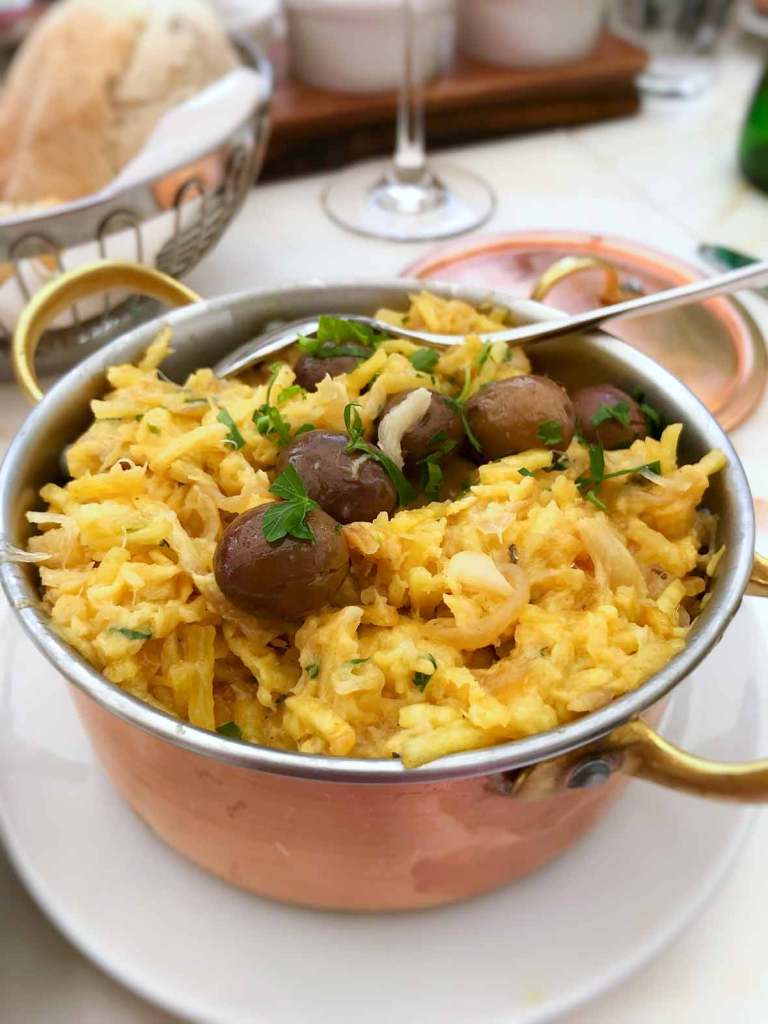
Shredded salt cod with matchstick fried potatoes, scrambled eggs, onions, and black olives. At a good tasca, this is the dish that tells you whether the kitchen respects the ingredients or just assembles them.
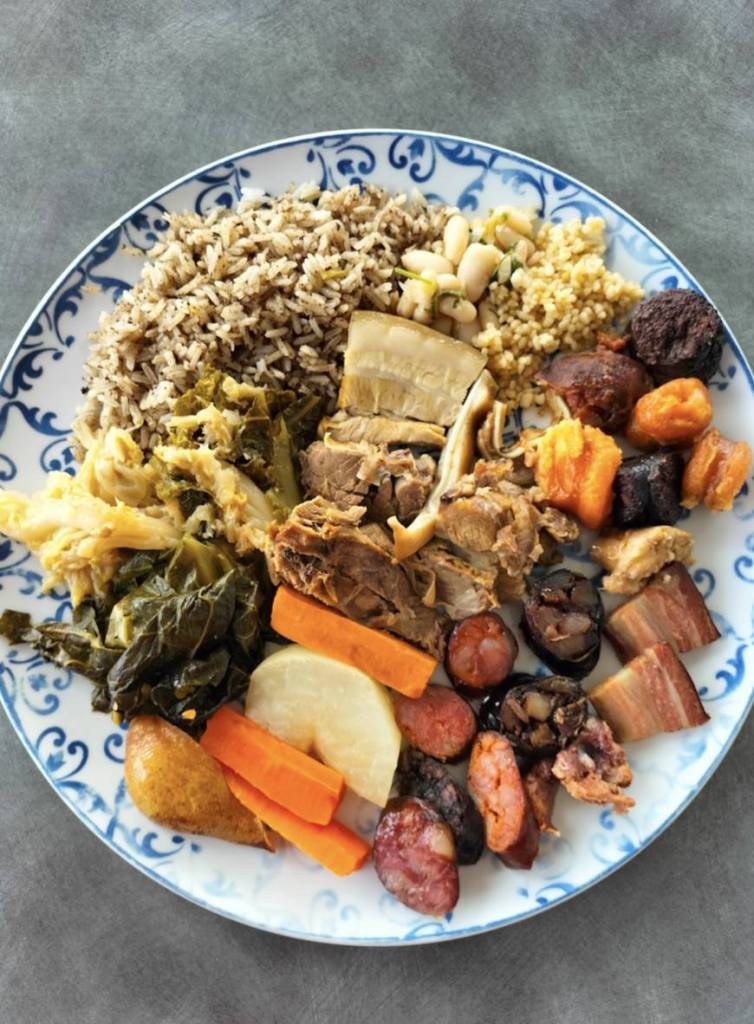
A massive slow-cooked stew of beef, pork, chicken, multiple sausages (farinheira, morcela, chouriço), and vegetables all cooked in the same water, which then cooks the rice. A Thursday lunch special at many traditional tascas, as it has been for generations. One serving is genuinely a full meal; order accordingly.
Gooseneck barnacles, harvested from Atlantic rocks, steamed simply and eaten with your hands, pulling the rubbery stalk from the shell with a satisfying resistance. Acquired texture. Unmistakable flavor. Specifically Lisbon.
The custard tart. Buy one warm from any good pastry counter, eat it immediately, and understand that the room-temperature version sold in plastic packaging in a duty-free shop bears no resemblance to the thing you just had.
A cherry liqueur served in a tiny chocolate cup at hole-in-the-wall bars throughout the old town. Under €2 a shot. The chocolate cup is edible. Ask for sem ela if you want it without the cup, com ela if you want the cup. The right answer is com ela.
First-Time Visitor Strategy
- One splurge: Belcanto if the budget allows, or Prado if you want modern Portuguese cooking without the full fine-dining bill.
- One seafood meal: Ramiro, early, with the prego finish.
- One local lunch: Mouraria or another tasca neighborhood, ordered from the prato do dia.
- One sweet stop: Manteigaria and Pastéis de Belém, ideally on different days so the comparison is fair.
Common Mistakes to Avoid When Eating in Lisbon
Lisbon remains genuinely affordable by Western European capital standards, but the gap has narrowed sharply since 2020. The €9-12 tasca lunch is still real and still excellent. The tourist-facing restaurant on a viewpoint terrace will charge three times that for food that’s half as good.
The Time Out Market Lisboa is worth one visit — it’s an impressive collection of Lisbon’s best chefs in one hall, genuinely designed by people with standards — but eating all your meals there would miss the point of being in Lisbon.
The Lisbon dining ritual remains: restaurants don’t come alive before 8pm. Arriving at 7pm at a Bairro Alto restaurant means eating alone in a half-lit room. Adjust or accept the trade.
Bottom Line: Where to Eat in Lisbon First
The best meal you’ll have in Lisbon will probably not be the Michelin tasting menu, though that will be memorable in its own way. It’ll be something simpler — a plate of bacalhau à Brás at a tasca where the lunch crowd spills onto the pavement, a warm pastel de nata with a three-sip espresso, or a prego at Ramiro after too much seafood to count. That version of Lisbon is alive, affordable, and genuinely good. It’s also why people come back.
Best Lisbon Neighborhood for Local Food: Mouraria

A specific note worth knowing: Mouraria, the ancient neighborhood around the base of São Jorge Castle, is where some of the best-value eating in Lisbon still exists in 2026. The tascas here are genuinely local — prices start around €9 for a full lunch with wine, the menus are handwritten and seasonal, and the midday crowd is workers from the surrounding streets rather than tourists. If you eat one meal here for lunch rather than in a tourist-facing Baixa restaurant, the quality-to-price ratio will recalibrate your expectations for the rest of the trip.
Zé da Mouraria is the most cited name in this neighborhood: a proper tasca with a short handwritten menu, around €10 for a prato do dia, queue at lunch rather than reservation system. The bacalhau dishes here are specifically worth ordering, but the daily specials are the better bet — whatever’s freshest that morning.
Portuguese Wine to Order in Lisbon
Portuguese wine is better than its international reputation, and Lisbon is a good place to start understanding why. Food-first travelers who like this style may also want the Greek food in Athens guide. A glass of Vinho Verde (light, slightly fizzy, often with under 12% alcohol) with a seafood lunch is the entry point. Alentejo reds — fuller, warmer-climate, built on touriga nacional and aragonez — are the local recommendation for dinner. House wine at a tasca costs under €4 a glass and is generally sound. A decent bottle for a restaurant dinner starts around €10-15 and goes well beyond that if you want to get serious about it.
Ask what’s from the Alentejo. Drink accordingly.
FAQ: Best Restaurants in Lisbon
What is the best restaurant in Lisbon for a first visit?
For most first-time visitors, Cervejaria Ramiro is the best single Lisbon restaurant experience because it combines local ritual, excellent seafood, and a clear sense of place. For a quieter modern meal, choose Prado; for a special occasion, choose Belcanto.
Do I need reservations for restaurants in Lisbon?
Reserve Michelin-starred and higher-end restaurants several weeks ahead. Many tascas and no-reservation restaurants reward early arrival instead, especially around lunch or before 8pm at dinner.
How much does a good meal cost in Lisbon?
A traditional tasca lunch can still run around €9-12, casual petiscos meals often land in the €20-35 range, seafood at Ramiro can climb quickly depending on shellfish, and Michelin tasting menus sit firmly in special-occasion territory.
Where should I eat local food in Lisbon?
Mouraria is one of the strongest neighborhoods for local-value eating, especially at lunch. Look for handwritten menus, prato do dia boards, and rooms full by 12:30pm.
What dishes should I not miss in Lisbon?
Start with bacalhau à Brás, clams Bulhão Pato, percebes if you like seafood, cozido à Portuguesa if you catch it as a lunch special, pastel de nata, and a small glass of ginjinha.