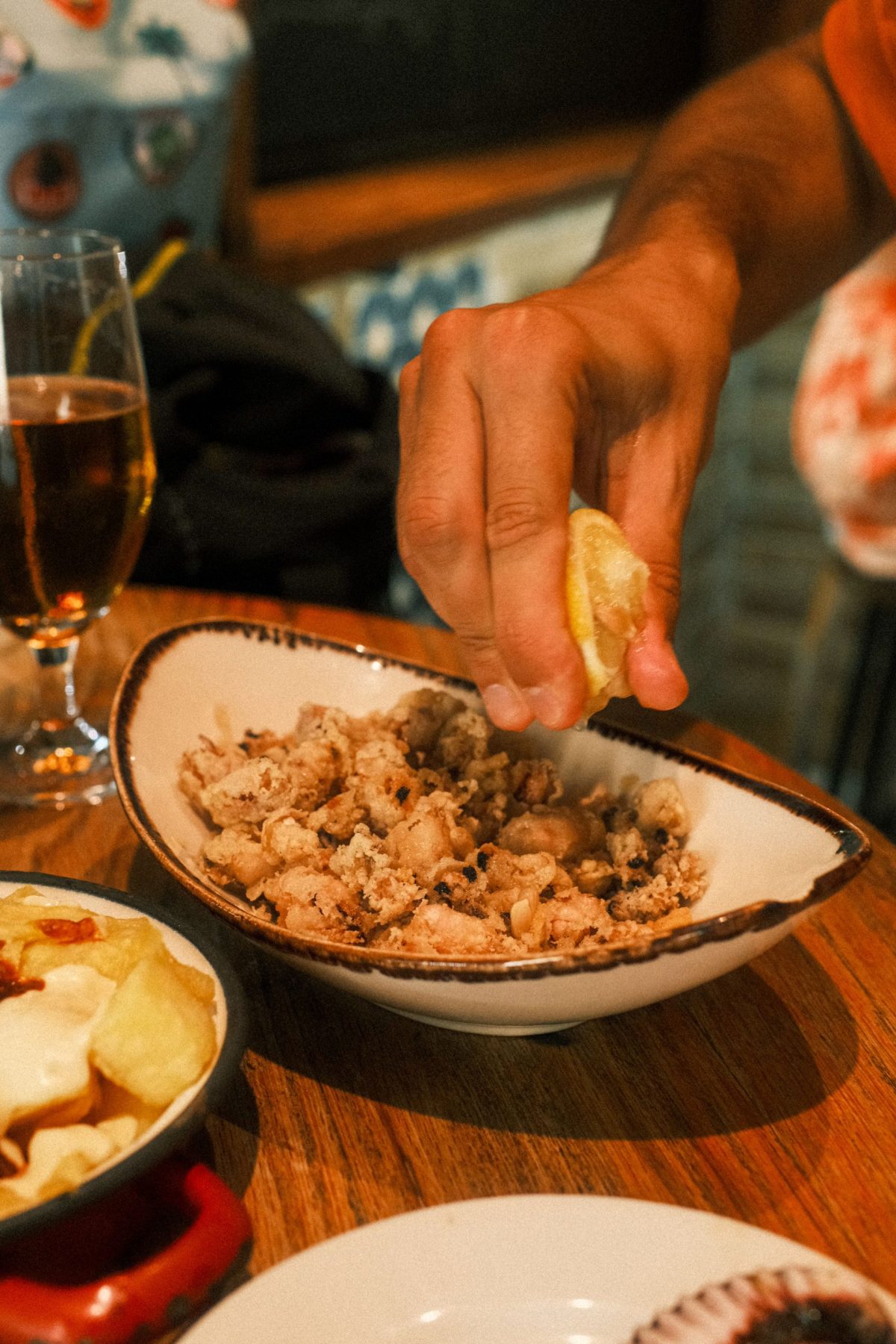
If you need a Barcelona tapas guide that does not send you straight into a laminated-menu trap, good. You are in the right place. This Barcelona tapas guide is built for eating well, not getting hustled.
Barcelona can feed you beautifully, but it will also happily charge you tourist prices for sad olives, reheated croquetas, and sangria that tastes like regret with fruit in it. This Barcelona tapas guide shows you what to order, where to eat by neighborhood, what prices are normal, and which red flags mean you should keep walking. Start with the quick comparison table below, then pick your neighborhood and build the night around small plates, vermouth, and zero panic.

Barcelona Tapas Guide Quick Picker
| Area | Best For | What To Order | Budget | Crowds |
|---|---|---|---|---|
| La Ribera / El Born | Classic bars with noise, history, and no patience for nonsense | Boquerones, jamón, cava, anchovies | €€ | Busy |
| Gràcia | Local evenings, cheaper drinks, less tourist theater | Gambas, croquetas, vermouth, bravas | € | Moderate |
| Gothic Quarter Edges | Convenience when you are central but still want quality | Bombas, house specials, wine by the glass | €€ | Busy |
| Sant Antoni | Modern tapas, natural wine, locals after work | Creative small plates, conservas, vermouth | €€ | Moderate |
| Poble-sec | Bar hopping without spending the whole travel budget | Pintxos, bombas, beer, simple seafood | € | Moderate |
| Barceloneta | Seafood and beach-adjacent chaos | Pulpo, fried fish, calamari, cava | €€€ | Busy |
What Actually Counts as Tapas in Barcelona?
Tapas are not appetizers. Appetizers warm you up for dinner. Tapas are dinner, especially when you do them properly: one bar, one or two plates, one drink, then move. Repeat until you are full, happy, and maybe arguing with your friend about whether the second croqueta was better than the first.
Barcelona has its own rhythm. This is Catalonia, not Granada, so do not expect free tapas with every drink. You are paying for the plates. The good news is that the plates are usually worth paying for when you are in the right bar.
- Traditional Catalan tapas: pa amb tomàquet, anchovies, jamón, croquetas, grilled seafood, escalivada, bombas, and vermouth.
- Spanish classics you will still see everywhere: gambas al ajillo, pulpo a la gallega, tortilla, patatas bravas, and conservas.
- Modern tapas: chef-led small plates, clever sauces, natural wine, and dishes that make traditionalists suspicious until the first bite.
Best Tapas Dishes in Barcelona for First-Timers
Bombas
Fried potato balls filled with meat ragù, then hit with aioli and spicy sauce. Born in Barceloneta, built for people who like crispy things and good decisions.
Pa Amb Tomàquet
Toasted bread rubbed with tomato, olive oil, and salt. Sounds too simple. Works because Catalans understand bread better than most of us understand ourselves.
Croquetas
Crispy outside, creamy inside, usually jamón or cheese. If they arrive cold in the middle, you have your answer about the bar.
Boquerones
Marinated anchovies that taste bright, salty, and clean. Order them with cava or vermouth and stop pretending anchovies are scary.
Jamón Ibérico
Expensive for a reason. Regular jamón is great; ibérico has that silky, nutty thing going on that makes people go quiet for a second.
Gambas al Ajillo
Shrimp, garlic, olive oil, clay dish. When the garlic is golden and the oil is good, the bread at the bottom becomes the real prize.
Barcelona Tapas Guide by Neighborhood
The neighborhood matters more than any individual “best tapas bar” list, which is why this Barcelona tapas guide starts with areas first. A useful Barcelona tapas guide should help you choose an area first, then a bar. A great tapas night is about momentum: walkable streets, several bars close together, and enough options that one bad call does not ruin dinner.
La Ribera / El Born
Best OverallLa Ribera is where you go when you want the classic Barcelona tapas mood: narrow streets, loud rooms, counter service, and bars that look like they were designed before anyone cared about lighting for Instagram.
El Xampanyet is the obvious anchor. It is packed, chaotic, and still worth it. Order anchovies, jamón, conservas, and a glass of sparkling wine. Then wander. If a bar is full of locals standing shoulder-to-shoulder and the menu is short, you are probably doing fine.
Start near Carrer de Montcada, then move toward Santa Maria del Mar. Go before peak dinner or accept the wait.
Gràcia
Local PickGràcia is where Barcelona feels like people still live there. Shocking concept. The plazas are full, the bars are casual, and the food tends to be less performative than in the center.
Pick a bar around Plaça del Sol or Plaça de la Vila de Gràcia. Look for locals, a handwritten board, and a bartender who does not care whether you speak perfect Spanish. Order croquetas, bravas, gambas, and vermouth. You will spend less and eat better than you would two blocks from La Rambla.
Make Gràcia your slow evening. One square, two bars, zero hurry.
Gothic Quarter Edges
ConvenientThe Gothic Quarter is tricky. Some of it is excellent. Some of it exists purely to sell paella to people wearing backpacks on the front. The trick is to leave the main plazas and look for smaller streets where the menu is not screaming at you in five languages.
Bar Muy Buenas near Carrer del Carme is the kind of place you can miss if you are walking too fast. Go for a few plates, keep your phone off the bar, and keep your bag close. The food can be worth the vigilance.
Use the Gothic Quarter for convenience, not as your whole tapas strategy.
Sant Antoni
Modern TapasSant Antoni is where you go when you want Barcelona to feel current without becoming precious. You will find market energy, small wine bars, vermouth spots, and kitchens doing interesting things without turning dinner into a lecture.
Use the market as your landmark, then wander the surrounding blocks. This is a good area for conservas, modern bravas, natural wine, and small plates that still understand hunger.
Start around Mercat de Sant Antoni and build a loose crawl from there.
Poble-sec
Budget CrawlPoble-sec is the move when you want quantity, energy, and prices that do not make you check your bank app under the table. Carrer de Blai is famous for pintxos, which are Basque-style bites often served on bread and held together with a toothpick.
Is every bar life-changing? No. Is it fun? Absolutely. Use it for a low-stakes crawl, especially if you are traveling with friends who want movement, cheap drinks, and easy ordering.
Start on Carrer de Blai and move when a place feels too empty or too tourist-staged.
Barceloneta
SeafoodBarceloneta is loud, salty, touristy in places, and still useful if seafood is the point. This is where bombas make the most sense historically, and where pulpo, fried fish, anchovies, and cava can turn into a very good afternoon.
Skip the beachfront menus promising everything to everyone. Go a few streets inland and look for places where people are eating seafood, not posing beside it.
Use Barceloneta for seafood, then leave before beach pricing eats the rest of your budget.
Which Barcelona Tapas Night Is Right for You?
🍷 First-Time Visitor
→ Start in La Ribera for the classic bar-hop feeling without spending the whole night decoding the city.
💸 Budget Traveler
→ Go to Poble-sec or Gràcia for cheaper plates, casual bars, and fewer inflated tourist prices.
🐟 Seafood Person
→ Use Barceloneta carefully: go inland, order pulpo or fried seafood, and avoid the beachfront trap menus.
🍽️ Food Nerd
→ Spend time in Sant Antoni for modern tapas, better wine, conservas, and bars that care about sourcing.
🕯️ Date Night
→ Mix El Born and Sant Antoni: one classic stop, one modern stop, then a vermouth or cava bar.
⏱️ Short on Time
→ Stay near the Gothic Quarter edges, but avoid main plazas and any place with a host dragging you in.
Before You Go: Tapas Checklist
Tip: a good tapas crawl is not a restaurant reservation with extra steps. It is movement, instinct, and knowing when to leave a bar after one drink.
How Much Do Tapas Cost in Barcelona?
For a normal tapas night in Barcelona, plan around €25-€45 per person with drinks if you are moving between casual bars. Simple plates like bombas, croquetas, pan con tomate, and gildas often sit in the €3-€8 range; seafood, jamón ibérico, and better wine can push the bill higher fast.
| Tapas plan | Typical spend | Best for |
|---|---|---|
| One quick bar stop | €8-€18 | Vermouth, one or two small plates, light snack |
| Casual tapas crawl | €25-€45 | Two or three bars, shared plates, drinks |
| Seafood-focused night | €45-€75+ | Barceloneta, prawns, pulpo, cava, better conservas |
Pro Tips for Ordering Tapas in Barcelona
- Do not order everything at once. Start with two plates. If the bar is good, stay. If not, escape with dignity.
- Use vermouth hour. Vermut with olives, anchovies, or chips is one of Barcelona’s great low-effort pleasures.
- Expect normal prices. Simple tapas often run €3-€7, seafood and jamón can go higher, and a full crawl with drinks often lands around €25-€45 per person.
- Skip La Rambla for dinner. Walk through it, look around, then go eat somewhere else.
- Look for short menus. A place doing ten things well usually beats a place offering paella, burgers, sushi, and “traditional tapas.”
- Do not confuse tapas with pintxos. Pintxos are more common in Basque-style bars, often on bread. Delicious, different system.
- Tip lightly. Rounding up or leaving small change is fine. Barcelona is not a 20-percent-tip city.
For official planning details while using this Barcelona tapas guide, check the Barcelona Turisme site, the official La Boqueria market site, and TMB transport fares before you build your route around metro stops and market hours.
Barcelona Tapas Guide FAQ
What tapas is Barcelona known for?
Barcelona is known for bombas, pa amb tomàquet, croquetas, boquerones, anchovies, conservas, jamón, pulpo, patatas bravas, and vermouth-friendly snacks. It is also a good city for modern small plates, especially around Sant Antoni and parts of El Born.
What time do locals eat tapas in Barcelona?
Locals often eat later than visitors expect. For a relaxed tapas crawl, start around 7 PM. For a livelier local feel, 8:30-10 PM is better. Weekend nights get crowded fast.
How much do tapas cost in Barcelona?
Simple tapas often cost €3-€7 each. Seafood, jamón ibérico, and more polished modern plates can cost more. A proper tapas crawl with drinks usually runs about €25-€45 per person.
Is La Rambla good for tapas?
Usually, no. La Rambla is better for walking than eating. Many restaurants there are built for tourists and charge more for weaker food. Eat in La Ribera, Gràcia, Sant Antoni, Poble-sec, Barceloneta, or smaller Gothic Quarter side streets instead.
Do you need reservations for tapas bars in Barcelona?
For casual tapas bars, usually no. For popular modern tapas restaurants, yes. If the place is tiny and famous, go early or expect to wait. Counter-style bars often move faster than they look.
Do you tip in Barcelona tapas bars?
Tipping is appreciated but not expected like in the United States. Round up, leave small change, or add a few euros for great service. You do not need to add 20 percent.
What is the difference between tapas and pintxos?
Tapas are small plates. Pintxos are usually smaller bites, often served on bread and held with a toothpick, originally associated with Basque food culture. Barcelona has both, especially around Poble-sec.
What should first-time visitors avoid when eating tapas in Barcelona?
Avoid photo-heavy menus, restaurants with aggressive hosts outside, paella-and-sangria bundles, empty bars at peak dinner time, and anything on La Rambla that looks designed for people who will never come back.
Barcelona rewards people who wander a little, order slowly, and leave the obvious streets behind. Treat this Barcelona tapas guide as a starting map, then follow the busy counters. Start with this Barcelona restaurants guide, then build your tapas night around one good neighborhood and a few plates worth remembering.