

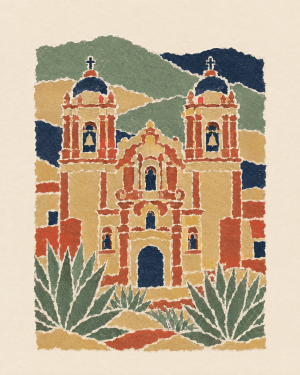
 OAXACA
Latin America / Mexico / City guide · 12 min read
They flattened a mountaintop to build it.
The best things to do in Oaxaca combine Monte Albán, the historic centre, village markets and time with local makers. This four-day guide helps you group the valleys sensibly and check access before booking.
Jump to what you came for
Things to Do in Oaxaca: The Short Answer
For four days, prioritise Monte Albán, the historic centre and one valley route, then fit a village market to your dates. Book around confirmed opening days and leave time to talk to makers rather than racing through every workshop.
OAXACAWhere to start
Which is why nothing here is generic
Most people arrive in Oaxaca for the food, and they are not wrong to — our Oaxaca food guide covers the seven moles, the mezcal and the markets. But the state holds sixteen recognised indigenous cultures, more than anywhere else in Mexico, and that depth shows up in everything: the weaving villages that each have their own technique, the festival calendar, the Zapotec capital on the ridge above the city.
Three things that are only in this state


The historic centre is walkable, but valley excursions need separate transport planning. Four days allow a city day, Monte Albán and a selective valley route, with a fourth day arranged around a market. Hierve el Agua can involve a long road journey; do not assume every stop is within ninety minutes.
How four days in Oaxaca should run
The valley villages run on fixed market days, and a village on its market day is a completely different place from the same village on a Tuesday. Check the calendar before you fix your dates, not after.
OAXACAMonte Albán
They removed the top of a mountain to build it

Monte Albán was founded by the Zapotecs around 500 BC and ran as the dominant city of the region for well over a thousand years. The detail that reorganises how you look at it: the ridge it sits on was not naturally flat. They levelled the mountaintop by hand to create the Great Plaza, several hundred metres above the valley floor, and then built a city on it.
What survives is the ceremonial core — pyramids, a ball court, an observatory set at an angle to everything else, and the Danzantes stone carvings whose figures were long read as dancers and are now generally understood as something considerably grimmer. Check the journey from your accommodation and arrange the return ride before leaving. It is a UNESCO World Heritage Site and it is the single thing in this guide not to skip.
OAXACAHierve el Agua
Not actually waterfalls, and not actually boiling

The name translates as “the water boils”, which it does not. Hierve el Agua is a set of rock formations about seventy kilometres from the city where mineral-saturated springs have been running over a cliff edge for thousands of years, depositing calcium carbonate as they go. The result looks exactly like a waterfall frozen mid-fall, which is the only description anybody ever uses because it is the right one.
At the top are natural pools fed by the same springs, sitting on the lip of the cliff with the valley dropping away below. You can swim in them. The water is cold, the view is enormous, and the combination is the single most photographed thing in the state after Monte Albán.
OAXACAJalatlaco, on foot
Cobblestones, murals and residential streets

A few blocks east of the historic centre, Jalatlaco is the neighbourhood that most visitors walk past on their way somewhere else. Cobbled streets, low colonial houses painted in strong colours, a steady accumulation of murals, and a handful of good cafés and small restaurants that serve the neighbourhood rather than the tour groups.
There is no single sight here and that is the appeal. Go in the late afternoon when the light is low and the walls are at their best, walk without a route, and stop at whatever looks right. It is the part of Oaxaca that most reliably makes people say they could live here.
Jalatlaco rewards a slower walk around its church, murals and cafés. These are residential streets as well as visitor favourites: keep entrances clear, ask before photographing people and avoid assuming that every colourful doorway is a public attraction.
OAXACAThe Zócalo and Santo Domingo
Santo Domingo is the one building to go inside
The Zócalo is the city’s living room: shaded by old laurels, ringed with café terraces, and almost permanently occupied by something — a market, a protest, a band, a political encampment. Sit at a terrace for an hour with a coffee and you will see more of the city’s actual life than any museum provides.
A few blocks north, the Templo de Santo Domingo de Guzmán is the building to go inside. The baroque interior is covered almost entirely in gilded plasterwork, and the family-tree ceiling above the entrance — a gilded vine of painted figures — is one of the most startling pieces of colonial decoration in Mexico. The adjoining former convent now houses the Museo de las Culturas de Oaxaca, which holds the treasure recovered from Tomb 7 at Monte Albán and is the correct place to go after the ruins rather than before.
The botanical garden behind Santo Domingo offers a useful introduction to regional plants. Check its current visitor arrangements and tour language locally before building the day around a particular slot.
What is actually still standing up there


 OAXACA
The artisan villages
Different craft traditions across the valleys
The valleys around the city are organised by craft in a way that is genuinely unusual. Villages specialise, and have for centuries.
Teotitlán del Valle weaves wool rugs on treadle looms, dyed with cochineal, indigo and marigold. Workshops will demonstrate the whole chain from raw fleece to finished textile, and buying directly lets you ask about the materials, technique and maker.
San Bartolo Coyotepec makes barro negro, the burnished black pottery that is unmistakably Oaxacan. San Martín Tilcajete carves and paints alebrijes, the brightly patterned wooden animals. Santa María Atzompa makes green-glazed earthenware.
The markets run on fixed weekdays — Tlacolula on Sunday, Villa de Etla on Wednesday, Ocotlán on Friday, Zaachila on Thursday. A village on its market day is a different place entirely, with the whole surrounding area arriving to trade. If your dates can be arranged around one, do it.
What comes out of the valleys


 OAXACA
Guelaguetza, and Día de Muertos
Book months ahead or come another time deliberately

Guelaguetza’s official programme sets the dates and ticket arrangements each year. The main 2026 performances were on 20 and 27 July; those dates have passed. For a future trip, wait for the relevant year’s published schedule rather than reusing a fixed “last two Mondays” rule.
The name is a Zapotec word for reciprocal giving — the obligation to give and to receive in turn — and the festival is structured around that idea rather than around performance. It is extraordinary and the city is completely full. Compare accommodation well ahead for festival dates; availability and price changes vary by property.
The other date worth planning around is Día de Muertos, at the start of November, which Oaxaca observes with more intensity than almost anywhere in Mexico — cemetery vigils, sand tapestries, comparsas moving through the streets at night. Same caveat on booking.
OAXACAPalenque visits
The one excursion that changes what you buy

The valleys hold dozens of palenques — small distilleries where a single maestro mezcalero roasts agave in an underground pit, crushes it under a stone wheel, ferments it in open wooden vats and distils it in clay or small copper stills. A half-day visit walks you through the whole chain with a taste at each stage.
Do this before you buy bottles rather than after. Understanding what separates an artisanal mezcal from a commercial one, and what the different agave varietals actually taste like, improves what you choose by an enormous margin — and the bottles cost less at the source anyway. The food guide goes further into which bars in the city to taste at first.
OAXACATransport and seasons
Altitude, seasons, and getting to the valleys

The altitude is modest but real. Oaxaca city sits at about 1,550 metres. Far gentler than Mexico City, but the sun at that height is stronger than it feels and the evenings cool off quickly. Hat, water, and a layer for after dark.
Plan for variable weather. Check the forecast for the city and the valley route separately. Carry sun protection and rain cover, and leave flexibility if storms affect an outdoor excursion.
Compare valley transport before booking. Ask for the exact stops, time at each, entry charges, meal arrangements and return time. A low headline tour price may exclude admissions or build in shopping stops.
Buy directly from makers where possible. Ask who produced the piece, how it was made and whether packing or shipping is included. Compare craftsmanship and provenance rather than assuming every workshop is cheaper than every gallery.
Cash in small notes. Village workshops, market stalls and the smoke corridor mostly do not take cards. The city restaurants and hotels do.
A four-day plan, and what to book
Start with the fixed parts of your trip: arrival time, a confirmed market day and any workshop appointment. Then add flexible walks and meals around them. This keeps your shortlist of things to do in Oaxaca from turning into a series of rushed road stops.
Monte Albán admission and return transport
INAH currently lists Monte Albán as open daily from 8am to 5pm, with last entry at 4pm. Check the applicable ticket category and exemptions before travelling. Admission, a guide and transport are separate items unless your booking explicitly includes them. Allow time for uneven ground, sun exposure and the return journey.
Choose one valley route
Ask whether Hierve el Agua is the main event or one of several quick stops. A weaving demonstration and a palenque visit both deserve time for questions. If the proposed itinerary leaves little time at each, remove a stop or add a day. Confirm current community access arrangements before setting off, and use a driver if your plans include alcohol tasting.
Budget by what is included
Build a daily total from accommodation, transport, admissions, guiding and meals rather than trusting a single all-in figure. Carry small cash for markets, check card acceptance before a workshop purchase, and agree the fare or tour inclusions before departure. When comparing things to do in Oaxaca, a smaller group or longer visit may matter more than the cheapest quoted price.
Respectful visits and practical access
Ask before photographing people, ceremonies or workshop processes. Check steps, surfaces, shade and toilets if anyone in your group needs easier access. A city walking day can be shortened with breaks; a remote valley excursion is harder to adjust after departure. Keep one unbooked afternoon for weather, rest or returning to a place you enjoyed.
For a combined trip, compare where to stay in Mexico City before arranging onward travel. Food-focused things to do in Oaxaca are covered in our linked food guide; use it to choose meals near the day’s sightseeing rather than crossing the city for every stop.
OAXACAIf you only have one day
Up the hill, then back down into the market
Two thousand five hundred years of Zapotec capital in the morning while the light is still long, then back down into the city for the smoke corridor at 20 de Noviembre at one o’clock. Oaxaca at its oldest and Oaxaca at its most alive, in the same day, with admission, transport and food budgeted separately.
OAXACAHow to combine them
Four days, and a market day if you can get one
Monte Albán early on the first morning. A valley day with Hierve el Agua, a weaving village and a palenque in one loop. A city day on foot ending in Jalatlaco at golden hour. And a last day built around whichever village market your dates happen to catch.
Oaxaca is the rare destination where the cultural depth and the eating are the same subject rather than two competing claims on your time — which is why this guide and the food guide keep pointing at each other. Read both, then go for longer than you planned.
Before you go
How many days do you need in Oaxaca?
Four days is a useful first-visit plan: Monte Albán, the historic centre, a selective valley excursion and a market day. Add time if you want longer workshop visits or a slower pace.
How do I plan a visit to Monte Albán?
Check INAH’s current hours and ticket category, arrange return transport and carry sun protection. Admission, guiding and transport may be charged separately.
When is Guelaguetza?
Check the official programme for your travel year. The main 2026 performances took place on 20 and 27 July; do not reuse those dates for a future year.
Can I visit Hierve el Agua independently?
Check current access and transport arrangements before leaving. Compare the complete return journey with a tour, and confirm local rules for pools and walking routes on arrival.
Which village market should I choose?
Choose a market that matches your dates and route. Confirm the local market day before booking transport, and avoid adding distant villages merely to fill an itinerary.
What should I book in advance in Oaxaca?
Prioritise accommodation for festival periods, any specific workshop or guided visit, and valley transport. Confirm opening days and cancellation terms before paying.
Keep going
Sources
Practical information reviewed 15 October 2026. Recheck official opening times, ticket conditions and transport before booking.
Monte Albán · Hierve el Agua · Guelaguetza · Mezcal · Oaxacan cuisine · Visit Mexico
We will tell you whether we can help and send a written quote before any paid work begins.