


Spain / Madrid / Where to stay · 14 min read
In Madrid the neighbourhood decides your evenings. The hotel barely matters.
Six neighbourhoods compared on what they actually feel like after dark — and everything inside the centre is walkable anyway.
Jump to what you came for
Know This First
Everything inside the centre is walkable, so this is a choice about atmosphere rather than logistics.
Madrid doesn’t have the obvious tourist-zone geography that other capitals do. There’s no single historic center that everyone crowds into — the interesting neighborhoods are distributed across a fairly wide map, and basing yourself in the wrong one means spending a noticeable amount of your trip in transit rather than actually in the city. Getting this choice right is more impactful here than in Rome or Barcelona, where the walkable center is smaller and more forgiving.
This is a guide to the Madrid neighborhoods worth choosing and why each one produces a different kind of trip.
Where to stay in Madrid comes down to what you want your evenings to look like. Sol is the most convenient and the least characterful. La Latina is the Sunday tapas neighbourhood. Malasaña and Chueca are where the nights actually happen. Salamanca is quiet, smart and a little removed. Lavapiés is the most genuinely local and the least polished.
First visit and short on time: Sol or La Latina. Second visit: Malasaña. Travelling with family or wanting calm: Salamanca. Everything inside the centre is walkable and the metro covers the rest, so this is a choice about atmosphere rather than logistics.
When to go
The centre, which is where everything is measured from
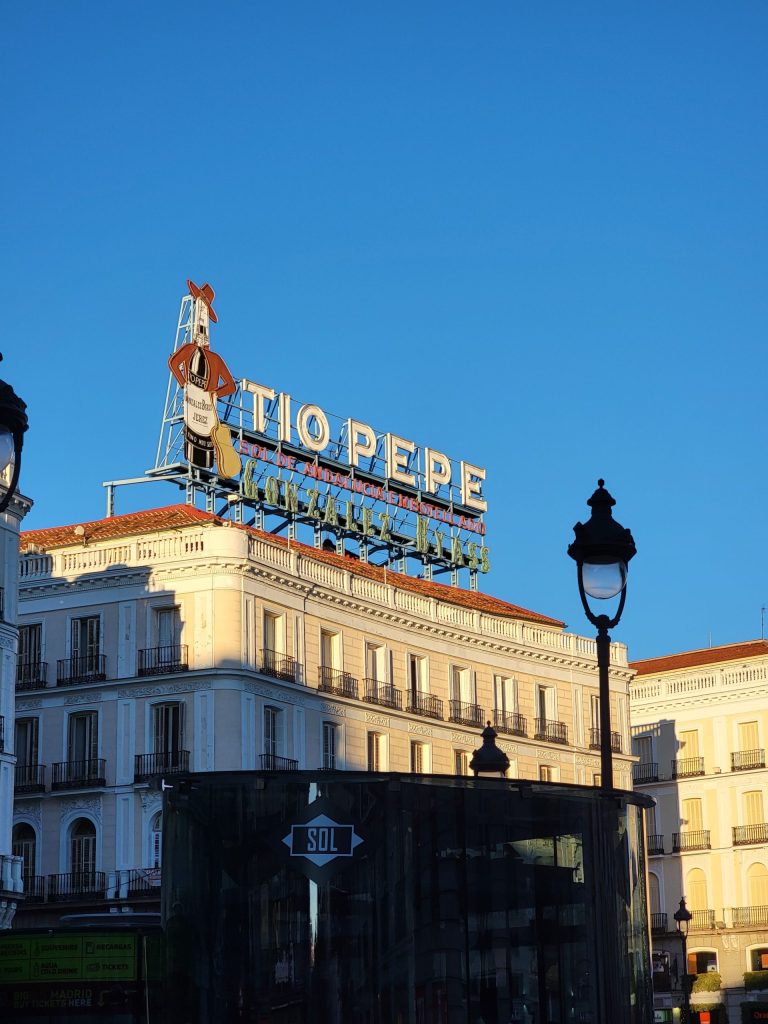 The Tío Pepe sign above Puerta del Sol
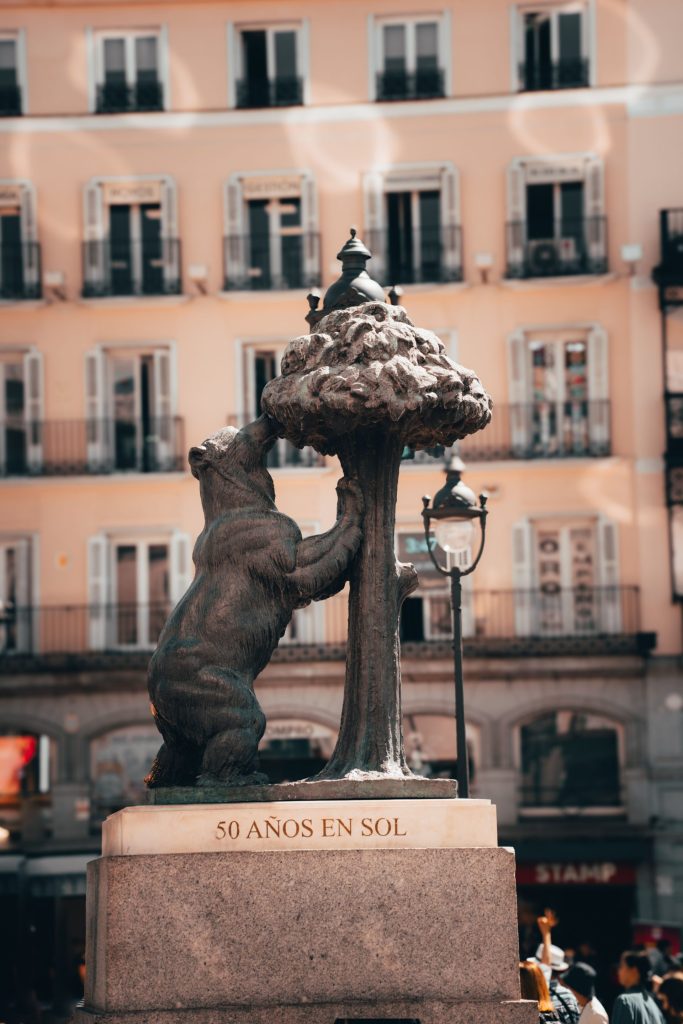 The Bear and the Strawberry Tree
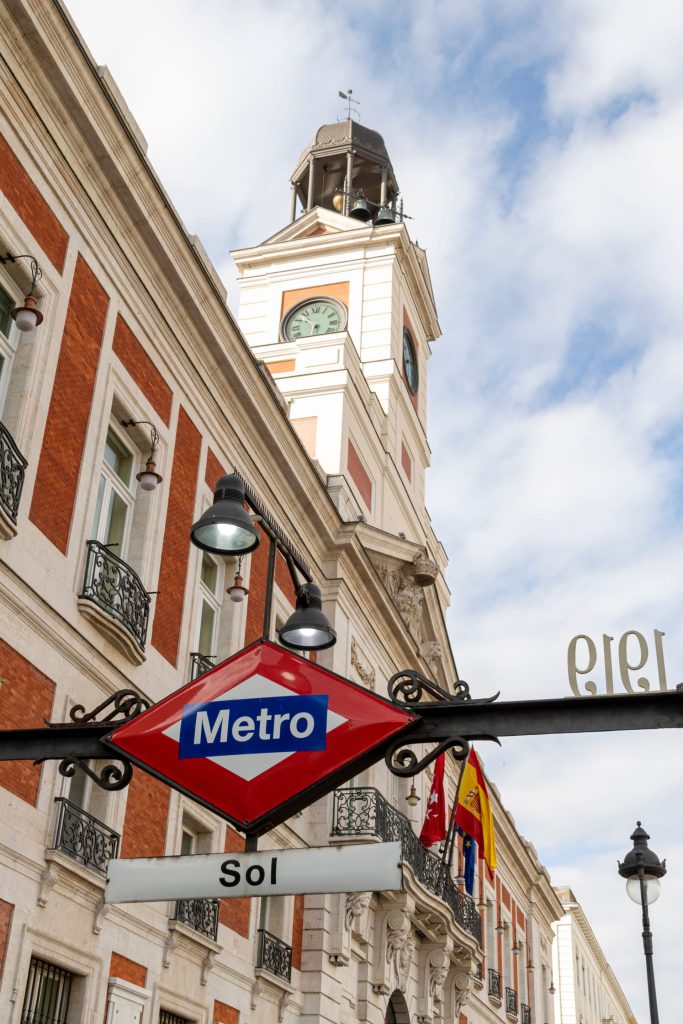 And the Metro, which covers what the walk does not
Sol and the Historical Centre: Maximum Convenience, Minimum Character
The Prado in fifteen minutes, the Palace in twenty, and very little neighbourhood of its own.
Puerta del Sol — the central point from which all Spanish roads are measured — and the surrounding streets form the geographic heart of the city. Everything is technically accessible from here. The Prado is a 15-minute walk. The Royal Palace is 20. La Latina is right there.
What Sol doesn’t offer is much in the way of neighborhood character. The streets immediately around the square are commercial and tourist-facing — chain restaurants, souvenir shops, the kind of infrastructure that exists to extract value from foot traffic rather than serve the people who live nearby. Hotels here are centrally priced for convenience rather than quality.
Best for: first-time visitors who want maximum logistical simplicity and don’t need the neighborhood to have a soul. Perfectly functional, never interesting.
La Latina: Where to Be for Tapas Culture
Cava Baja on your doorstep and the Rastro on a Sunday, which is the busiest the city gets.
If you’re visiting Madrid specifically for food and the Sunday El Rastro experience, La Latina is the correct base. The neighborhood sits south of Sol, centered around Cava Baja — the street with the highest concentration of traditional tabernas and tapas bars in the city — and extends into the hilly medieval streets around the Basilica de San Francisco el Grande.
Staying in La Latina means walking out your door and immediately being in the tapas zone. The Sunday Rastro market is downhill from the main neighborhood. Casa Lucio is five minutes away. The architecture is genuinely old — this is one of the few parts of central Madrid that survived the various destructions of the 19th century with medieval street plans largely intact.
The honest caveat: La Latina is lively, which means Cava Baja on a Friday or Saturday night is not a quiet street. The further from the main tapas strip, the quieter the accommodation.
The ritual that goes with all this, and the one visitors most often miss, is la hora del vermut — vermouth hour, roughly noon to two on a Sunday, after the Rastro and before lunch. It is red vermouth on tap, served over ice with a slice of orange and an olive, almost always with something salty beside it, and in the Cava Baja tabernas it is the busiest and best-humoured part of the week. If you stay in La Latina you do not plan for this; you walk outside on Sunday and it is already happening around you.
Cava Baja and the streets around it
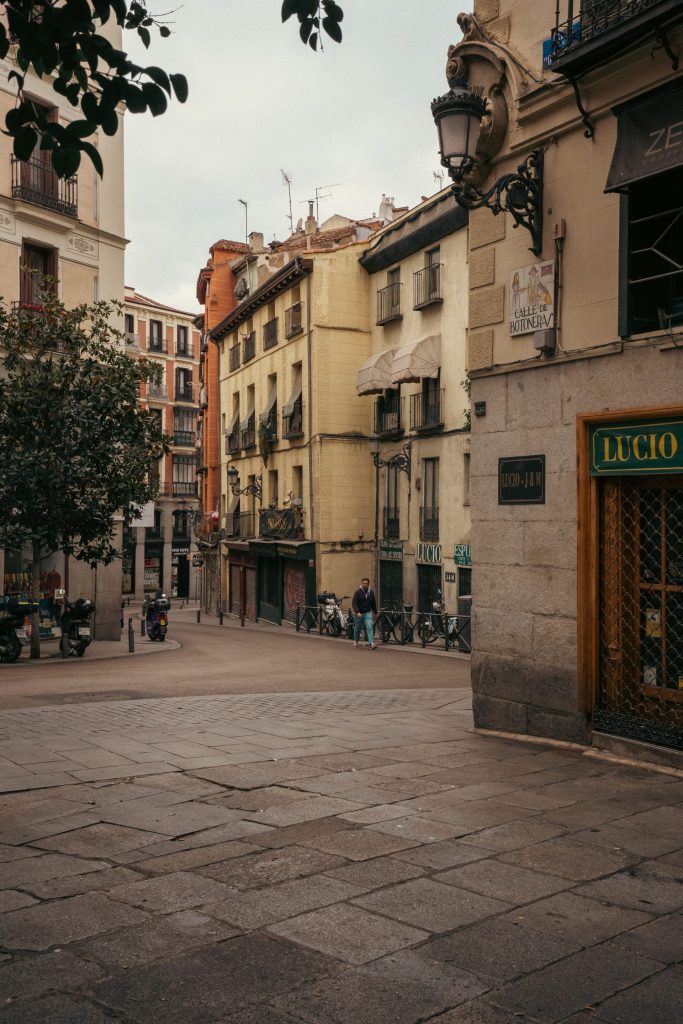 An empty cobbled square at dusk
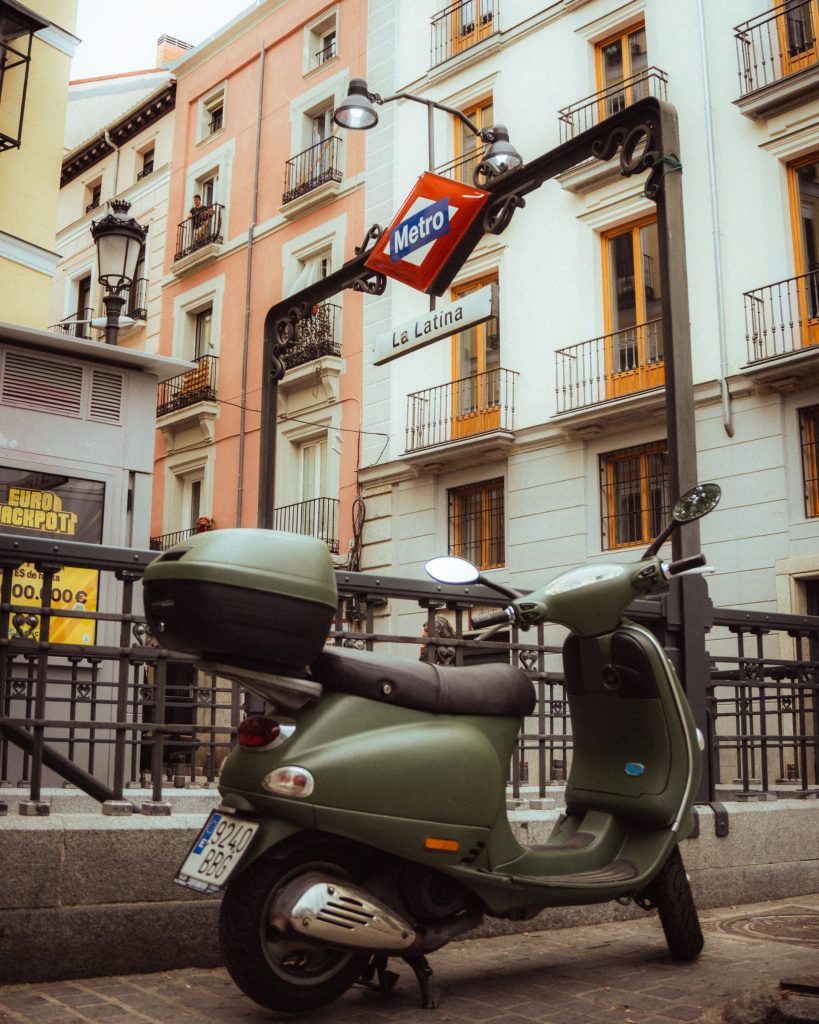 A scooter on a sloping street
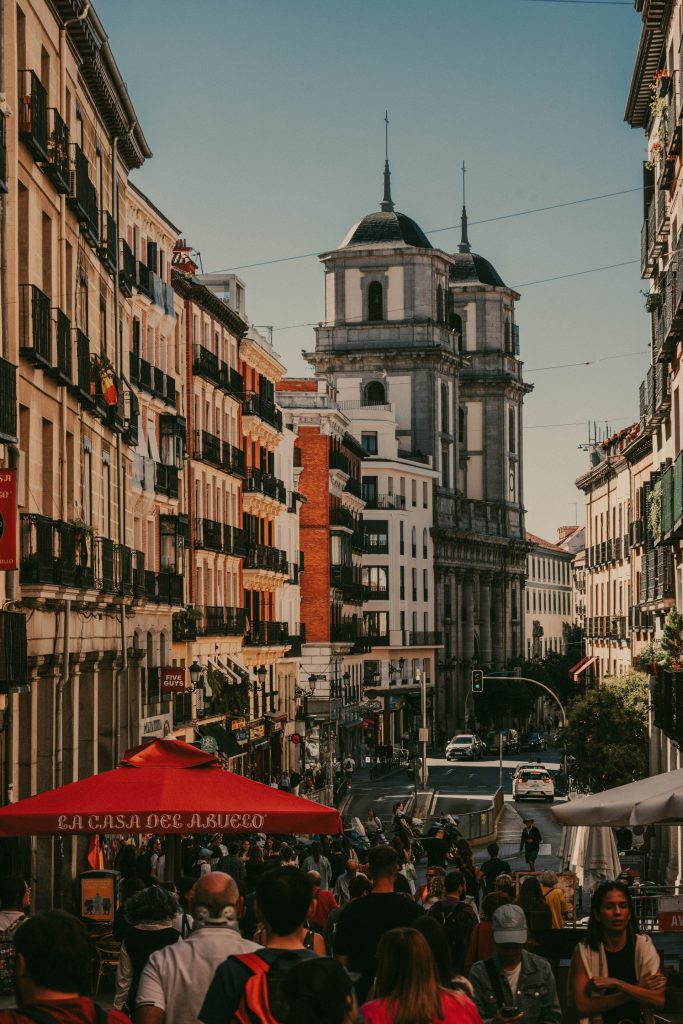 And the same streets once the terraces fill
Malasaña: Madrid's Creative Neighbourhood
Gentrified but not sanitised, and lively late into the night.
Northwest of Sol, Malasaña is the neighborhood that’s been Madrid’s bohemian, creative district since the Movida — the cultural explosion of the late 1970s and 1980s when, after forty years of Franco’s dictatorship, the city suddenly started making art, music, and culture at an extraordinary rate. The Movida’s physical home was here.
In 2026 it’s gentrified but not sanitized — the vintage shops, independent cafés, cocktail bars, and gallery spaces are still there alongside the wine bars and the record shops that have been operating since 1982. Malasaña is the neighborhood that feels most like a city you’d choose to live in rather than a city you’re visiting. The restaurants are good and not tourist-priced. The bars run late. The coffee is serious.
Good for: anyone for whom evenings out and cultural energy matter as much as sightseeing. Less convenient for the major museums (further from the Prado than Sol) but better for everything in the 10pm-2am category.
Malasaña, and the city above it
 A narrow street lined with parked cars
 The curved stone facades of the Gran Vía
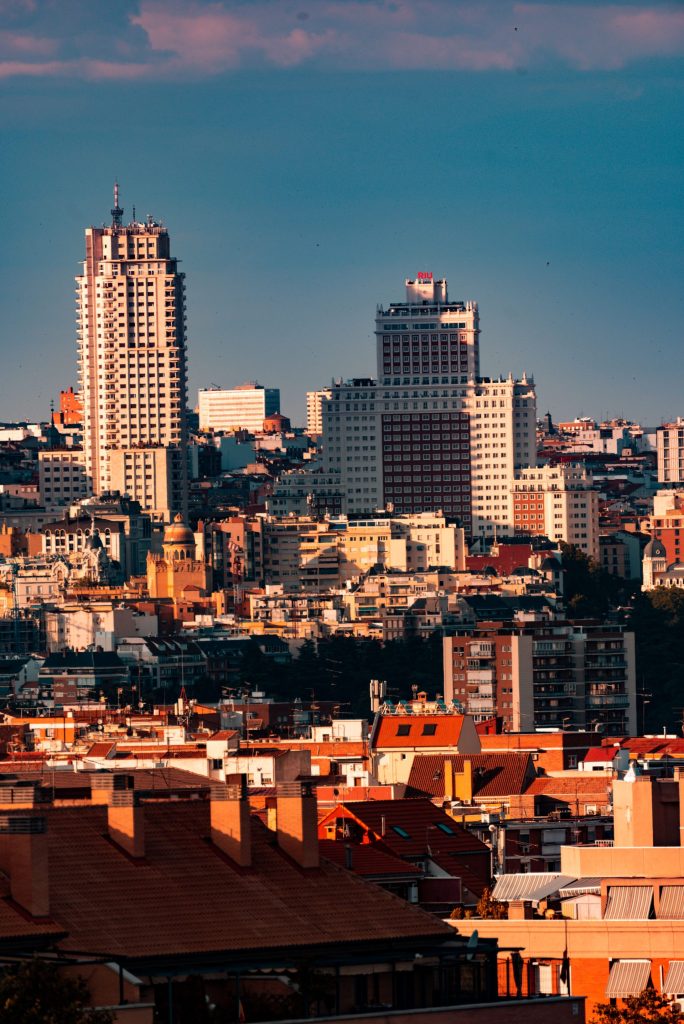 And the rooftops at sunset
Chueca: The LGBTQ+ Hub With Excellent Everything
The most welcoming street life in Madrid, and Orgullo makes rooms scarce in late June.
Chueca is immediately east of Malasaña and shares similar energy at a slightly different frequency — it’s Madrid’s gay neighborhood and one of the most welcoming and distinctly characterized districts in the city. The restaurants, bars, and shops here are notably good even by Madrid standards, with a concentration of independent operators who take their food and their atmosphere seriously.
Madrid Pride (Orgullo) in late June is one of the largest in the world and centers in Chueca — worth knowing about either for the experience or for the accommodation booking challenges it creates.
Good for: solo travelers, couples, anyone who values a neighborhood that’s invested in being a neighborhood. The terraces around the plaza fill at aperitivo time in a way that feels genuinely local rather than performed.
Chueca takes its food and its street life seriously
 A Pride flag over a wrought-iron balcony
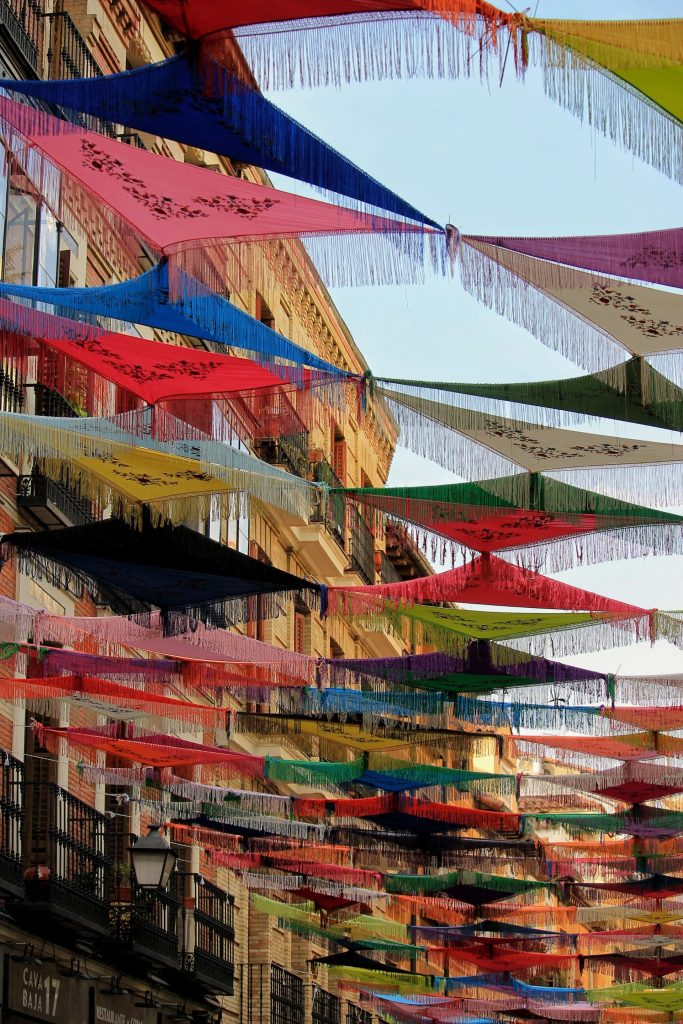 Bunting strung across the street
 And the tables out, which is most of the year
Salamanca: The Smart-Money Option
Wide streets, Retiro nearby, calm at night, and further from everything you came for.
Salamanca is Madrid’s most upscale residential neighborhood — wide boulevards, designer shopping on Calle Serrano, the kind of architecture that reflects 19th-century money tastefully deployed. It’s also where some of the city’s best restaurants are (StreetXO, Casa Dani in the Mercado de la Paz) and where the upper-mid accommodation options tend to be slightly better quality for the price than equivalent hotels in Sol.
It’s further from La Latina and the tapas culture, and further from the Malasaña nightlife, but closer to the Retiro Park and a more residential evening energy. Good for: travelers who want quality accommodation without tourist-zone premium, and whose evenings tend toward dinner-and-home rather than bar-hopping.
Lavapiés: The Most Genuinely Local Option
Rough around the edges in ways that are either the point or the problem.
Lavapiés is south of Sol and has historically been Madrid’s most multicultural neighborhood — waves of migration from North Africa, South Asia, Latin America, and sub-Saharan Africa have given it a character that no other central Madrid neighborhood has. The street food is extraordinarily diverse, the restaurants are cheap and good, and the creative energy is real — the arts scene here has been significant since the early 2000s.
It’s rough around the edges in ways that Chueca and Salamanca aren’t, which is either a feature or a concern depending on what you’re looking for. Not recommended as a base if you want polished comfort; specifically recommended if you want to stay in a neighborhood that functions as a neighborhood rather than as an amenity for visitors.
Where to Stay in Madrid at a Glance
Each neighbourhood, what it is best for, and what you give up.
Every neighbourhood, sortable
| Neighbourhood | Best for | The trade-off |
|---|---|---|
| Sol | Walking to everything — the Prado in 15 minutes, the Palace in 20 | Commercial and tourist-facing, with very little neighbourhood character of its own |
| La Latina | Tapas on Cava Baja and the Sunday Rastro on your doorstep | Old, hilly medieval streets, and the busiest part of the city on a Sunday |
| Malasaña | Creative energy, vintage shops and the Movida’s old ground | Gentrified, and lively late into the night |
| Chueca | Independent restaurants and the most welcoming street life in Madrid | Orgullo in late June makes rooms both scarce and expensive |
| Salamanca | Quiet residential evenings, Retiro nearby, better value at the upper-mid tier | Further from both the tapas culture and the nightlife |
| Lavapiés | The most genuinely local and multicultural version of the city | Rough around the edges — a feature or a concern depending on the trip |
What Madrid Gets Right That Other Cities Get Wrong
The accommodation has improved sharply, and the ordinary parts of the city have not been rearranged for visitors.
Madrid’s accommodation scene has improved significantly in the last decade in a specific way: the conversion of historic buildings — palaces, convents, grand 19th-century commercial buildings — into boutique hotels has added a tier of genuinely atmospheric mid-range options that didn’t exist ten years ago. These are not generic international hotel format applied to a historic room; they’re properties that use the building’s history as the design language.
A few worth knowing in each category:
In Sol/Gran Vía: the area around Gran Vía has several converted historic cinema buildings and Art Deco commercial buildings that now function as design hotels. Prices are tourist-zone but the buildings justify it for people who care about where they sleep.
In Malasaña: boutique guesthouses in 19th-century residential buildings, typically smaller (10-20 rooms), locally owned, with the neighborhood’s character intact. More reliable for people who want to feel in the city rather than above it.
In Salamanca: the international luxury brands are here (Four Seasons Hotel Madrid opened in 2020 in the restored Centro Canalejas complex, one of the most discussed hotel openings in recent Spanish hospitality), alongside boutique options that offer the neighborhood’s elegance at better price points.
The other thing Madrid does better than it is given credit for is the azotea — the rooftop terrace. The city is flat, dry and low enough that roofs genuinely have views, and a great many hotels, department stores and cultural buildings put a bar on top of theirs and open it to anyone. The terrace at the Círculo de Bellas Artes is the one everybody names, and it charges a small admission for the lift, but most neighbourhoods have a quieter version that charges nothing beyond the price of the drink. It is the cheapest good hour in Madrid.
The ordinary texture of the city, which is the actual reason to pick a neighbourhood
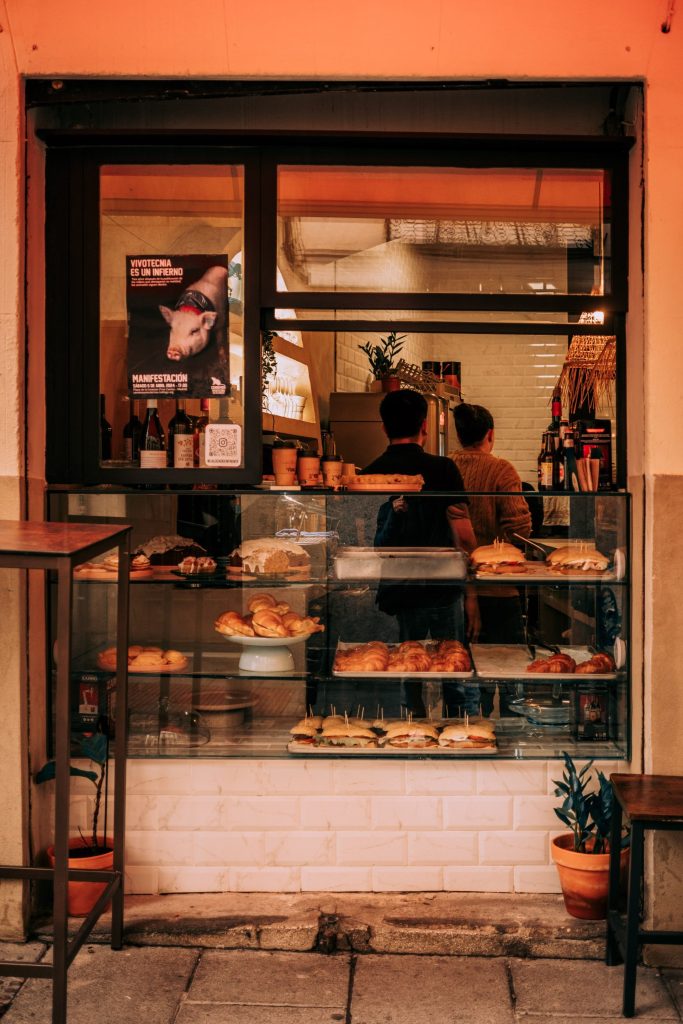 A bakery counter, seen from the pavement
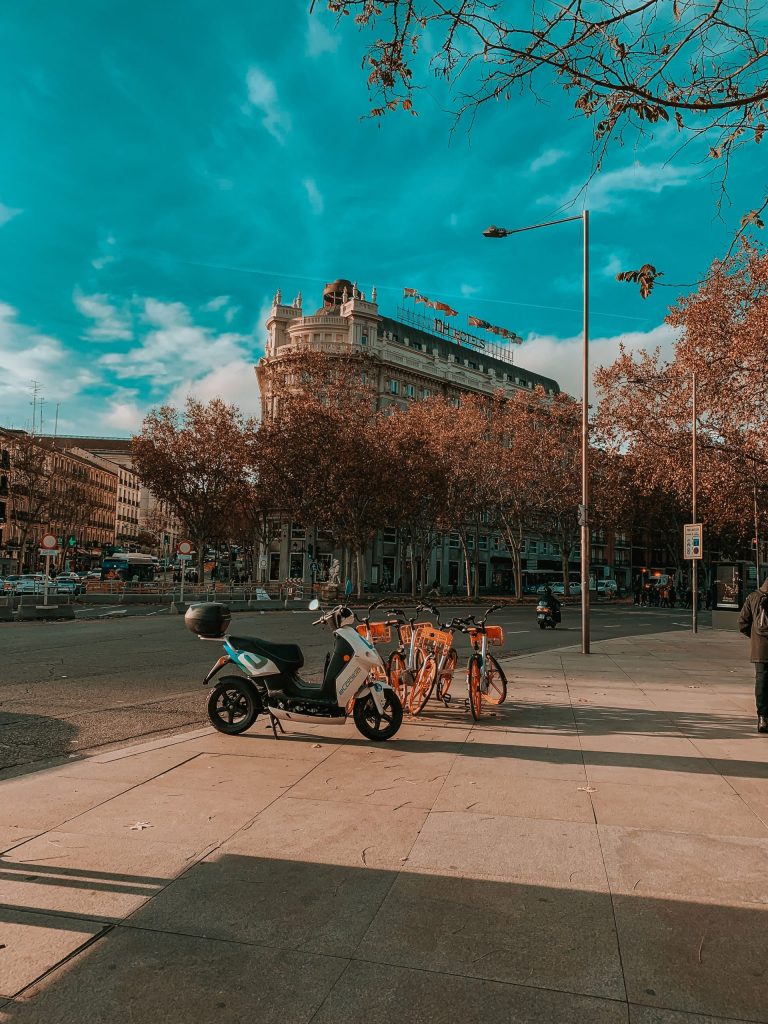 A scooter and a bicycle on a wide boulevard
 And the towers above the park
Book before you go
The neighbourhood, then the hotel
On this scale the district decides your mornings and evenings far more than the room does.
Orgullo, if you are near Chueca
Late June fills the city. Either come for it deliberately or book well clear of it.
A quiet room on a loud street
Cava Baja and the Malasaña corners are worth staying on — ask for the interior side.
Nothing for Sunday lunch
The Rastro and the vermouth hour afterwards do not take reservations and do not need them.
Practical Transport
The metro, the airport line, taxis and the Cercanías network for days out.
Metro: Madrid’s metro is extensive, clean, and fast. A multi-trip card can reduce the cost compared with buying single tickets; check the current fare before travel. Lines 1, 2, 3, and 5 cover the main neighborhoods.
Airport: Metro Line 8 connects Barajas with Nuevos Ministerios; the total fare depends on the ticket and airport supplement, so check the current amount before travel. One of the better airport connections in Europe.
Taxis and Uber: both operate in Madrid. Uber and Cabify are generally cheaper than taxis for longer city crossings. Street taxis in Madrid use meters and are generally reliable, unlike some southern European cities.
For days out, the network you want is Cercanías, the suburban rail run by Renfe out of Atocha and Chamartín. It is how Madrileños reach Toledo, El Escorial and Alcalá de Henares, it costs a fraction of an organised coach tour, and the trains run often enough that you do not need to commit to a return time. Buy at the machines in the station rather than online, and give yourself longer than the timetable suggests at Atocha, which is large enough to lose twenty minutes in.
When to Go, and Where to Actually Book
Season, the hostel option, and the hotel that changed the conversation.
May-June and September-October are the sweet spots: warm (20-30°C), manageable crowds, and hotel prices 20-30% below the July-August peak. Madrid in August actually loses residents who leave for the coast, which makes it genuinely quieter in the city itself — a valid time to visit if you want the cultural institutions to yourself.
Semana Santa (Holy Week before Easter) fills the city with processions and celebrations; the most significant is in Toledo (an easy day trip) rather than Madrid itself, but the week adds crowds and hotel premium.
Madrid has a strong hostel culture in Malasaña and Lavapiés that’s worth knowing for budget travelers. These aren’t the anonymous party-hostel format — they’re properties built around the specific neighborhoods they’re in, with staff who know where to eat and what’s worth doing. Dorm beds from around €20/night, private rooms from €60. The social common areas in the better ones are genuinely good for solo travelers.
Okay hostel in Malasaña and several independent properties in Lavapiés represent the quality tier worth looking for specifically — small, character-driven, neighbourhood-embedded. Search by neighbourhood rather than by price and you’ll find the right end of the market.
The Four Seasons Hotel Madrid opened in 2020 inside the restored Centro Canalejas complex, which combines seven historic buildings. It was the most significant luxury hotel opening in Spain in years and reset expectations for what a Madrid five-star could be. Relevant for anyone looking at the top of the market — the spa, the rooftop, and the central location at the corner of Alcalá and Sevilla are all genuinely impressive.
Worth knowing about even if you don’t stay there, because the hotel’s arrival signalled something real about Madrid’s position in the European luxury travel market. The city is no longer the affordable alternative to Barcelona. It’s a destination in its own right, priced accordingly at the top end, and genuinely worth it.
Booking Madrid in order
Pick the evening you want, then the district
Sol for convenience, La Latina for tapas, Malasaña or Chueca for the nights, Salamanca for calm, Lavapiés for the least polished version.
Come in May, June, September or October
Twenty to thirty degrees, manageable crowds, and rates well under the summer peak.
Book clear of Orgullo and Semana Santa
Late June and Holy Week both fill the city. Either come for them deliberately or avoid them entirely.
Ask for an interior room on the loud streets
Cava Baja and the Malasaña corners are worth staying on, and the interior side is how you sleep.
Consider the hostels properly
Madrid has a genuinely strong hostel culture in Malasaña and the centre, and it is not only for people in their twenties.
Before you go
Which Madrid neighbourhood is best for a first visit?
Sol or La Latina. Sol puts you inside the historic centre with the Prado a 15-minute walk away and everything else close behind; the trade-off is that it is busy and short on local character. La Latina gives you the same walkability with far more atmosphere, especially on a Sunday.
Where should you stay for nightlife?
Malasaña for bars with a creative, slightly scruffy edge, and Chueca for the best-organised nightlife in the city and its LGBTQ+ heart. Both are walkable from the centre and from each other, which is how Madrid nights actually work — you drift rather than plan.
Is Sol too touristy to stay in?
It is the most visitor-facing part of the city and it is noisy at night, but it is also genuinely the most convenient base and that counts for a lot on a short trip. If you are here for two or three days and want to walk everywhere, the convenience usually wins. For anything longer, move one neighbourhood out.
Where should you stay with family or for a quieter trip?
Salamanca. It is the smart-money neighbourhood — wide streets, good restaurants, calm at night, and a short metro ride from the centre. You give up the walk-everywhere convenience of Sol and you get sleep in return.
Is Lavapiés a good area to stay in?
If you want the version of Madrid that is not arranged for visitors, yes. It is the most diverse and most genuinely local part of the centre, with the food to match. It is also the least polished, and some streets feel scruffier at night than the tourist map suggests — ordinary city judgement applies.
Do you need to stay near a metro station?
Less than you would think. The centre is compact and most of what visitors want is walkable. The metro matters for the airport, for Salamanca and for getting home late, and it is cheap, frequent and easy to use. Check the last train before you commit to a long night.
How far in advance should you book?
Several weeks for spring and autumn weekends, which are the busiest. Madrid has more accommodation than its visitor numbers strictly require, so you will usually find something late — you will just pay more and sleep further out than you wanted.
What is the best time of year to stay in Madrid?
May and June, then September and October. July and August are genuinely hot and a good part of the city leaves. Winter is cold, clear and much cheaper, and the city keeps its hours regardless of the weather.
Keep going


Sources
Checked 2026 against the city tourism board and the transport operators · esMadrid, the official tourism board · Metro de Madrid · EMT Madrid · Renfe · Museo del Prado · Adolfo Suárez Madrid-Barajas · Spain tourism · Time Out Madrid · Lonely Planet Madrid · FCDO Spain travel advice
We will tell you whether we can help and send a written quote before any paid work begins.