


Caribbean / Jamaica / Travel guide · 14 min read
The trip you get depends on whether you leave the resort.
Jamaica is smaller than Connecticut. Kingston, Boston Bay and the Blue Mountains are all closer than the brochure implies.
Jump to what you came for
How Jamaica is organised
The decision you make before you book anything
Here’s something I keep saying about Jamaica and nobody believes until they go: it’s smaller than Connecticut. At roughly 4,200 square miles, this is an island that a lot of people spend a week inside the gates of one resort on — and there’s nothing wrong with that, the all-inclusive model here is genuinely well-developed and some of the best of its kind in the Caribbean.
But the version of Jamaica that exists outside those gates is a completely different country, and it operates at a frequency that has shaped global music, global food culture and global ideas about what a good time looks and feels like, in ways disproportionate to the island’s size by any reasonable measure.
This guide covers both Jamaicas. The resort Jamaica for people who want it, and the other Jamaica for people who want that instead — or, better, both on the same trip.
Jamaica at street level


When to go
December through April is the dry season and peak pricing. June to November is cheaper and is also hurricane season — treat disruption cover as part of the ticket price.
Jamaica has four main tourist regions, and picking the wrong one for what you actually want produces a trip that’s fine and slightly frustrating. Here’s the honest breakdown:
Montego Bay is the most resort-concentrated area — close to the main airport (Sangster International), surrounded by all-inclusive properties, championship golf courses, and the tourist strip along Jimmy Cliff Boulevard. The most convenient choice for a beach-first trip that doesn’t require much independent planning.
Negril is where Jamaica tourism started, and it’s where it remains most itself in some ways: the Seven Mile Beach is one of the most beautiful stretches of Caribbean sand, the West End cliffs give you cliff-jumping and sunsets and the specific laid-back energy that made people start coming here in the 1970s. More independent-travel-friendly than Montego Bay. The road from the airport takes about 90 minutes.
Ocho Rios is the adventure base — Dunn’s River Falls (limestone terraces where tourists hold hands and climb together, which sounds naff and is surprisingly enjoyable), the Blue Hole, Konoko Falls, zip-lining through rainforest. More activity-oriented than Negril, more accessible than Kingston.
Kingston is where Jamaica actually lives. The capital city, the Bob Marley Museum, the Trench Town Culture Yard (where the reggae movement was born), the National Gallery of Jamaica, the best restaurants on the island, and the Blue Mountains rising above it all. Most first-time visitors don’t come here specifically. Most people who’ve been before wish they’d come here sooner.
The four regions, compared
| Region | Best for | Airport transfer | Trade-off |
|---|---|---|---|
| Montego Bay | Beach-first trips, all-inclusives, golf | 10–20 min from Sangster | Least independent; the strip can feel sealed off |
| Negril | Seven Mile Beach, cliff sunsets, independent travel | ~90 min | Spread out; you need taxis to move along the cliffs |
| Ocho Rios | Waterfalls, zip-lining, the adventure circuit | ~90 min from Sangster | Cruise-ship days crowd the big sites by mid-morning |
| Kingston | Music history, the best restaurants, the Blue Mountains | ~45 min from Norman Manley | Not a beach base; needs a guide in places |
Which Jamaica are you booking?
You want beach, sunsets and no decisions
Negril’s West End, three to four nights, and one day inland
You came for the music and the food
Kingston first, then the Blue Mountains an hour above it
You want the version most visitors miss
Treasure Beach on the south coast, and Port Antonio in the north-east
You are island-hopping the wider Caribbean
Compare it with Puerto Rico and the Dominican Republic
Kingston: the version most people miss
The capital, the music, and the best restaurants
The honest case for spending at least two nights in Kingston: it’s where the cultural layers of Jamaica are most dense and most available. The Bob Marley Museum at 56 Hope Road is in the house where Marley lived from 1975 until his death in 1981 — a guided tour through his recording studio, personal space, and the room where the 1976 assassination attempt left bullet holes in the walls that are still visible. Not a museum in the reverential, glass-case sense. A house where he lived.
The Trench Town Culture Yard in west Kingston is more challenging logistically (it requires going into a neighborhood that most resort tourism doesn’t reach) and more rewarding for it. This is where the Wailers rehearsed in the 1960s, where the specific social conditions that produced reggae music as a language for the dispossessed were most concentrated. Go with a licensed guide; the community runs tours specifically because independent wandering in this area isn’t the right approach.
Kingston’s restaurant scene is genuinely the best on the island — ask any Jamaican chef where they eat at home and the answer involves Kingston. The uptown neighborhoods around New Kingston and Hope Road have excellent options that never make it into beach resort guides precisely because beach resort guides don’t cover Kingston.
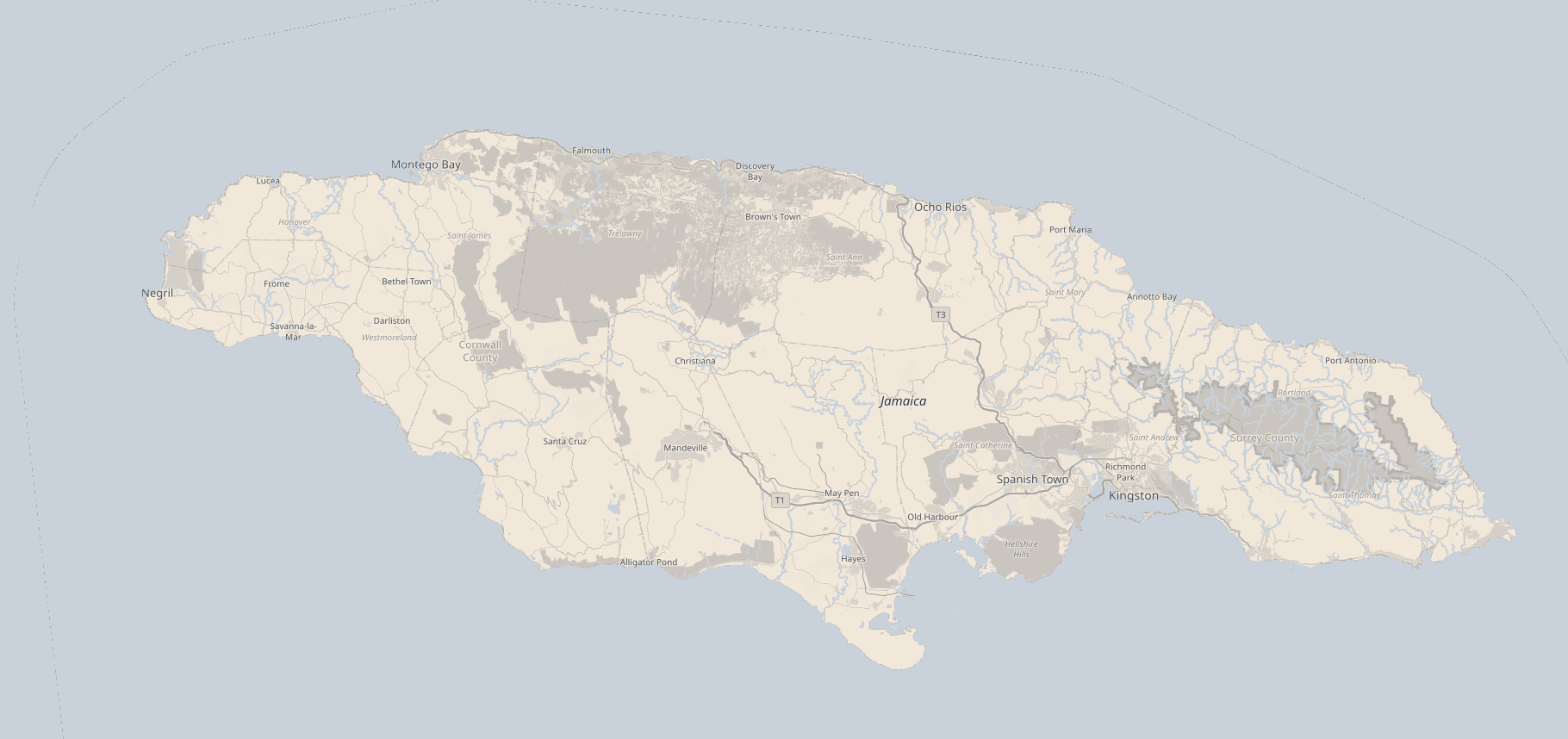 Six regions, and the drives between them are longer than the map suggests.
Jerk: the one thing to do correctly
A method, not a sauce
Jerk chicken is Jamaica’s most famous culinary export, and the version you’ve had outside Jamaica — at a restaurant in London or New York or wherever you are — is related to the original the way a photograph of a painting is related to the painting.
The original version is made in Boston Bay in Portland Parish on the northeast coast of the island, where the tradition began with the Maroon communities in the Blue Mountains. Pork or chicken (always whole pieces, never strips) is marinated in a paste of scotch bonnet peppers, allspice (pimento), thyme, garlic, and ginger, then slow-smoked over pimento wood in a covered pit until the smoke has penetrated throughout. There’s no gas burner version of this experience. The wood matters. The pimento matters. The time matters.
If you’re anywhere near Portland Parish or the northeast coast, going to Boston Bay specifically for jerk is the kind of trip detour that becomes the thing you talk about. If you’re in Montego Bay or Negril, the roadside jerk stands are still significantly better than anything exported.
Pimento wood, a split drum, and several unhurried hours


Blue Mountains: the other Jamaica
7,402 feet, an hour above Kingston
Rising above Kingston to 7,402 feet, the Blue Mountains are cooler, misty, and covered in coffee plants that produce what many roasters consider among the finest coffee in the world. Blue Mountain coffee costs more than most other coffees because the altitude and the climate conditions that produce its specific mild, balanced flavor require slow growing at high elevation — but drinking it in the mountains where it’s grown, at a small farm that sells directly, is a different experience from the same coffee in a specialty café in Dubai.
The Holywell Recreational Area in the national park gives accessible hiking without requiring technical equipment — trails through the cloud forest with the city visible below on clear days. Craighton Estate coffee tour is the most established farm tour, and the combination of coffee tasting at altitude in a working plantation with the drive up through the mountain villages is the most specifically Jamaican day available from Kingston.

Negril: sunset and the West End cliffs
Seven Mile Beach is as good as described
Seven Mile Beach is exactly as good as described. The sand is fine, the water is warm and clear, the beach bars are consistent, and the sunset from the western end of the beach — or better, from the cliff-side bars like Rick’s Café on the West End — is the iconic Jamaica sunset that all the images in the brochures are trying to recreate.
Rick’s Café has become famous enough that the cliff-jumping has turned into a performance with an audience, which you can choose to participate in or watch while drinking a rum punch. Both are fine. The West End cliffs more generally — a road running along the edge of the limestone cliffs with bars, restaurants, and guesthouses perched above the water — are worth an evening walk even if you’re based at a beach resort rather than on the cliffs themselves.

Treasure Beach: where Jamaicans go
The south coast never built the wall
On the south coast, about two hours from Negril and three from Kingston, Treasure Beach is where Jamaicans who have options go for their own holidays. Quieter than any of the north coast destinations, with no large all-inclusive properties, a fishing village character that’s been maintained rather than replaced, and the kind of beach bars and simple restaurants that are primarily serving the people who live nearby.
The Calabash International Literary Festival, held in Treasure Beach, is one of the Caribbean’s most respected literary events and draws writers from across the Anglophone world to a setting that’s specifically and unusually beautiful. Worth knowing about for anyone who finds themselves here in May or June when it runs.

Practical Jamaica
Transport, timing, and safety in proportion
Getting around: Jamaica requires either organized transfers between destinations or rental car driving (on the left, as in the UK — Caribbean roads are genuinely varied in quality). The distances between regions are larger than the map suggests due to road conditions; Kingston to Negril is 3+ hours rather than the 2.5 the map implies. Plan accordingly.
Best time: December through April is the dry season — classic Caribbean beach weather, reliable sunshine, peak season pricing. June through November is hurricane season technically, with September and October carrying the highest risk. The shoulder months of May and November offer lower prices with reasonable weather.
Safety: Jamaica has a genuine crime problem in certain areas — Kingston has high crime rates in specific communities — but the tourist-facing areas (Negril, Montego Bay, Ocho Rios, the resort strip) have a very different security reality. Common sense applies: don’t flash valuables, use licensed taxis, book organized transport for Kingston visits. The vast majority of visitors have entirely uneventful trips.
Book before you fly
Airport
MBJ for the north coast and Negril, KIN for Kingston, the Blue Mountains and the south. The wrong one adds a long transfer at both ends.
A car for two or three days
Not the whole trip. It is cheaper than resort transfers and it is the only way to reach the Blue Mountains, Boston Bay and Treasure Beach on your own schedule.
Blue Mountain sunrise hike
Guided, and it starts around 2am. It cannot be arranged the night before.
Hurricane-disruption cover
Between June and November treat this as part of the ticket price, not an upsell.
What to eat and drink
Five things, and the rum at the end
The Jamaica food conversation starts and ends with jerk, but here’s the fuller picture:
Ackee and saltfish: the national dish. Ackee is a fruit that arrived from West Africa on slave ships, grows on trees across the island, and in its ripe form has a flesh that cooks like scrambled eggs but tastes like nothing else. Combined with salted codfish, scotch bonnet, onions, and tomatoes, it’s a specifically Jamaican breakfast that you cannot accurately describe to anyone who hasn’t had it.
Curry goat: slow-cooked with Scotch bonnet, allspice, and island-grown curry blend until the meat falls from the bone. A Sunday and celebration dish, found at family restaurants rather than tourist buffets. The curry blend in Jamaica is different from Indian curry and different from Trinidadian curry — a hundred years of Caribbean adaptation to local palate has produced something specific.
Patties: a Jamaican fast food that’s been exported across the Caribbean and is better at the source. A flaky, turmeric-yellow pastry shell filled with spiced beef, chicken, or vegetables. Available at Juici Patties and similar chains across the island for around USD $1. Eat one for breakfast with a coco bread (soft bread roll) and understand why this is the most popular quick meal on the island.
Red Stripe: Jamaica’s national beer, light lager, served ice cold, correct. Rum punch: the island’s cocktail, made with Jamaican rum (Appleton Estate is the benchmark), lime, sugar, and bitters in various ratios. Overproof rum: 63% ABV, white rum used in cooking and sold in small bottles at rum bars. Don’t drink it as a spirit without mixing.
The Appleton Estate rum tour in the Black River valley is a half-day excursion that covers the full production process from sugar cane field to barrel aging. The estate has been producing rum since 1749 and the aged expressions available for tasting at the end of the tour are better than anything available in duty-free.
The Jamaican canon
Ackee and saltfish — National dish
— a West African fruit that cooks like scrambled egg and tastes like nothing else, with salted cod, scotch bonnet, onion and tomato. Breakfast, properly.
Curry goat — Sunday cooking
— slow-cooked with scotch bonnet, allspice and an island curry blend that is its own thing — not Indian, not Trinidadian. Family restaurants, not buffets.
Patties — About USD $1
— turmeric-yellow pastry around spiced beef, chicken or vegetables. Eat one with coco bread and the whole category makes sense.
Appleton Estate rum — Benchmark
— producing since 1749 in the Black River valley. The aged expressions at the end of the tour beat anything in duty-free.
Red Stripe — Cold, always
— the national lager. Overproof white rum at 63% is for mixing and cooking — not for drinking neat, whatever anyone tells you.
The three plates to order


The reggae context
More globally influential music than countries fifty times its size
Jamaica has produced more globally influential music per capita than any country in the world — not just reggae, but ska, rocksteady, dancehall, and dub, all of which emerged from this island and influenced everything from punk to hip-hop to EDM. Understanding this is the difference between passing through Kingston’s music history as a tourist stop and engaging with it as one of the significant cultural stories of the 20th century.
The Trench Town Culture Yard is the right starting point. From there, the Jamaica Music Museum (part of the Institute of Jamaica) and the Tuff Gong International Recording Studio (Marley’s studio, still operating, tours available) fill in the context.
The bottom line
Use the resort as a base, not as the trip
Jamaica has more going on than a week at a Sandals resort reveals, and less than the safety-warning tone of some travel guides suggests. The jerk at a roadside stand in Boston Bay. The Blue Mountains above Kingston. Negril’s west-facing cliffs at sunset. Kingston’s music history on a walking tour.
Use the resort as a base if you want it. Leave it regularly.
Before you go
How many days do you need in Jamaica?
Seven nights is the number that makes the island work without rushing. That gives you four or five nights on one coast and two or three in Kingston or the Blue Mountains, with the long transfer absorbed rather than dominating a short trip. At five nights, pick one region and stay in it. Ten nights lets you add Treasure Beach or Port Antonio, which is where the trip stops looking like everyone else’s.
Is it worth leaving the resort in Jamaica?
Yes, and it does not have to be dramatic. A half-day to a roadside jerk drum, an afternoon on the West End cliffs, or a morning at a Blue Mountain coffee farm changes the texture of the week considerably. The all-inclusive model here is genuinely well run, so use it as a base rather than treating it as the whole trip. The island outside the gates is the reason the island is famous.
Do you need a car in Jamaica?
Not necessarily. Driving is on the left and road quality varies sharply, so many visitors use organised transfers between regions and licensed taxis locally. That costs more and removes the main source of stress. Rent a car if you want Treasure Beach, Port Antonio or the south coast on your own schedule. Budget more time than the map suggests: Kingston to Negril is over three hours, not the two and a half it looks like.
When is the best time to visit Jamaica?
December through April is the dry season and the reliable choice, with peak pricing to match. Hurricane season runs June to November, and September and October carry the real risk. May and November are the value window — lower prices, mostly good weather, and far fewer people at Dunn’s River Falls and the Seven Mile Beach bars. Book around the Calabash festival weekend in Treasure Beach well ahead if you want it.
Where is the best jerk in Jamaica?
Boston Bay in Portland Parish, on the northeast coast, where the tradition came down from the Maroon communities in the Blue Mountains. Whole pieces of pork or chicken, marinated in scotch bonnet, pimento, thyme, garlic and ginger, then slow-smoked over pimento wood in a covered pit. The wood is not a detail; it is the dish. Roadside drums elsewhere are still excellent, and still a different league from jerk abroad.
Is Blue Mountain coffee worth the price?
In a café in London or Dubai, arguably not — you are paying for scarcity and a protected name. Drunk at altitude on the estate that grew it, with the cloud forest around you and the city far below, it is a different proposition entirely. Craighton Estate runs the most established tour. Buy directly from a small farm where you can; the gap between the farm gate and the export price is considerable.
Keep going
Sources
Prices, drive times and opening hours are editorial estimates from recent reporting rather than published rates — confirm the ones your plans depend on · Visit Jamaica — the Jamaica Tourist Board · JTB Online — the board’s trade site · UK FCDO — Jamaica travel advice · US State Department — travel advisories · Government of Canada — travel advisories · Smartraveller — Australian government advice · CDC — Travelers’ Health · NOAA National Hurricane Center · UNESCO — Blue and John Crow Mountains · CIA World Factbook
We will tell you whether we can help and send a written quote before any paid work begins.