If you’re searching for the best islands in Southeast Asia, this guide ranks 10 top picks across Thailand, the Philippines, Indonesia, Malaysia, Vietnam, and Cambodia — scored on food quality, diving, budget, and crowds. Skip straight to the comparison table or browse by country below.

10 Best Islands in Southeast Asia (2026): Food, Diving & Island Hopping
The best islands in Southeast Asia aren’t just about beaches — they’re culinary destinations where you stumble into night markets, floating seafood shacks, and family warungs that will ruin you for restaurant food everywhere else. After island-hopping across the region for weeks — eating my way through pepper farms in Phu Quoc, fresh-caught clams in Con Dao, and grilled red snapper at plastic tables on Koh Phi Phi — I’ve ranked the 10 best islands that actually deliver on both fronts: killer food and adventures worth your time.
I’m ranking these by what matters: authenticity, food quality, actual activities worth doing, and whether you can stay on the island and eat brilliantly without ever leaving. Some are famous. Some are hidden gems. All of them impressed me enough that I’m going back. Use the quick-pick table below to find your match, then hit the country tabs for the full breakdown on each island.
Best Islands in Southeast Asia: Quick Comparison Table
Scored on food quality, diving, how budget-friendly it is, and how crowded it gets. Use this to shortlist your island before diving into the detail below.
Island Comparison at a Glance
🍜 Food quality | 🤿 Diving | 💰 Budget (more = cheaper) | Crowds = how busy it gets
| Island | Country | Food | Diving | Budget | Crowds | Best For |
|---|---|---|---|---|---|---|
| Koh Phi Phi | 🇹🇭 Thailand | 🍜🍜🍜🍜 | 🤿🤿🤿🤿🤿 | 💰💰 | Busy | Divers & night-market lovers |
| Palawan | 🇵🇭 Philippines | 🍜🍜🍜🍜🍜 | 🤿🤿🤿🤿 | 💰💰💰 | Moderate | Food obsessives & lagoon kayakers |
| Bali | 🇮🇩 Indonesia | 🍜🍜🍜🍜🍜 | 🤿🤿🤿 | 💰💰💰 | Busy | Culture lovers & warung hunters |
| Langkawi | 🇲🇾 Malaysia | 🍜🍜🍜🍜 | 🤿🤿 | 💰💰💰💰 | Moderate | Adventure seekers & hawker fans |
| Phu Quoc | 🇻🇳 Vietnam | 🍜🍜🍜🍜 | 🤿🤿🤿 | 💰💰💰💰💰 | Moderate | Night market fans & solo travelers |
| Koh Tao | 🇹🇭 Thailand | 🍜🍜🍜 | 🤿🤿🤿🤿🤿 | 💰💰💰💰💰 | Moderate | Dive certification & budget travel |
| Tioman | 🇲🇾 Malaysia | 🍜🍜🍜🍜 | 🤿🤿🤿🤿 | 💰💰💰💰 | Quiet | Jungle trekkers & hidden-gem seekers |
| Gili Islands | 🇮🇩 Indonesia | 🍜🍜🍜 | 🤿🤿🤿🤿 | 💰💰💰 | Moderate | Turtle spotters & chill seekers |
| Con Dao | 🇻🇳 Vietnam | 🍜🍜🍜🍜 | 🤿🤿🤿 | 💰💰💰 | Quiet | History buffs & authentic-food chasers |
| Sihanoukville Islands | 🇰🇭 Cambodia | 🍜🍜🍜 | 🤿🤿🤿 | 💰💰💰💰💰 | Quiet | Off-grid backpackers |
The 10 Best Islands in Southeast Asia — Browse by Country
Every island below is one of the best islands in Southeast Asia for a specific type of traveler. Click a country tab to jump straight to its islands — each entry covers what the food is actually like, what’s worth doing, and exactly where to go.
1. Koh Phi Phi
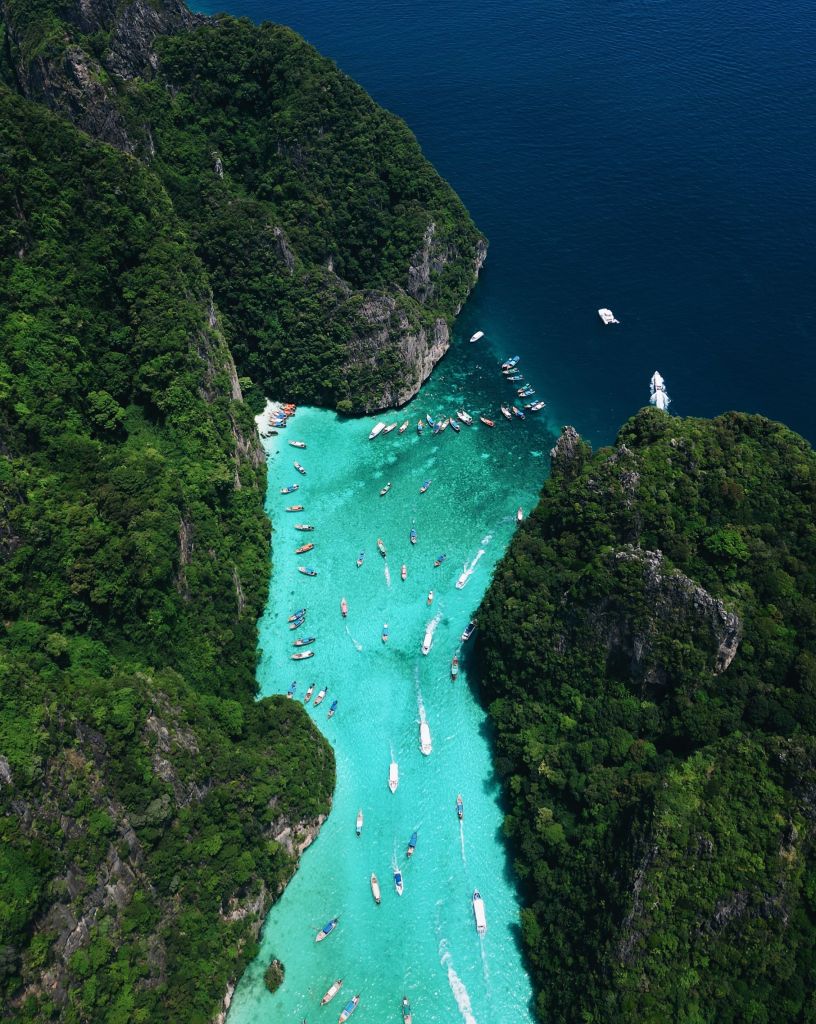
🤿 World-Class Diving🍜 Night Market SeafoodKoh Phi Phi gets a bad reputation for crowds — and yeah, you’ll see them — but the island delivers on every level. The diving is legitimately world-class. I went down 60 feet and watched a sea turtle drift past like it owned the place (it did). The limestone rock formations are dramatic, the water is an impossible shade of blue, and after dark the night markets serve fresh seafood grilled directly in front of you while you wait.
The food story on Phi Phi is all about the catch of the day. I had a grilled red snapper — charred outside, buttery inside — for less than $5 at the Tonsai Village night market. Get there around 6pm, grab a plastic stool, and eat while your fish cooks. The spicy papaya salad stall with the queue of locals? Go there first. Don’t skip it.
6. Koh Tao
🎓 Best for Dive Certification💰 Ultra Budget-FriendlyKoh Tao is where people come to get their PADI dive certification — for around $300, one of the most affordable rates anywhere in the world. Beyond the dive courses, it’s a genuinely chill place to exist. Small island, low-key vibe, and everyone is either a diver, a yoga person, or someone who wanted to disappear for a week and succeeded entirely.
The food matches the vibe: cheap, plentiful, and occasionally excellent. Fresh fish grilled on the beach for pennies. Pad Thai vendors lined up along the main street. Skip the Italian restaurants (yes, they exist, no, don’t) and eat where the locals eat. I had fresh grouper cooked in foil with lemongrass and chiles from a beach vendor at sunset — it cost less than a coffee at Starbucks and tasted better than most restaurant meals I’ve paid 10x for.
2. Palawan
🏆 Best Overall Food🛶 Lagoon KayakingPalawan is the Philippines’ crown jewel and one of the best islands in Southeast Asia for food. The Bacuit Archipelago — limestone islands surrounding the main island — is so beautiful that kayaking through it feels like a video game. I paddled into hidden lagoons, swam with fish that looked painted on, and explored caves no one else was in because everyone else was still on the main beaches.
The food is what makes Palawan stick with you. Puerto Princesa has a massive public market where local fishermen sell whatever they caught that morning. I bought mussels the size of my fist for $2. The island is also famous for fresh tuna, local crab, and Filipino breakfast staples made by someone who grew every ingredient in their backyard. You eat better here on $5 a day than in most cities spending 10 times that.
3. Bali
🛕 Culture & Deep Food🌾 Rice Terrace HikingBali isn’t for hiding from crowds, but it has something for everyone — and the people who write it off as too touristy are usually the ones who stayed in Seminyak and never left. Get up to Ubud in the rice terraces and it actually feels like you’ve gone somewhere. I spent a week cycling through rice paddies in the morning, eating at tiny warungs for $1.50 a meal, and watching gong performances at temples by evening.
Skip the tourist restaurants in Seminyak (overpriced, generic). The local spots hidden in rice fields — made by someone’s grandmother, costing almost nothing — are where the food makes sense. I had nasi kuning (turmeric rice), gado-gado (vegetable salad with peanut sauce), and satay that made me question why I’ve eaten meat any other way. Balinese food layers spices, agriculture, and culture in a way no restaurant menu can replicate.
8. Gili Islands
🐢 Turtle Snorkeling🚗 Car-Free IslandsThe Gili Islands — Trawangan, Meno, Air — are a study in minimalism: no cars, no motorbikes, just bikes, boats, and people. Walk 20 meters into the water and sea turtles are just there, completely unbothered by humans. Gili Trawangan has the parties. Gili Air is quieter and has the kind of slow Southeast Asian breakfast worth waking up for. Gili Meno is the smallest, most peaceful, and most likely to make you miss your flight home.
Food-wise: skip the tourist restaurants and eat where Indonesian families eat. Fresh fish is grilled daily right on the beach. Some evenings a night market appears with grilled seafood that’s cheap and genuinely excellent.
4. Langkawi
🌿 UNESCO Geopark🍜 Hawker Food HeavenLangkawi leans upscale without being pretentious. It’s got the sky bridge, the cable car, zip-lines through the rainforest, and a geopark that’s actually UNESCO-protected. But it also has cheap hawker stalls where you can eat like a local all day. I zip-lined over a rainforest canopy in the morning and ate laksa noodles for $1.20 at lunch. That’s the Langkawi balance nobody talks about.
The food is genuinely Malaysian: Malay, Chinese, and Indian influences layered onto each plate. Nasi lemak, roti canai, and fresh prawns grilled in their shells. The hawker centers near town are where locals eat — cheaper, faster, and honestly better than the beach restaurants every time.
7. Tioman Island
🌴 Hidden Gem🦎 Jungle & WildlifeTioman gets skipped by most travelers, which is exactly why you should go. Dense jungle meets calm beaches, and you’ll actually see wildlife. I watched a monitor lizard the size of a small dog cross the path like it owned the road (it did). The island is Malaysian, which means the food has real depth: not tourist food, actual Malaysian cuisine cooked by people who’ve been doing it their whole lives.
I had a grilled fish curry that changed how I think about cooking — wrapped in banana leaves, grilled over coals so the flesh steamed inside while the outside charred. Turmeric, lemongrass, lime, fish. That dish alone is worth the ferry trip.
5. Phu Quoc
🌶️ Pepper Farms🐟 Fish Sauce HeritagePhu Quoc is the island you go to when you want authenticity without the backpacker crowds. Famous for pepper (grown here, some of the world’s finest), fish sauce (the real kind), and diving. I went to a pepper farm, watched locals harvest black peppercorns in the midday heat, and came away respecting every dish that uses fresh-cracked pepper. The island is quiet, the beaches are pristine, the food is honest.
The night market is where everything happens. Fresh crabs, fresh fish, freshly grilled everything. I had a bowl of pho for $0.80 that was better than most pho I’ve eaten anywhere. The fish sauce smell isn’t accidental — it’s the island’s heritage and the smell of serious umami.
9. Con Dao Islands
🏛️ History & Isolation🦀 Authentic Local FoodCon Dao is genuinely remote. The islands have deep colonial and wartime history — a French prison island, then a South Vietnamese one — beautiful uncrowded beaches, and the kind of authenticity you only get when a place isn’t on the standard backpacker route. I saw maybe three other Western tourists the entire week I was there.
The food isn’t tuned for tourists. Fresh seafood dominates. I had clams steamed with garlic and butter that tasted like they were pulled from the ocean an hour before. Simple restaurants, no frills, incredibly fresh ingredients prepared honestly.
10. Sihanoukville Islands
🌊 Off the Beaten Path💰 Cheapest in SEASihanoukville on the mainland is chaotic, but the islands nearby — Koh Rong, Koh Rong Sanloem, Koh Thmei — are where the real magic is. These islands are developing but not overdeveloped: there’s still a genuine feeling that you’ve discovered something. Clear water, long beaches, friendly locals who aren’t used to big tourist crowds.
Cambodian food is underrated, and the islands’ seafood is where that ends. I had a seafood hot pot cooked at my table with a broth so good I drank it plain at the end. Prices are some of the cheapest in Southeast Asia — full meals for under $5.

Which of the Best Islands in Southeast Asia Is Right for You?
Not every traveler wants the same thing from the best islands in Southeast Asia. Here’s the shortcut — pick your traveler type and go straight to the right island.
🍜 You’re a food obsessive
→ Palawan or Bali (Ubud). Best market culture, freshest ingredients, most authentic local cooking at any price point.
🤿 You want to dive (or learn)
→ Koh Tao for certification (cheapest anywhere). Koh Phi Phi for dramatic dives if you’re already certified.
💰 You’re on a tight budget
→ Sihanoukville Islands or Koh Tao. Both offer $12–20/day living. Phu Quoc is close behind with slightly more comfort.
🌴 You want to escape tourists
→ Con Dao, Tioman, or Koh Thmei. Quiet, authentic, and genuinely off the standard travel map.
🎉 You want adventure + nightlife + food
→ Koh Phi Phi or Bali. You’ll have all three in abundance — just don’t expect silence at 2am.
👨👩👧 Traveling with family
→ Langkawi or Palawan. Both have calm beaches, reliable infrastructure, and great local food for every palate and age.



Island-Hopping Prep Checklist
Before you board your first ferry to any of the best islands in Southeast Asia — make sure this is sorted. I learned all of this the hard way so you don’t have to.
✅ Before You Go: Island Hopping Essentials
💡 Pro tip: Screenshot this checklist or save it offline — island WiFi will fail you at exactly the moment you need it most.
Pro Tips for Eating & Adventuring Right
- Eat where you see locals eating. Crowded with families at 6am? That’s the only signal you need. Ambiance doesn’t matter; flavor does.
- Hit markets at dawn. The best fish is at 5–6am — fishermen just came in and they’re selling directly. Ask to join; most are happy to show you what they’ve got.
- Quality over quantity on island hopping. 5–7 days per island beats 2 days on five islands. You miss the real vibe when you rush. Plan smart with our backpacking itinerary guide.
- Book activities through your guesthouse. You’ll get better prices and real advice than from beach touts.
- Never trust “the ferry always runs at 8am.” Check the night before. Bring snacks. Ferries wait for no one.
- Respect local customs everywhere. Dress modestly in temples, don’t touch sacred sites, tip generously — it matters far more than you think.
- Skip plastic menus. If the restaurant has a laminated photo menu and no locals inside, walk past. Find the handwritten board with the queue.
🗺️ Plan Your Trip — Official Resources
Verified links to official tourism boards, UNESCO listings, and dive resources for every island on this list.
FAQ: Best Islands in Southeast Asia for Food & Adventure
Which Southeast Asian island is best for diving?
Koh Phi Phi and Koh Tao are both exceptional but serve different divers. Koh Phi Phi has dramatic underwater rock formations, larger pelagic life — sea turtles, reef sharks — and is the better choice for intermediate and advanced divers. Koh Tao is the certification capital of Southeast Asia: calmer, shallower sites built for learning, with some of the lowest PADI course prices in the world. First-timers: Koh Tao. Experienced divers: Koh Phi Phi.
Which island has the best food?
Palawan and Bali (Ubud specifically) have the strongest food cultures on this list. Ubud’s warungs serve authentic Indonesian home cooking at $1–2 a meal. Palawan’s morning markets and fresh-caught seafood are genuinely world-class. For authentic food with zero tourist interference, Con Dao and Phu Quoc both deliver. If you want the combination of food quality plus activities, Palawan wins. And if you’re a night market person, Phu Quoc is unbeatable value.
Which island is cheapest?
Koh Tao, the Sihanoukville islands, and Phu Quoc are the budget champions. You can live on $15–20/day including accommodation if you eat local and skip the bars. Avoid Koh Phi Phi and Langkawi if budget is your priority — they run 2–3x more expensive than the budget options on this list.
What’s the best time to visit Southeast Asian islands?
November to April is dry season across most of Southeast Asia — best weather, calmest seas, and clearest water for diving and snorkeling. May to October is monsoon season. Prices drop in wet season and crowds thin in September–October. If you’re traveling November–March, read the full seasonal breakdown before booking — it fills up fast.
Can I visit multiple islands on one trip?
Absolutely — Southeast Asia island hopping is one of the best travel experiences in the region. That said, I’d recommend picking 2–3 islands and staying 5–7 days on each. Ferry schedules aren’t always reliable, and you miss the actual vibe of a place by rushing. Quality over quantity — always. Our backpacking guide has route ideas for doing it right.
Which island has the fewest tourists?
Con Dao, Tioman, and Koh Thmei (part of the Sihanoukville island group) are the least visited on this list. Phu Quoc is developing but still quiet relative to Bali or Koh Phi Phi. The trade-off: fewer tourists means fewer restaurants, fewer activities, and less reliable ferries. But if peace and genuine authenticity are what you’re after, those are your islands.
Do I need to book ferries in advance?
In peak season (December–February), yes — especially for routes to Palawan and Koh Phi Phi. In shoulder or low season you can usually book same-day or the night before. Always check schedules the evening before you travel. For getting around Southeast Asia efficiently, check the transport section of our backpacking guide.
The best islands in Southeast Asia deliver on every front — killer food, stunning views, authentic experiences, and the kind of adventures that make you question why you ever go home. Whether you pick Palawan for its markets, Koh Tao for dive certification, or Con Dao for pure solitude, every island on this list will exceed expectations. Pick one, stay long, eat everything, and come back with stories no one will believe until they see the photos. When you’re ready to plan the food side of the trip, start with the night markets — they’re where every great island food memory begins.
Keep Exploring Southeast Asia
Related posts:
![Is Cuba Safe to Travel to in 2026? The Unfiltered Truth You Need to Know]()
Is Cuba Safe to Travel to in 2026? The Unfiltered Truth You Need to Know
![The Ultimate Southeast Asia Travel Guide: A First-Hand Itinerary for Backpackers Why Southeast Asia? More Than Just an Epic Trip, It's an Experience]()
Backpacking Southeast Asia: The Ultimate 2026 Guide
![Southeast Asia breakfast guide — 15 must-try morning dishes across the region]()
15 Best Breakfasts in Southeast Asia: A Local's Eating Guide (2026)
![vegetarian food in Southeast Asia — colourful street food dishes from Thailand, Vietnam, Indonesia and Malaysia]()
Best Vegetarian Food in Southeast Asia: 8 Dishes Worth Travelling For
![7 Things Not to Do in Cuba: What I Wish Someone Had Told Me]()
7 Things Not to Do in Cuba (From Someone Who Lived There)
![Most popular Cuban food dishes — authentic ropa vieja and traditional Cuban cuisine]()
5 Most Popular Cuban Food Dishes: A Local's Insider Guide
![Indonesian food beyond Bali — Rendang, Soto Ayam, Gado-Gado and authentic regional dishes from Sumatra, Java and Yogyakarta]()
The Best Indonesian Food Beyond Bali: 7 Regional Dishes You Must Try
![Best viewpoints to watch the sunset in Havana, Cuba — photography and timing guide]()
Havana Sunsets: Complete Guide to the Best Viewpoints, Photography & Timing