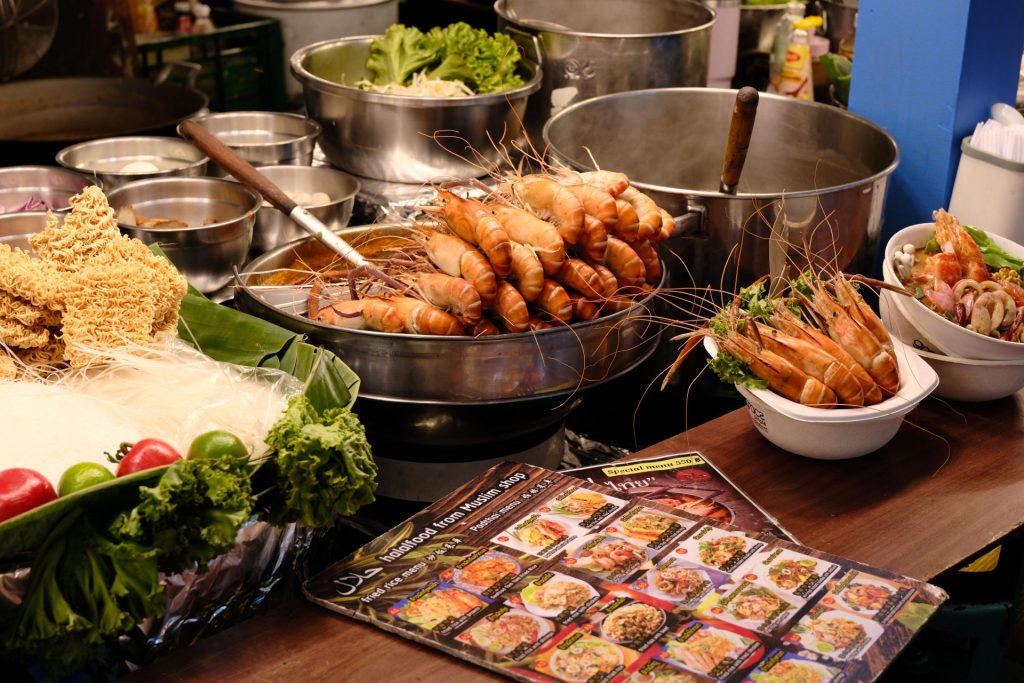
Pad Thai gets all the attention. Every menu, every cooking class, every “authentic Thai food” listicle — Pad Thai front and center. And look, it’s a great dish. It’s genuinely great. But if Pad Thai is all you eat in Thailand, you’ve basically seen one page of a very long book and called it done.
Thai street food beyond Pad Thai is where the real obsession lives. There are dishes in Thailand that most tourists walk straight past because they don’t recognize them, can’t read the sign, or just default to the safe option. Those are the dishes that turn a good trip into a food trip you plan your entire next visit around.
After weeks eating my way through Bangkok’s night stalls, morning markets near Ari and On Nut, and Chiang Mai’s Warorot Market before it got too hot to function, I can give you the honest list. Seven dishes that genuinely stopped me mid-bite. The ones I went back for the next day, and the day after that. The ones that rewired what I thought Thai food was.
This is that list — what each dish is, exactly how it tastes, where to find the real version, and what to pair it with when you do.
Updated June 2026, rechecked on the ground in Bangkok and Chiang Mai. Every dish below is one I’ve ordered, eaten, and gone back for — prices and stall tips reflect what I actually paid.
Best Thai Street Food Besides Pad Thai (Quick Answer)
Short on time? If you only chase a handful of dishes, start with these:
- Khao Soi — Chiang Mai’s coconut curry noodles; the one bowl I’d cross the country for.
- Som Tum — fiery green papaya salad, the beating heart of Thai street food.
- Moo Ping — charcoal pork skewers; the perfect 10-baht Bangkok breakfast.
- Sai Oua — herby Northern Thai sausage you’ll smell before you see.
- Hoy Tod — crispy oyster omelette, best hunted down after dark in Chinatown.
The full seven — with flavors, spice levels, prices, and exactly where to find each — are below.
The 7 Best Thai Street Food Dishes You’re Probably Walking Past
Right after you land, before you hit your first stall, here’s the full picture — flavor profiles, spice levels, and where each dish lives. Use this to plan your first market run.
Flavor profile, spice level, location, and price — your pre-market cheat sheet.
🥗 Som Tum
- Flavor: Spicy, sour, crunchy
- Spice: 🌶🌶🌶 adjustable
- Where: Everywhere in Thailand
- Price: 40–60 baht
🥞 Khanom Bueang
- Flavor: Sweet + savory crispy pancake
- Spice: 🌶 mild
- Where: Bangkok markets, Chiang Mai
- Price: 20–40 baht
🦪 Hoy Tod
- Flavor: Crispy omelette, juicy oysters
- Spice: 🌶 mild, chili on side
- Where: Chinatown, seafood markets
- Price: 60–100 baht
🌿 Sai Oua
- Flavor: Smoky, herbal, spicy sausage
- Spice: 🌶🌶 medium
- Where: Chiang Mai & Northern Thailand
- Price: 50–80 baht
🌿 Miang Kham
- Flavor: Sweet, salty, sour, crunchy in one bite
- Spice: 🌶 mild
- Where: Markets, traditional restaurants
- Price: 30–50 baht
🍢 Moo Ping
- Flavor: Smoky, sweet, garlicky pork
- Spice: 🌶 mild
- Where: Bangkok morning street carts
- Price: 10–15 baht / skewer
🍜 Khao Soi
- Flavor: Rich coconut curry, crispy noodles
- Spice: 🌶🌶 medium aromatic
- Where: Chiang Mai — rare in Bangkok
- Price: 60–100 baht
💡 Pro tip: Screenshot this before you lose signal at the market.
Som Tum: The Green Papaya Salad That’ll Slap You Awake
This is not your average salad. Not even close.
Som Tum is shredded green papaya pounded in a clay mortar with fresh chilies, garlic, lime juice, fish sauce, palm sugar, green beans, cherry tomatoes, and dried shrimp. You watch the vendor make it in front of you — cracking, pounding, adjusting — then they hand you something that is simultaneously spicy, sour, salty, sweet, and crunchy, all at once, all working perfectly together.
The crunch is half the experience. Green papaya shredded into thin strips has this satisfying, audible snap that holds up even after the pounding. The lime juice brightens everything. The fish sauce gives it depth. The palm sugar rounds out the heat just enough — just enough — to stop it from being purely punishing.
Som Tum originated in Laos and the Isaan region of Northeast Thailand. The Isaan version — Som Tum Pu — adds raw fermented crab, which is funky, complex, and completely worth ordering if you’re feeling adventurous. Bangkok versions tend to be slightly milder and sweeter. Find a vendor who looks like they’ve been making it for thirty years and ask for “pet” (spicy). That’s the real version.
The first time I had it from a cart near a BTS station in Bangkok, I ate the entire plate in ninety seconds and immediately pointed for a second. The vendor laughed and made it hotter the second time. She was right to.
Pair it with: Sticky rice and Moo Ping skewers. Canonical combination. Everything works together.
Heat check: Tell the vendor “pet nit noi” (a little spicy) if you’re unsure. Local stalls default significantly hotter than tourist menus.
Where to find it: Every market, every corner in Thailand. Chatuchak Weekend Market or any side street away from tourist zones in Bangkok. Warorot Market before 10am in Chiang Mai.
Khanom Bueang: Crispy Thai Pancakes You’ll Eat Six of Without Noticing
Khanom Bueang look small and unassuming. That’s part of how they get you.
Thin, crispy rice flour pancakes cook in small circular molds on a hot griddle — maybe five centimetres across — until golden and rigid. Then they’re folded in half like tiny tacos and filled. The sweet version gets coconut cream and shredded coconut, finished with orange-dyed meringue that adds a faintly caramelized top. The savory version goes with dried shrimp, coriander, and a sweet-salty sauce.
Both versions are excellent. I couldn’t choose so I stopped trying and alternated.
The texture is what surprises people. They’re audibly crispy — you can hear the snap from the next table. The filling is soft and slightly warm inside, which contrasts with the rigid shell in a way that feels almost architectural. Someone designed these to be perfect, centuries ago, and they got it right.
Khanom Bueang have roots in the royal court cuisine of the Ayutthaya period — one of Thailand’s oldest traditional snacks, surviving every food trend that’s ever swept through the country. Finding them on the street today feels like eating something that never needed to be updated because it was already done.
Where to find it: Bangkok markets (Yaowarat, Chatuchak, Ari), Chiang Mai’s Night Bazaar and weekend markets. Look for the vendor with the row of tiny round molds and a line of patient people.
Hoy Tod: Bangkok’s Crispy Oyster Omelette You Need to Try Before You Judge It
Before you scroll past “oyster omelette” — stay with me for thirty seconds. Because Hoy Tod gets massively undersold by its description and completely delivers in person.
Fresh oysters go onto a scorching flat griddle with a thick batter of rice flour and egg. The batter spreads and cooks until the edges caramelize and go genuinely crunchy — almost chip-like — while the center stays soft and custardy around the oysters. Bean sprouts go on top toward the end. The whole thing comes off the griddle in one piece, served with a sharp house chili sauce that cuts through the richness.
The contrast between the crispy edges and the soft, briny oyster center is the whole dish. It’s a texture study. Eat only the middle and you’ve missed the point entirely.
In Bangkok, Hoy Tod at its best lives along Yaowarat Road — Chinatown — particularly after 7pm when the street fills up and vendors set up their heavy cast-iron griddles on the sidewalk. Steam clouds, sizzle, the smell of caramelizing batter — it’s one of those Bangkok food experiences that feels like the city performing specifically for you.
My best version came from a no-name stall near the Odeon Circle end of Yaowarat, standing up, eating off a paper plate in the heat, at 9pm on a Tuesday. Eight-person queue. That’s the quality signal you’re looking for. Always follow the queue.
Order the mussel version (hoy malaeng phu tod) if available — mussels are chewier and more intensely flavored, and handle the crispy batter contrast even better.
Where to Start: Best Thai Street Food for First-Timers
Three dishes in and the options might already feel overwhelming. Here’s a quick decision guide based on what you’re actually in the mood for.
- You want something light and high-energy to kick off a market session
- You’re happy with heat and want the full Thai flavor range immediately
- You’re pairing with sticky rice and grilled meat — it was built for that
- You’re exploring a market and want something snackable and low-commitment
- You have low heat tolerance — these are mild and completely crowd-pleasing
- You want something to eat while walking and photographing
- You’re in Chiang Mai on day one — this is the dish that defines the city
- You want a full sit-down meal, not snacks
- You’re into rich aromatic broths and don’t mind medium heat
Sai Oua: The Northern Thai Sausage That Changes What You Think Sausage Can Be
Sai Oua only makes complete sense when you eat it in its home context.
It’s a grilled pork sausage packed with minced pork and an aromatic paste of lemongrass, kaffir lime leaves, galangal, shallots, dried red chilies, garlic, turmeric, and coriander root. Every vendor has their own balance — some lean heavier on the lemongrass, some on the kaffir lime, some on the heat. But the result is always the same: smoky from the charcoal grill, deeply herbal, and complex in a way that feels more like a slow-cooked curry than anything you’d normally call a sausage.
It tastes like the forest and the grill decided to be one thing. That sounds strange. It works completely.
Sai Oua is a Northern Thai specialty with deep roots in Lanna Kingdom food tradition — the same cultural heritage that gave Thailand Khao Soi, Miang Kham, and the entire herbal-forward flavor profile that distinguishes Northern food from the sweeter, fishier flavors of the Central Plains. If you’ve only eaten Bangkok Thai food, Northern food will genuinely surprise you.
Chiang Mai is where you want it. Specifically from stalls at Warorot Market (Kad Luang) in the morning or the Night Bazaar in the evening. You’ll see it hanging in links at market stalls, grilled to order over charcoal, often served alongside sticky rice and nam prik noom — a roasted green chili dipping sauce that is its perfect companion.
For the complete Northern Thailand food picture, the Northern Thai food guide covers everything worth eating in Chiang Mai.
Miang Kham: One Bite, Every Flavor Thailand Has
Miang Kham is tiny. You could walk past it twenty times. Don’t.
It’s a fresh betel leaf that functions as an edible wrapper. Inside: toasted dried coconut, roasted peanuts, dried shrimp, tiny cubes of fresh lime with the skin left on, finely diced shallots, and a thick sweet-savory sauce of palm sugar, fish sauce, and ginger that binds everything into a dense, fragrant paste. You fold the leaf around the filling, put the whole thing in your mouth at once, and chew.
What happens next is difficult to describe to someone who hasn’t done it. Sweet from the coconut and palm sugar. Salty from the dried shrimp. Sour from the lime. Bitter from the lime skin and the leaf. Crunchy from the peanuts. Fresh from the shallot. Every flavor register your mouth has, firing simultaneously, balanced in a way that shouldn’t be possible from something the size of a golf ball.
It is the most complete single-bite flavor experience I’ve had in Southeast Asia. That’s not hyperbole. It’s just accurate.
Miang Kham has roots in royal court cuisine and traditional herbal medicine — the combination of ingredients was originally considered as much a health preparation as a snack. Finding it on a street stall today feels like eating something ancient that never needed to be updated because it was already perfect.
I had my first version at a Bangkok market stall run by an older vendor who had been making them for decades. She watched me eat the first one, saw my face change, and started making a second without asking. She already knew exactly what had just happened.
Where to find it: Traditional market stalls and some street vendors in Bangkok and Chiang Mai. Less visible than Som Tum but worth hunting. Say “miang kham” — vendors who make it know immediately and usually smile.
Moo Ping: The Pork Skewer That Runs Bangkok’s Mornings
Moo Ping is the proof that simple done perfectly beats complex done adequately.
Pork — a mix of shoulder and belly — is marinated overnight in garlic, coriander root, soy sauce, oyster sauce, fish sauce, and palm sugar. The balance of savory and sweet soaks into the meat completely over those hours. Then it goes onto bamboo skewers and cooks over charcoal, slowly, turning until the outside caramelizes and picks up a dark char at the edges while the inside stays completely juicy.
You get them hot off the grill, wrapped in a paper sleeve, two or three at a time, with a bag of sticky rice on the side. The sticky rice catches the marinade drips. Everything is intentional.
Each skewer costs 10–15 baht. You will eat four before you realize you should have ordered more.
The charcoal char is what makes them irreplaceable. You cannot replicate this at home without the same setup — actual wood coals, not gas — and that specific combination of slow heat, caramelizing sugar, and smoke creates a flavor profile that is both simple and impossible to fake. Every Bangkok Moo Ping vendor has their own marinade variation, passed down from whoever taught them.
Moo Ping is morning food. Carts set up from around 7am near BTS stations, morning markets, office areas, and school entrances. By 10am at busy spots, they’re often gone. This is Bangkok’s breakfast, and it has been for as long as anyone can remember.
Neighbourhood specifics: The On Nut and Phra Khanong BTS corridor has excellent morning carts. Or Tor Kor Market is another reliable spot. Our 10 best street foods in Bangkok has the full neighbourhood breakdown.
Khao Soi: Chiang Mai’s Greatest Dish and One of Thailand’s Best Bowls
Khao Soi is not technically street food you eat standing up. But leaving it off this list would be dishonest — it is the single most important dish in Northern Thailand, and most visitors to Chiang Mai still don’t find the right version.
A coconut curry noodle soup with roots in Yunnan Chinese Muslim and Burmese trading routes through Northern Thailand. Rich, slightly sweet, medium-spicy coconut milk broth made with red curry paste as the base. Egg noodles, soft and saturated with the broth. On top: the same noodles, deep-fried until shatteringly crispy. Around the bowl: pickled mustard greens, shallots, lime, chili oil on the side.
The contrast between the soft noodles in the broth and the crunchy ones on top is the whole dish expressed in one structural decision. Someone figured this out a long time ago and it has never needed to change.
The condiments are not optional. Add pickled mustard greens for tartness. Squeeze in the lime. Spoon in chili oil to your tolerance. Stir once. Now it’s the dish it’s supposed to be.
Tourist-facing Chiang Mai versions tend to run sweeter and thinner. Local noodle shops run it richer, more aromatic, with better coconut milk and proper spice depth. The difference is significant and worth the five-minute walk off Nimman Road to find it.
Khao Soi Khun Yai and Khao Soi Islam are the most consistently referenced spots by people who actually live in Chiang Mai. Both are small, have plastic stools, and run out by early afternoon. Go before noon.
For everything else in the north, the Northern Thai food guide is the full picture, and our what to eat in Chiang Mai guide maps the city dish by dish.
Pro Tips for Eating Thai Street Food Like You Live There
- Follow the queue. A long line at a small stall is the single best quality signal. No queue, no certainty.
- Eat early and eat late. Best vendors are up before 9am and after 7pm. The midday gap is when local stalls rest.
- Point, smile, hold up fingers. Point at what someone else is eating, show fingers for quantity, pay what they say.
- Carry small bills. 20 and 50 baht notes. Street food vendors often can’t break a 500 baht note.
- “Pet nit noi” — a little spicy. Learn these three words before you eat anything. You can always go hotter next order.
- Eat standing at the cart sometimes. Moo Ping, Khanom Bueang, Hoy Tod fresh off the griddle taste better eaten immediately in the noise and heat of the market.
- For breakfast context, the Southeast Asia breakfast guide covers the early-hour food scene in Bangkok and Chiang Mai.
Before You Hit the Markets: Thai Street Food Checklist
Screenshot this before you lose signal at the market.
Thai Street Food Dishes Compared at a Glance
The whole list in one scannable table — flavor, spice, where to try each, and roughly what you’ll pay.
| Dish | Flavor | Spice | Best place to try it | Price (THB) |
|---|---|---|---|---|
| Som Tum | Sour, spicy, crunchy | 🌶🌶🌶 adjustable | Markets everywhere; Isaan stalls, Bangkok | 40–60 |
| Khanom Bueang | Sweet or savory, crispy | 🌶 mild | Old-town Bangkok & Chiang Mai markets | 20–40 |
| Hoy Tod | Briny, savory, crisp-edged | 🌶 mild | Yaowarat (Chinatown), Bangkok — after dark | 60–100 |
| Sai Oua | Smoky, herbal, aromatic | 🌶🌶 medium | Warorot Market, Chiang Mai | 50–80 |
| Miang Kham | Sweet-salty-sour, herbal, nutty | 🌶 mild | Traditional markets, Bangkok & Chiang Mai | 30–50 |
| Moo Ping | Smoky-sweet, charred, garlicky | 🌶 mild | Morning carts near BTS, Bangkok | 10–15 / skewer |
| Khao Soi | Rich coconut curry, crunchy noodles | 🌶🌶 medium | Local noodle shops, Chiang Mai | 60–100 |
More Thai Street Foods Worth Trying
Seven is where I’d start, but the rabbit hole goes deeper. A few more that earned their place on my repeat list:
- Kuay Teow Reua (boat noodles) — tiny, intense bowls of dark, herbal broth. Order three; everyone does.
- Gai Tod (Thai fried chicken) — Hat Yai–style, shatteringly crisp, eaten with sticky rice straight off a square of paper.
- Khanom Krok — coconut-rice half-spheres, custardy in the middle, made in dimpled cast-iron pans you’ll hear before you find.
- Pad Krapow with a fried egg — the dish locals actually order every day: holy basil, chili, rice, and a runny yolk.
- Mango Sticky Rice — yes it’s famous, but warm coconut rice with ripe nam dok mai mango is non-negotiable.
- Roti — the night-market sweet: griddled, buttery, deep in banana-and-condensed-milk territory.
FAQ: Thai Street Food Beyond Pad Thai

What is the most popular street food in Thailand besides Pad Thai?
Som Tum (green papaya salad) is arguably Thailand’s most eaten street food after Pad Thai — pounded fresh to order at stalls on every corner from Bangkok to the Isaan countryside. Moo Ping (grilled pork skewers) is Bangkok’s specific answer: the city’s breakfast food, sold from morning carts near every BTS station. Both cost under a dollar. Both are non-negotiable.
Where is the best place to eat street food in Bangkok?
Yaowarat Road (Chinatown) is Bangkok’s most iconic street food strip, especially after 7pm when stalls fill the sidewalks with griddles, steam, and queues. Chatuchak Weekend Market covers daytime snacking across almost every category. The Ari, On Nut, and Phra Khanong neighbourhoods have outstanding local stalls without tourist markup. Fundamental rule: the longer the queue at a small stall with plastic stools, the better the food.
Is Thai street food safe to eat?
Yes, with basic common sense. Busy stalls with high turnover are safe because food is constantly fresh and cooked hot. Look for food cooked in front of you, served immediately, at high heat. Pre-cooked food sitting out in tropical heat is the main thing to be cautious about. Thai street food is almost always cooked at scorching temperatures — the wok, the grill, the griddle — which handles the main food safety concerns effectively.
What is Khao Soi and where can I find it?
Khao Soi is a rich coconut curry noodle soup topped with crispy deep-fried noodles, with roots in Yunnan Chinese Muslim and Burmese trading culture through Northern Thailand. It’s Chiang Mai’s defining dish. In Chiang Mai, look for local noodle shops near Nimman Road or Warorot Market. Khao Soi Khun Yai and Khao Soi Islam are the most referenced spots by locals, and both tend to sell out before early afternoon.
What is Moo Ping?
Moo Ping are Thai grilled pork skewers — pork marinated overnight in garlic, coriander root, soy sauce, and palm sugar, then charcoal-grilled until caramelized and lightly charred. Bangkok’s breakfast street food, sold from carts near BTS stations from around 7am. Each skewer costs 10–15 baht and they’re best eaten hot with sticky rice. By 10am at busy spots, they’re usually gone.
How spicy is Thai street food?
It ranges from completely mild to face-melting. Som Tum is adjustable — tell the vendor “pet nit noi” (a little spicy). Sai Oua and curry preparations run medium-hot. Khao Soi is aromatic and warming rather than fiery. Moo Ping and Khanom Bueang are mild. The default local spice level at most stalls is significantly hotter than what tourist menus describe as spicy.
What food is Chiang Mai known for?
Chiang Mai is the home of Northern Thai (Lanna) cooking, which is herbal, smoky, and largely coconut-free apart from its most famous export. Khao Soi (coconut curry noodles) is the dish most visitors come for, but Sai Oua (herbal grilled sausage), nam prik noom (roasted green chili dip), and Miang Kham all belong to the same Northern tradition. Warorot Market in the morning and the Night Bazaar after dark are the easiest places to eat your way through all of them.
How much does Thai street food cost?
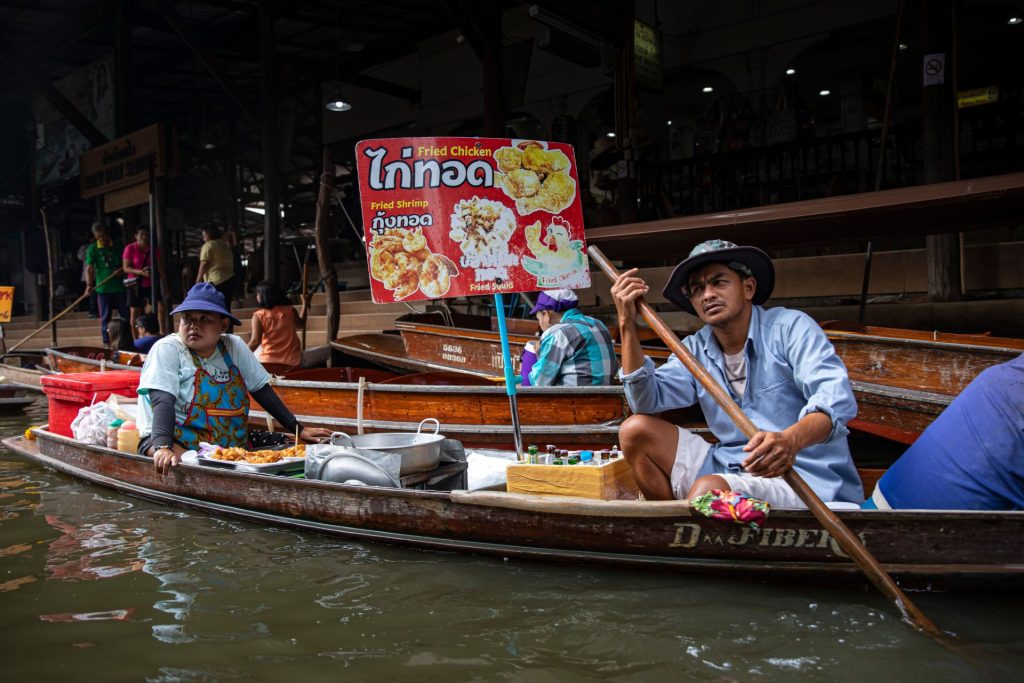
Most single street-food dishes run 10–100 baht (roughly $0.30–$3). Moo Ping skewers are 10–15 baht each, Som Tum and Khanom Bueang sit around 20–60 baht, and a full bowl of Khao Soi or a plate of Hoy Tod tops out near 60–100 baht. You can eat extremely well across a day of market grazing for under 300 baht. Carry small 20 and 50 baht notes, since stalls rarely break large bills.
Thai street food beyond Pad Thai isn’t a hidden discovery — it’s just what happens when you walk twenty metres past the tourist menus and follow your nose. The stalls are there. The vendors have been making these dishes for decades. You just have to show up hungry, carry small bills, and be willing to point at things you don’t recognize yet.
For the full Bangkok food picture, the Bangkok food guide covers restaurants, neighbourhoods, and market timing. For Thailand trip planning, best time to visit Southeast Asia has the month-by-month breakdown.